

Turismo 2030 Aruba – MACS 2025-2035 Vision & Strategy
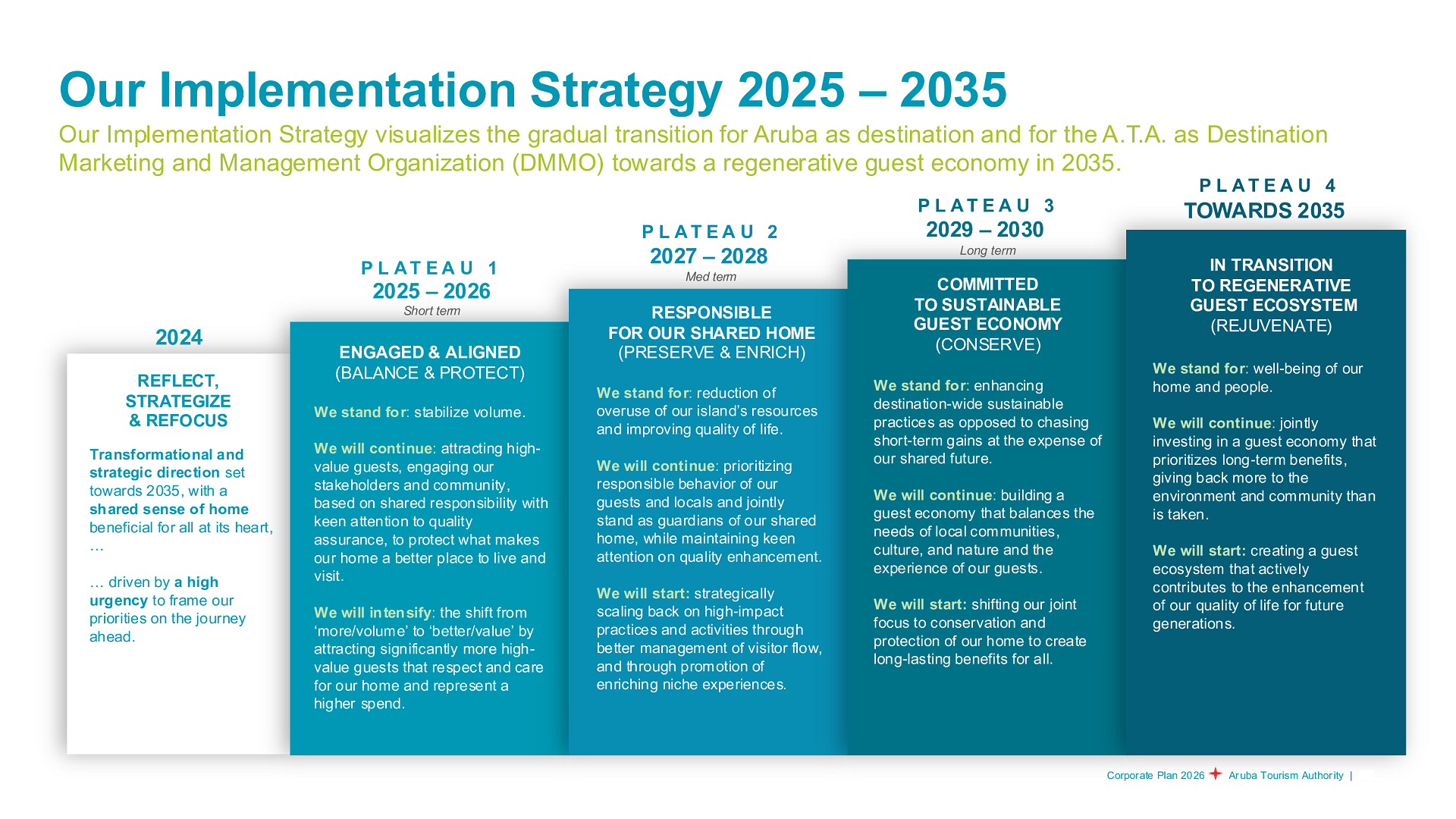
As the world of travel evolves at lightning speed, it’s more important than ever for destinations to not only keep up but to anticipate, adapt and lead. For Aruba, the journey toward 2030 and beyond is guided by the master framework known as MACS 2025–2035 (Multi-Annual Corporate Strategy) and its long-term roadmap, “Turismo 2030.”
This is the blueprint for how Aruba intends to transform its tourism economy balancing growth, sustainability, culture, community and innovation. Aruba is shaping its tourism ecosystem around sustainability, innovation and community from national frameworks like MACS 2025-2035 to local pioneers such as Aruba Nature Adventure, who are redefining what responsible tourism looks like on the island. In this detailed blog, we unpack what MACS/Turismo 2030 involves, why it matters, how it ties into the island’s wider economic vision, and we explore tangible examples of how Aruba is turning ambition into reality.

What is MACS 2025-2035 (Turismo 2030)?
At heart, MACS 2025-2035 is the strategic long-term plan developed by the Aruba Tourism Authority to shape the visitor economy and destination management for the next decade and beyond. As the plan states:


“The A.T.A. will embark on a journey of change, moving towards a more responsible, sustainable, and finally regenerative industry, where we no longer focus on ‘what can Aruba do for its visitors’ but rather on ‘what can Aruba do for its guests and what can our guests do for Aruba’.” (A.T.A. Corporate Plan 2025)
In other words: Turismo 2030 is not just about more visitors it’s about better visitors, better experiences, stronger community benefit and a healthier environment.
Some key objectives and features of the roadmap include:
- High-Value, Low-Impact (HVLI) model: Prioritising visitor segments who spend more, stay longer, engage deeper, and whose presence leaves a lighter environmental and social footprint.
- Strategic shifts in perspective: From simply “what can our destination do for visitors” to “how visitors and guests can contribute” to the destination’s well-being.
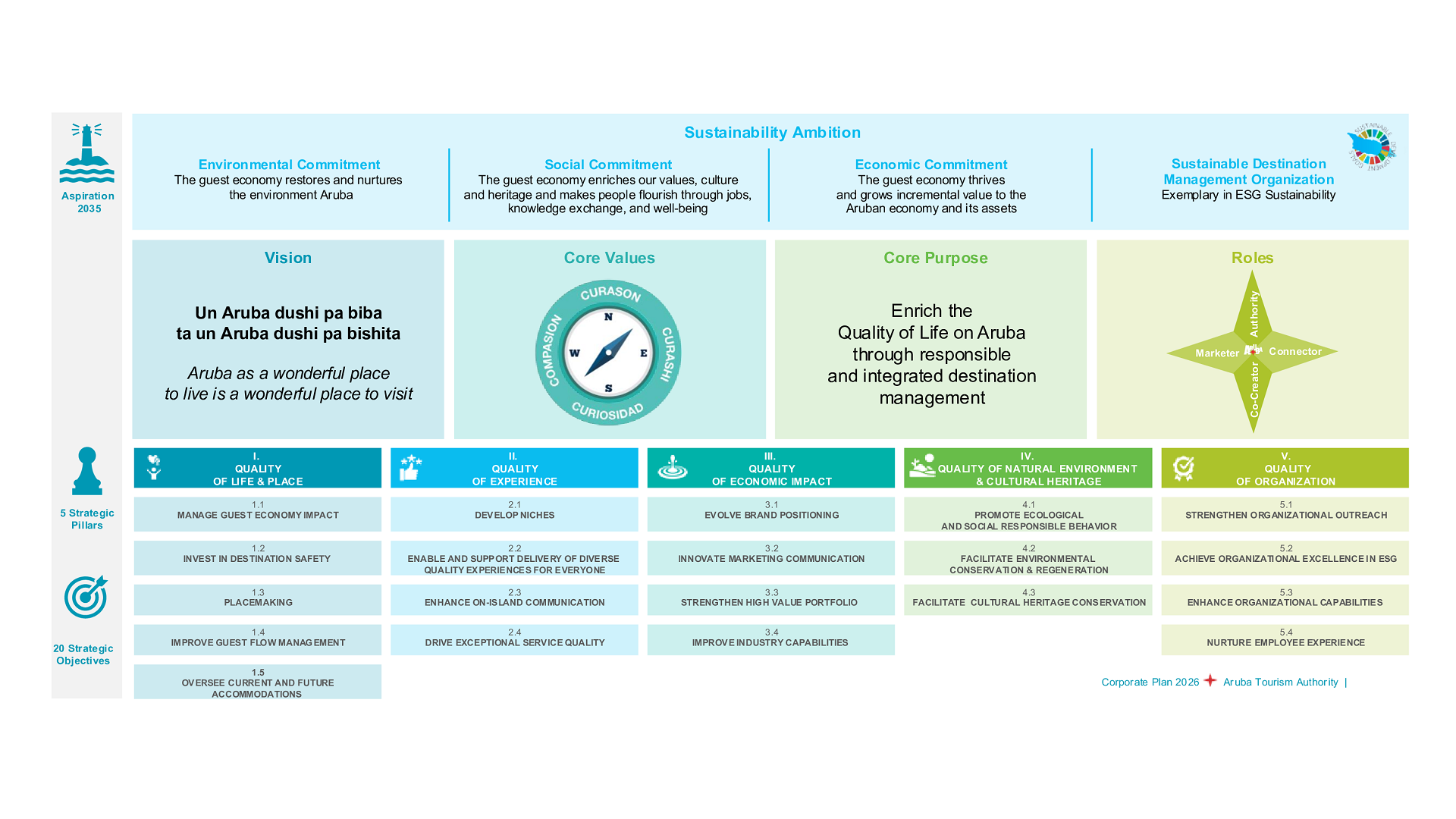
- Five strategic shifts: Integrated destination management, regenerative tourism (not just sustainable, but generative), stakeholder engagement, balance between resident and visitor satisfaction, and continuous learning.
- Link to national economic vision: Tourism already contributes a major share of Aruba’s GDP and employment, but Turismo 2030 directs this engine toward inclusive prosperity through better infrastructure, innovation, and community participation.
Tangible example: The 2024 Annual Report of A.T.A. notes that the MACS framework drives more than 100 action points across multiple sectors through 2030. Another cornerstone project, “Gateway 2030,” modernises the airport and aligns the arrival experience with Aruba’s premium-sustainable identity.
Sustainable Tourism & Cultural Preservation
One of the most compelling aspects of the MACS Turismo 2030 framework is its emphasis on sustainability, regeneration, community inclusion and identity preservation.
Empowering local communities through tourism
Aruba’s residents are integral to the island’s success and the plan recognises that. The partnership between A.T.A. and CEDE Aruba (Centre for Development), for example, aims to improve quality of life for residents through tourism-driven social projects, volunteer programs and cultural initiatives (Gobierno di Aruba).
This ensures that tourism growth happens with the community, not at its expense.


Protecting Aruba’s natural assets and identity
From coral reefs to desert hills, mangroves to beaches, Aruba’s natural treasures are essential to its identity. Turismo 2030 reinforces that these assets must be valued and protected.
“Sustainable tourism maintains resources for future generations; regenerative tourism goes further actively improving and rejuvenating the destination.” (A.T.A. Corporate Plan 2025)
Tangible example: Aruba has installed visitor-flow sensors in busy areas to monitor environmental stress, allowing data-driven management of carrying capacity. Another initiative, “Protect It,” invites every visitor to become a partner in preserving nature and culture.
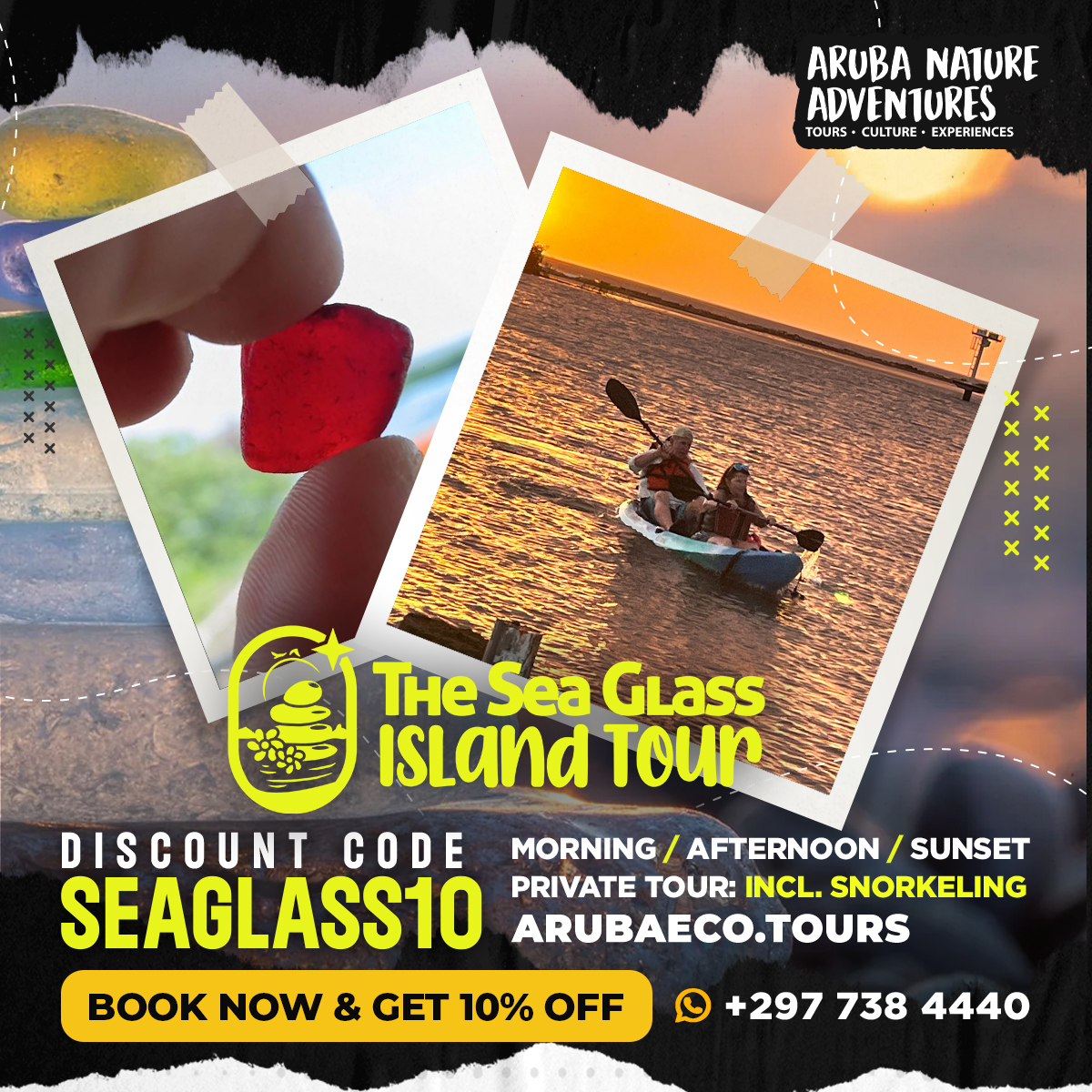
Local success story: Companies like Aruba Nature Adventure embody this regenerative approach in practice. Founded by Jorge Zarraga and Bianca Heusen, the company offers low-impact kayak, snorkel and hiking tours in areas like Spanish Lagoon and Arikok National Park. Their focus on education, environmental care and authentic storytelling illustrates how local entrepreneurship can support both community and conservation precisely the ethos of Turismo 2030.
By 2030, Aruba expects to see more ecosystem-based tourism products like these, with visitors contributing directly to preservation and cultural continuity.

Innovation in Destination Marketing
For Aruba to stand out globally, it must market differently and more intelligently. Turismo 2030 drives innovation through data-driven marketing, segmentation and storytelling.
Branding Aruba as a “Smart & Sustainable Destination”
The brand message “Un Aruba Dushi pa Biba ta Un Aruba Dushi pa Bishita” (“A wonderful Aruba to live in is a wonderful Aruba to visit”) captures the island’s dual promise: quality of life for residents and authentic value for visitors. Under Turismo 2030, campaigns like Protect It and The Aruba Effect deepen that message, linking Aruba’s joy and beauty to responsibility and care.
Leveraging data to improve visitor satisfaction
A.T.A. is enhancing its analytics capacity — tracking visitor satisfaction, environmental metrics and resident sentiment. The 2024 Annual Report integrates SDG and ESG frameworks, ensuring that Aruba’s tourism aligns with global sustainability standards. That same year, Aruba scored a 9 out of 10 average in visitor satisfaction (A.T.A. Annual Report 2024).
Tangible examples:

- Targeted digital marketing in Latin America and Europe to attract value-aligned travellers.
- The Gateway 2030 airport redevelopment, enhancing both experience and efficiency.
- Digital dashboards helping A.T.A. adapt campaigns to visitor feedback in real time.
By 2030, Aruba aims to be recognised not just for its beaches, but as a smart, sustainable and emotionally resonant destination.
Infrastructure & Experience Enhancement
Vision needs structure and Turismo 2030 dedicates major attention to physical, digital and human infrastructure.
New investments in hospitality, mobility & visitor infrastructure
Projects like Gateway 2030 modernise Aruba’s gateway to the world, adding smart-check-in, improved passenger flow and sustainability standards. Other efforts include the redesign of high-traffic tourist zones with nature-based solutions, expansion of renewable-energy use in hospitality, and improved water-management infrastructure.
Partnerships with the private sector
Turismo 2030 thrives on collaboration. From large resorts to small eco-tour operators, Aruba’s tourism strategy depends on synergy. The alliance with CEDE Aruba exemplifies community partnership, while collaborations with airlines and hotel groups expand connectivity and quality.
Tangible example: The partnership between A.T.A. and local innovators like Aruba Nature Adventure proves how small enterprises can deliver world-class experiences while staying true to sustainability principles. Their success encourages the integration of local SMEs into broader tourism value chains an essential objective of the masterplan.
Experience enhancement: diversifying what Aruba offers
Beyond the beach, the future of Aruba lies in wellness retreats, culinary travel, culture and eco-experiences. Under the HVLI model, emphasis moves to depth of engagement. Infrastructure investments from digital tools to mobility upgrades will support these new experience types.
Looking Ahead: Aruba 2030 – A Vision in Practice
By 2030, the island’s transformation will be evident:
- High-value visitor mix: Fewer, more meaningful visits, longer stays, higher spend, deeper cultural connection.
- Smart systems: Data dashboards monitor satisfaction, flows, and sustainability KPIs.
- Community-based tourism: More SMEs like Aruba Nature Adventure flourish, offering authentic local experiences and creating sustainable livelihoods.
- Environmental leadership: Aruba’s reefs, mangroves and parks restored through regenerative initiatives.
- Infrastructure excellence: Gateway 2030 fully operational, green transport links and energy-efficient hotels.
- Caribbean leadership: Aruba stands as a model for value-driven, sustainable island tourism.
In short: Turismo 2030 is a paradigm shift from consumption to contribution, from growth to balance, from visitors to guests.
Final Thoughts
The future of tourism in Aruba is being written today. The MACS 2025–2035 Turismo 2030 framework sets the course for a destination that prioritises people, planet and prosperity equally.
For residents, it promises shared benefits. For visitors, it offers authenticity, meaning and quality. For the tourism industry, it brings innovation and responsibility. As A.T.A. Executive Leadership often reminds stakeholders, “Un Aruba Dushi pa Biba ta Un Aruba Dushi pa Bishita” the happiness of locals and guests are inseparable.
Bon bini naar Aruba welcome to a new era of One Happy Island.