
Aruba Tourism Plan 2026 – The Roadmap in Action
As the global tourism landscape evolves rapidly, the small-but-mighty island nation of Aruba stands ready to act. With the release of the Corporate Plan 2026 by the Aruba Tourism Authority (A.T.A.), the island is not simply planning for the future it is setting a roadmap for actionable change.
This plan moves beyond vision to detail: measurable performance indicators, strategic partnerships, and community empowerment designed to accelerate Aruba’s transformation into a high-value, sustainable, and inclusive destination.
In this article, we explore:


- The strategic objectives for 2026
- Innovation in marketing & communications
- Community and industry partnerships
- Monitoring progress and accountability
- A data-driven forecast of how this plan may shape Aruba’s future by the end of the decade
Strategic Objectives for 2026
The Corporate Plan 2026 defines clear thrusts and metrics, tightly aligned with the broader MACS 2025-2035 “Turismo 2030” vision. (A.T.A. Corporate Plan 2026 PDF)

Stabilize Arrivals & Increase High-Value Visitor Share
Instead of pursuing raw numbers, Aruba is targeting quality over quantity prioritizing longer stays, higher per-day spending, and deeper cultural engagement.
Key performance targets include:
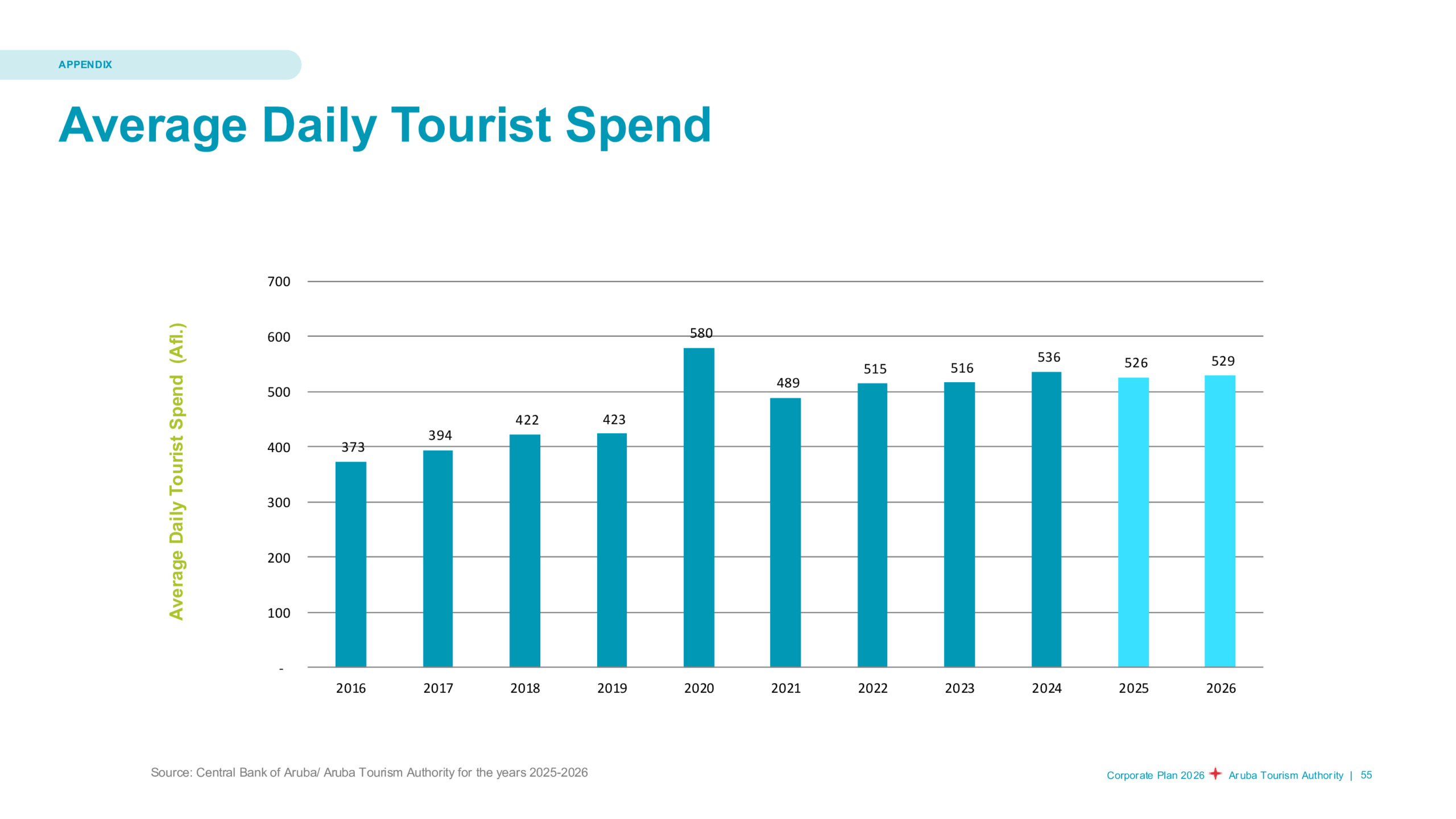
- Raising average daily tourist spending (ADTS) above Afl. 553 (2024 rate per Annual Report)
- Extending visitor length of stay and diversifying markets beyond North America to Latin America and Europe
- Developing new long-stay and experiential travel products catering to wellness, adventure, and remote-work segments
Focus Areas: Digital Marketing, Partnerships & Workforce Development
The plan emphasizes strengthening Aruba’s digital marketing ecosystem through AI-driven insights, data-based audience segmentation, influencer collaborations, and sustainable storytelling campaigns.
It also prioritizes capacity building training hospitality professionals, empowering entrepreneurs, and aligning public-private sectors around sustainable tourism.


Sustainability & Community Integration
Sustainability remains non-negotiable. 2026 goals focus on regenerative tourism meaning that Aruba’s ecosystems and communities should benefit from every visitor.
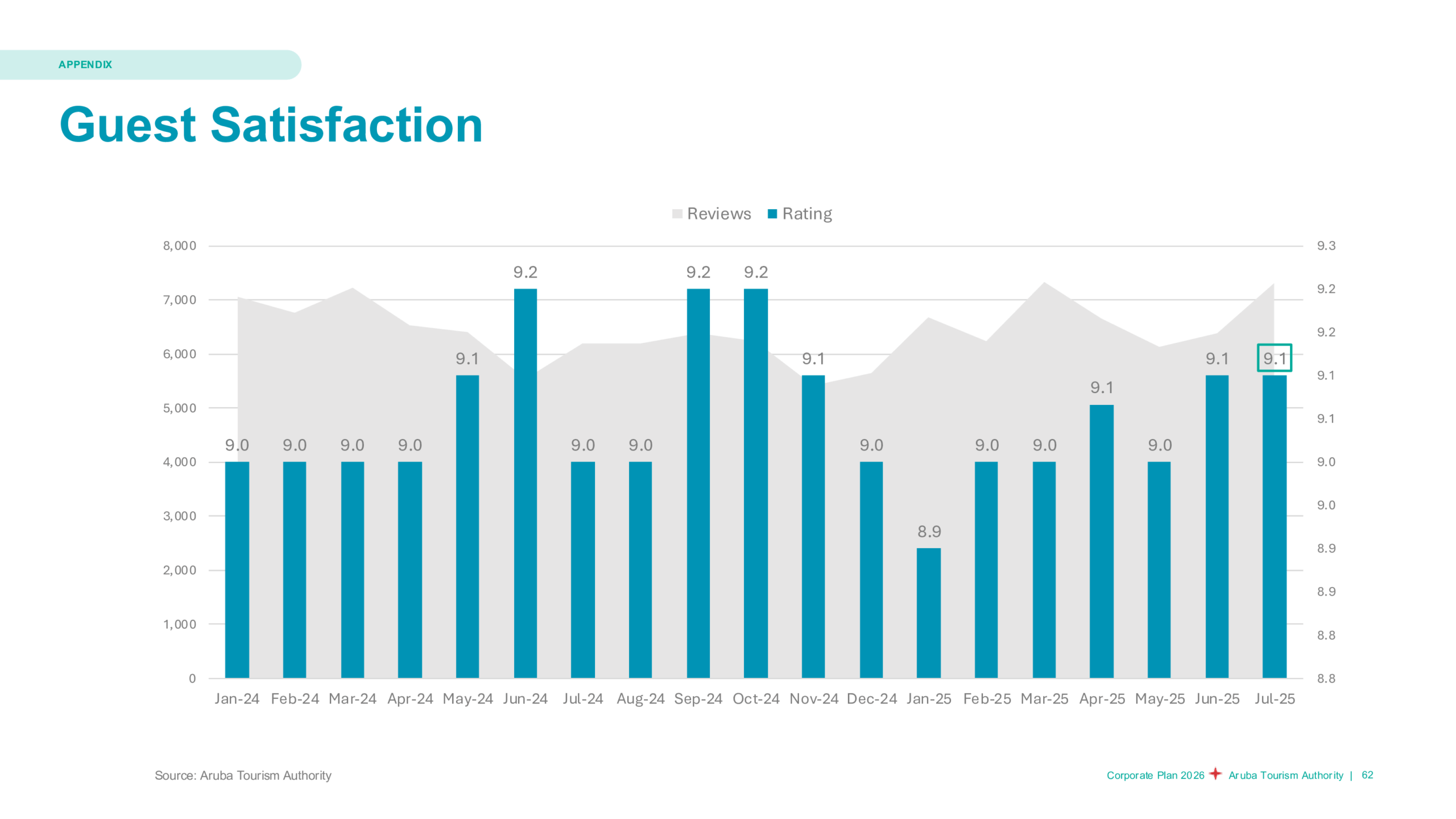
Targets include maintaining or improving the 9/10 visitor satisfaction rate, raising resident sentiment above 70%, and adopting green performance indicators across sectors (water, energy, waste, biodiversity).
Innovation in Marketing & Communications
A.T.A.’s new approach emphasizes authentic storytelling and smart tourism innovation. Aruba’s global message is evolving from “One Happy Island” to “One Responsible, Regenerative Island.”
Smart Destination Branding
Under the Corporate Plan 2026, Aruba’s global communications will amplify its sustainable identity. This includes digital campaigns emphasizing local culture, gastronomy, eco-experiences, and community pride.
As A.T.A. stated during its 2026 North America Strategy Meetings, “Aruba must move from being a dream destination to a meaningful one where every visit contributes positively.”
Data-Driven & AI-Powered Personalization
The A.T.A. is investing in advanced analytics to understand visitor behavior and optimize marketing spend. AI will help tailor offers, measure engagement, and enhance the visitor journey from inspiration to post-stay connection.
Example initiative: 2026 will see the introduction of digital dashboards combining visitor satisfaction data, social media sentiment, and sustainability metrics to guide campaigns in real time.
Community & Industry Partnerships
The Corporate Plan 2026 places strong emphasis on collaboration aligning communities, private operators, and policy institutions.


Empowering Local Entrepreneurs & Tourism SMEs
Aruba’s future growth depends on local innovation. The A.T.A. aims to help small and medium-sized tourism enterprises (SMEs) integrate into official marketing, capacity-building, and training programs.
A shining example is Aruba Nature Adventure, a locally founded eco-tour company created by Jorge Zarraga and Bianca Heusen. Offering intimate kayak, snorkeling, and hiking experiences in pristine areas like Spanish Lagoon and Arikok National Park, the company represents the exact alignment between entrepreneurship and sustainability that A.T.A. promotes.
By focusing on education, respect for nature, and community inclusion, Aruba Nature Adventure demonstrates how tourism can empower locals while preserving the environment. Its model exemplifies the “High-Value, Low-Impact” principle central to the 2026 Plan.
Strategic Industry Alliances
Beyond SMEs, Aruba is deepening alliances with:
- AHATA (Aruba Hotel & Tourism Association) to maintain service excellence and sustainability standards.
- Airlines & travel agencies to strengthen connectivity and promote longer stays.
- NGOs & educational institutions – like CEDE Aruba and the University of Aruba, to train the next generation of tourism leaders.
- Digital partners & influencers integrating AI and authentic storytelling in content creation.
Together, these partnerships ensure that Aruba’s growth remains inclusive and future-proof.
Monitoring Progress & Accountability
Transparency is built into the plan. The A.T.A. has introduced measurable Key Performance Indicators (KPIs) and annual reporting cycles to track real progress.
Measurable KPIs
The 2026 plan establishes targets for:
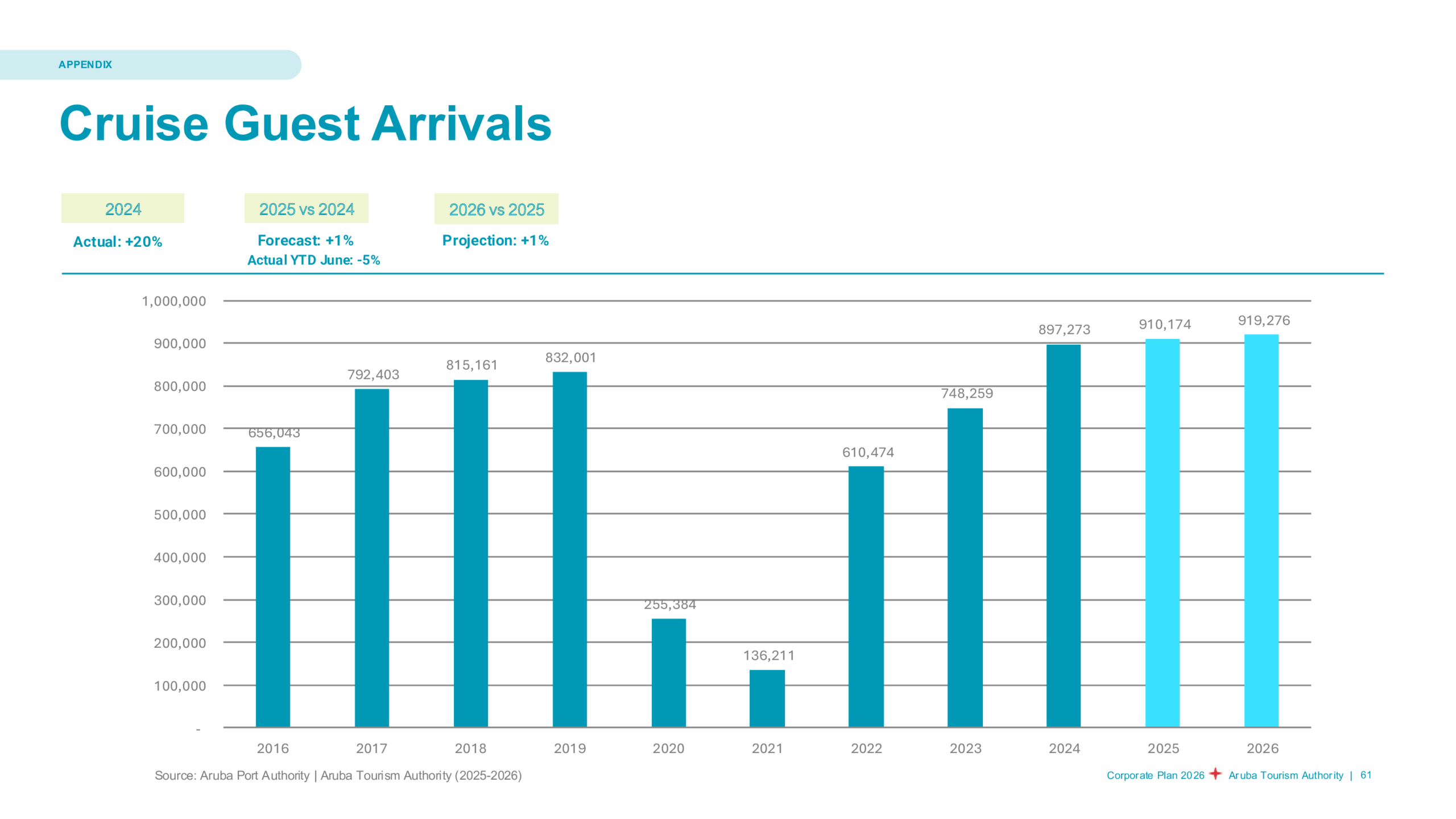
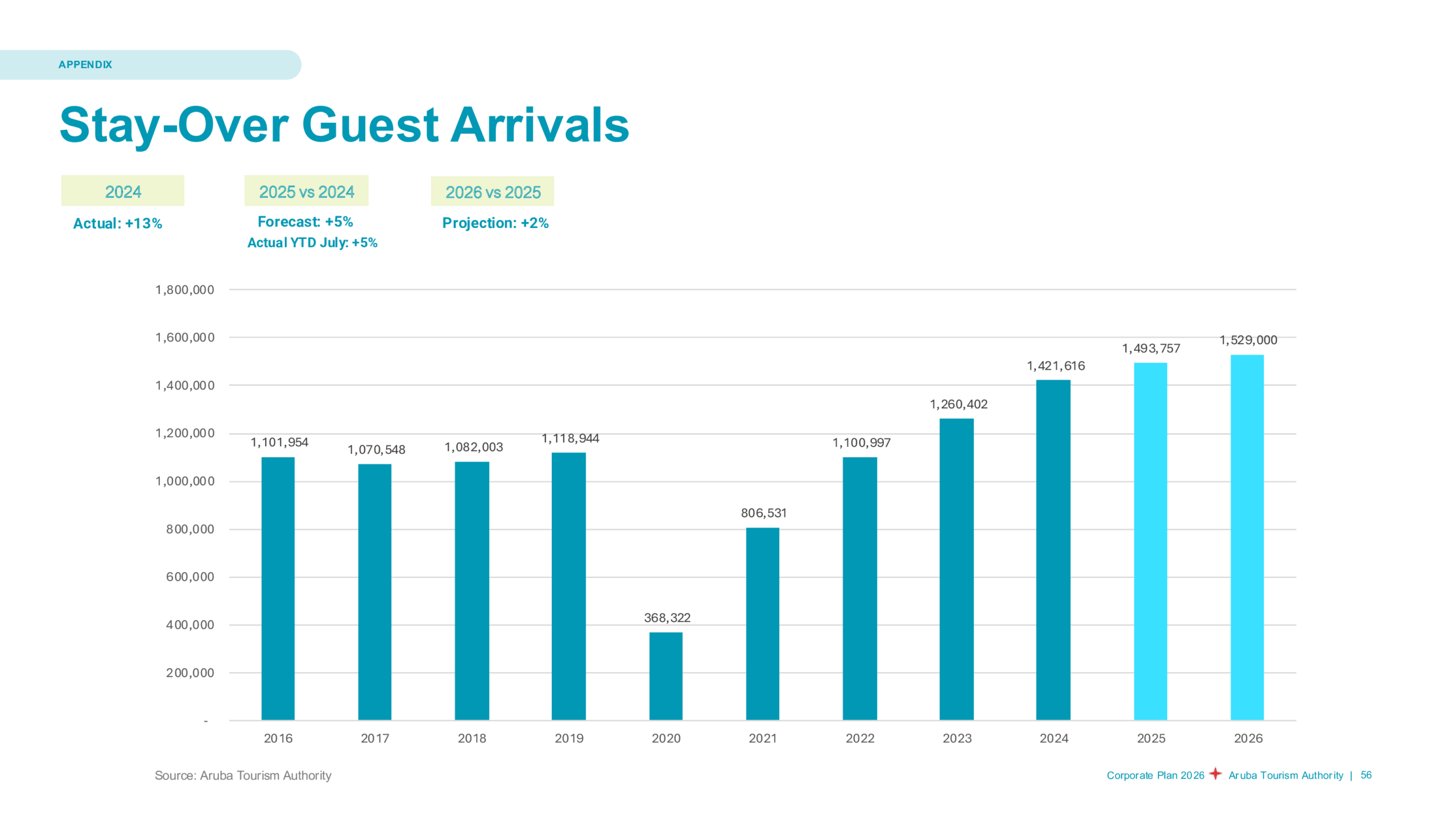
- High-value visitor arrivals and spend
- Resident sentiment
- Carbon and waste reduction metrics
- Visitor satisfaction (target 9.2 or higher)
- Brand sentiment and engagement scores
- Number of trained local entrepreneurs
Transparent Reviews
The A.T.A. will continue publishing mid-year and year-end reports similar to its 2024 Annual Report (A.T.A. Annual Report 2024) providing quantitative results, stakeholder transparency, and adaptation plans when targets are not met.
Forecast: How the Corporate Plan 2026 Could Transform Aruba
The real power of the 2026 plan lies in its long-term ripple effects. Here’s a look at where Aruba could stand by 2030 if current strategies succeed.
Economic Growth & Visitor Quality
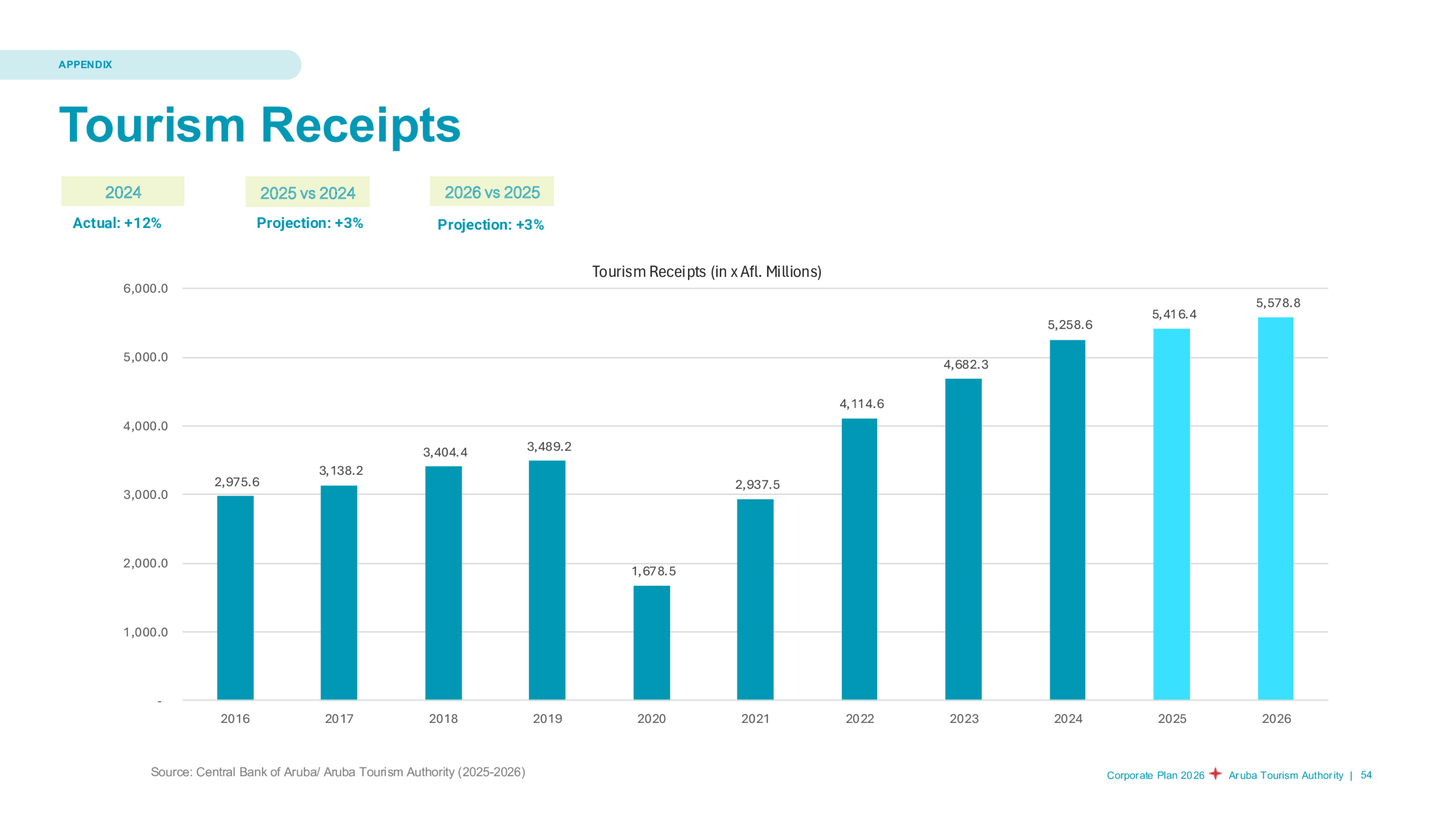
- GDP contribution: Tourism receipts may surpass Afl. 6 billion (≈ USD 3.4 billion) by 2026, driven by higher-value guests. (Centrale Bank van Aruba, 2025 Outlook)
- Average daily spend: Expected to rise from Afl. 553 → Afl. 600+, an 8% increase.
- Length of stay: Extending from 7.2 to 7.5 nights on average.
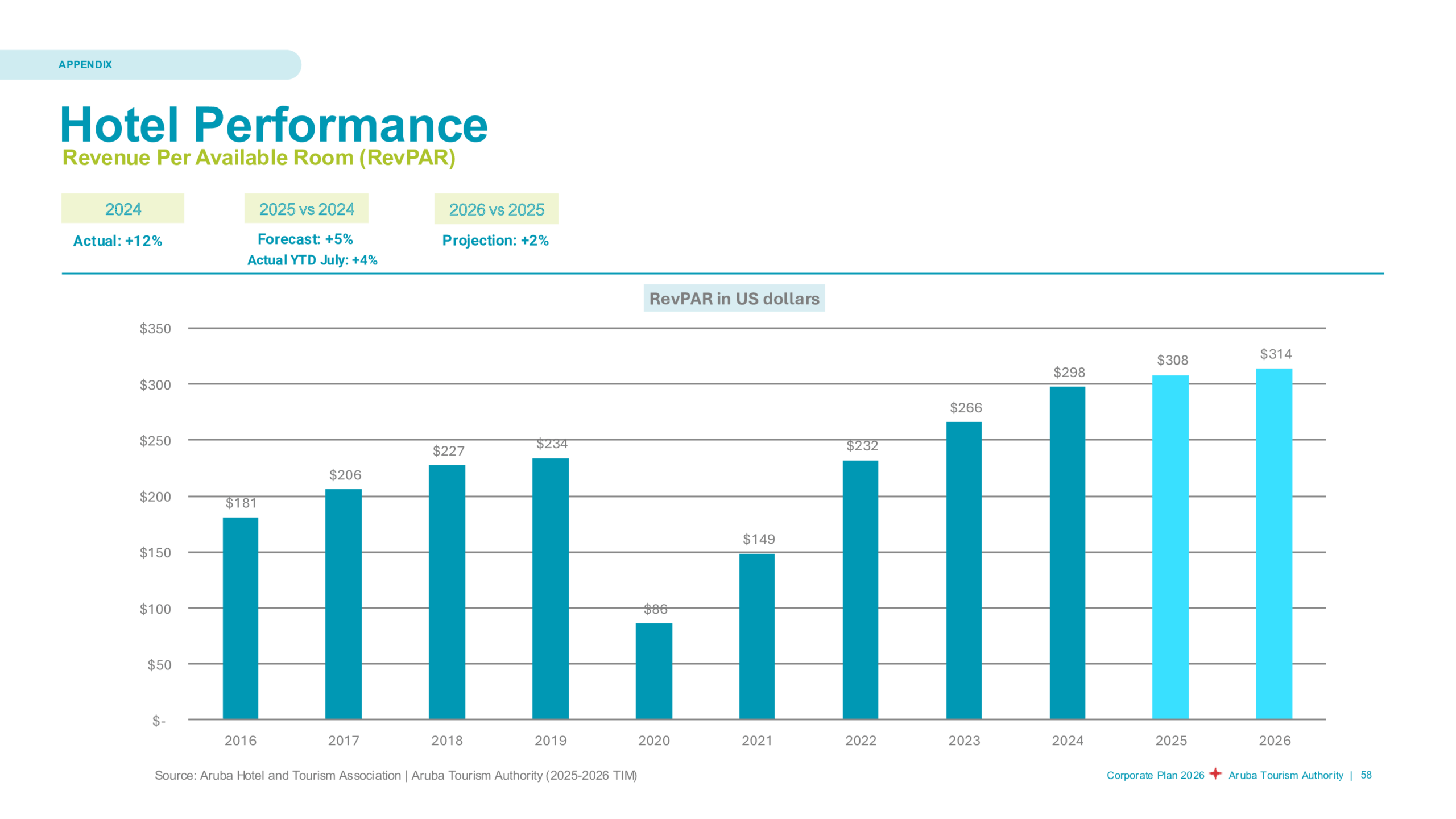
- RevPAR (Revenue per Available Room): Could grow 10–15% year-on-year for premium stays.
Sustainability & Community Benefit
If the A.T.A. continues empowering local entrepreneurs like Aruba Nature Adventure, the economic benefits will flow deeper into communities.
Local companies that emphasize low-impact tours, cultural storytelling and environmental protection will not only improve visitor satisfaction but also strengthen Aruba’s international reputation as a leader in regenerative island tourism.
Projections suggest that by 2026:
- Resident satisfaction could rise from 68% (2024) to 75%.
- Local SME participation in tourism revenues could grow 20-25%.
- Eco-tourism products (like hiking, kayaking, and cultural immersion tours) may account for 15% of visitor activity choices.
- Environmental impact indicators (waste, water use, emissions per tourist) could decline 5–8% due to smart-management systems and community collaboration.
Global Positioning
By combining sustainability, smart branding, and authenticity, Aruba could move beyond the Caribbean “sun-and-sand” stereotype to become a flagship for responsible island tourism.
In the words of A.T.A.’s leadership:
“The true measure of our success will not be how many arrive, but how our visitors and our people thrive together.”
Final Thoughts
The Corporate Plan 2026 represents a defining moment in Aruba’s tourism evolution translating a decade-long vision into practical, measurable actions.
For residents, it means shared prosperity, cleaner environments and stronger cultural identity.
For visitors, it means richer, more meaningful experiences and a genuine connection with local life.
For the tourism industry, it means innovation, resilience, and responsible growth.
Aruba Nature Adventure, and companies like it, show what’s possible when sustainability meets entrepreneurship. Their example proves that Aruba’s tourism can be both profitable and purposeful a model for other small island nations seeking balance between prosperity and preservation.
Bon bini naar Aruba welcome to the next chapter of One Happy Island, where the future of tourism is already in motion.