
Rising Economic Pressures in a Tourism-Dependent Nation
Aruba’s economy is admired worldwide for its thriving tourism sector, crystal-clear beaches, and appealing leisure-focused lifestyle. Yet behind this success lies a growing set of economic vulnerabilities. These risks are increasing as climate change intensifies, particularly through rising temperatures, extreme weather, coastal erosion, and sea level rise. Understanding and addressing Aruba’s economic risk is essential for building a resilient future.
Aruba’s Economy and Tourism Dependence
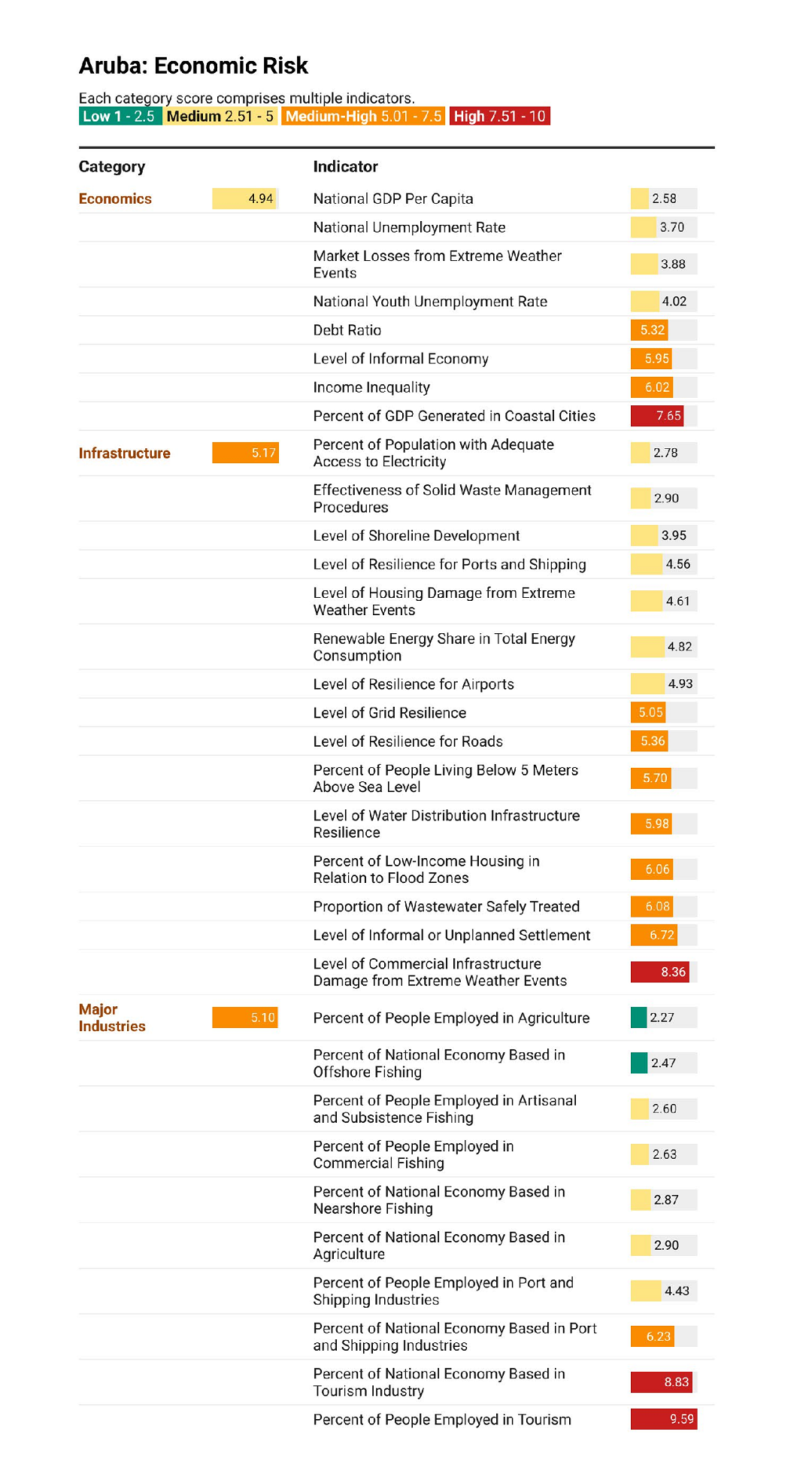
Tourism contributes over 70% of Aruba’s GDP and supports more than 88% of local jobs. In fact, Aruba recently received one of the highest global vulnerability scores for the percentage of employment tied to tourism.
- Percent of Economy Based in Tourism: Score 8.83
- Percent of Jobs Dependent on Tourism: Score 9.59
Before the COVID-19 pandemic, tourism accounted for around 64.7% of Aruba’s GDP. After the pandemic collapse and subsequent recovery, tourism dependence grew even stronger. Projections indicate tourism will reach 72% of GDP by 2034, increasing vulnerability.


Because 83% of visitors come from the United States, Aruba’s economy is highly exposed to fluctuations in the U.S. travel market.
Aruba Economic Risk Climate Adaptation and Coastal Exposure
Coastal Development Heightens Climate Vulnerability
Most hotels, restaurants, airports, harbors, and recreation zones are built along Aruba’s coastline. These zones face growing risks from:
- Rising sea levels
- Coastal erosion
- Stronger hurricanes and storms
- Flooding and saltwater intrusion
The World Bank warns that sea level rise will significantly reshape Caribbean economies, coastal infrastructure, and tourism
In Aruba, a single extreme weather event may cause over $310 million in damages, equivalent to 9.2% of Aruba’s GDP. This is especially serious because:
- Queen Beatrix International Airport is less than 40 meters from the shoreline
- Power and water plants are located in low-lying flood-prone areas
- Nearly 46% of households are situated in areas at risk of storm surge and flooding
These factors make Aruba economic risk climate adaptation a central national priority.


Strain on Infrastructure and Housing Systems
Commercial and Residential Vulnerability
Aruba’s infrastructure risk score reflects major challenges:
| Indicator | Risk Score | Key Concern |
|---|---|---|
| Damage to Commercial Infrastructure from Storms | 8.36 | Hotels & ports face extreme weather threats |
| Informal or Unplanned Settlements | 6.72 | Unauthorized housing in unsafe zones |
| Wastewater Treatment Capacity | 6.08 | Existing systems overloaded by tourism |
Rapid tourism expansion and vacation rental growth have raised housing prices, pushing many families into flood-prone or environmentally sensitive areas.
The reopening of the Parkietenbos Wastewater Facility in 2024 and the new $20 sustainability fee show progress—but wastewater and coastal resilience still require large-scale investment.
Tourism Saturation, Economic Stagnation, and Inequality
Tourism Expansion Has Outpaced Economic Growth
Although tourism arrivals increased 37% between 2009 and 2019, Aruba’s GDP per capita increased only 5% over the same period. Meanwhile, income inequality worsened, reflected in:
- Gini coefficient: 0.44 (2019)
- Increased pressure on public land, beaches, and housing
- Growing frustration among residents over coastal privatization
Local stakeholders report that uncontrolled hotel and short-term rental expansion is displacing community life and damaging natural ecosystems.
This trend has contributed to what experts call “tourism exhaustion”—where tourism continues to grow, but economic benefits do not.
Climate Adaptation and Economic Stability
Why Climate Resilience Matters to Economic Security
If Aruba does not strengthen climate adaptation, the economy could experience:
- Higher public debt from disaster recovery
- Lower tourism revenue due to degraded beaches and hotter climate
- Job loss across service industries
- Risk to credit markets from business default increases
Example Resilience Actions Needed
- Strengthening coastal natural barriers (mangroves, reefs, dunes)
- Diversifying tourism sectors (cultural, wellness, eco-tourism)
- Reforming land use to reduce flood and heat vulnerability
- Expanding renewable energy and solar grid allowances
- Investing in affordable and climate-resilient housing
These strategies align with Aruba economic risk climate adaptation goals and are essential to long-term stability.


Conclusion: Building a Climate-Resilient Future for Aruba
Aruba stands at a crucial turning point. Its economic prosperity is deeply connected to the natural environment, meaning climate change is not just an environmental concern—it is a direct economic risk. By prioritizing climate adaptation, sustainable tourism, resilient infrastructure, and housing stability, Aruba can safeguard its economy for generations to come.
For more local news, visit us at Aruba Online News and follow our social media pages. Share your news with us by sending it to info@arubaonline.news.