

A Call to Collective Action: Strengthening Aruba’s Climate Resilience
Aruba has long been celebrated as a paradise an island known for its crystal-clear waters, sunlit beaches, and a spirit of hospitality that welcomes visitors from across the globe. Its natural beauty is more than a source of pride; it is the foundation of the Aruba island’s culture, identity, and economic livelihood. However, Aruba now faces a challenge that threatens every one of these pillars. The accelerating impacts of climate change are no longer predictions of a distant future they are unfolding today, becoming progressively more visible in everyday life.
The Foreword to the climate resilience report acknowledges that Aruba stands “at a critical juncture.” The island must confront the growing threat to its coastal ecosystems, economic stability, and social well-being. Yet, the Foreword also emphasizes that confronting this challenge is not simply about responding to environmental threats it is about protecting Aruba’s identity, securing its long-term prosperity, and safeguarding future generations.
Understanding the Threat to Aruba’s Natural Heritage
Aruba’s natural landscapes its coral reefs, mangrove forests, seagrass beds, sand dunes, and coastal waters are more than scenic attractions. They are essential ecosystems that sustain life on the island. They protect the shoreline from erosion, support fisheries, attract tourism, regulate climate conditions, and nurture biodiversity.


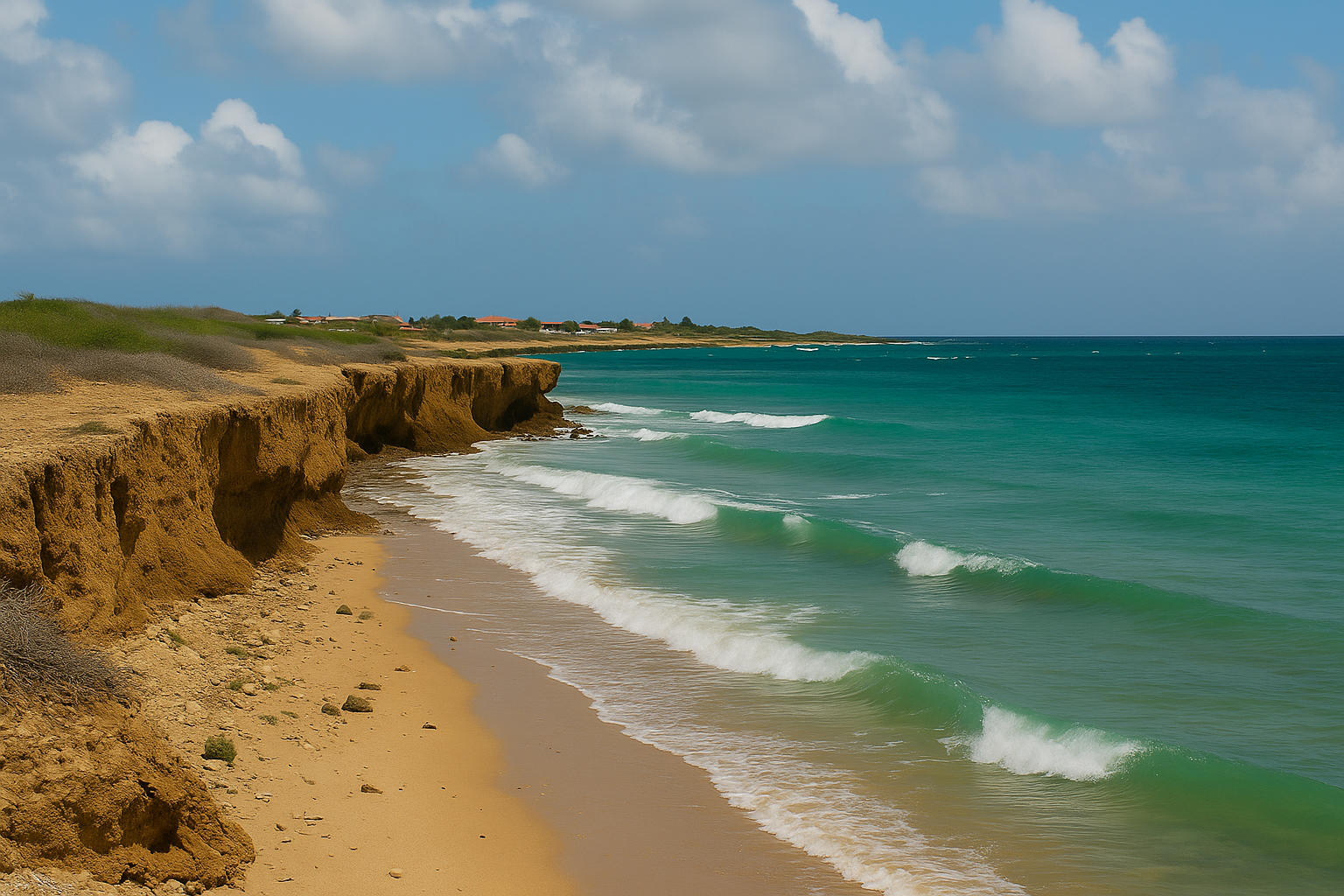
However, these ecosystems are under growing strain. Coral reefs, once vibrant and teeming with marine life, are showing signs of bleaching and disease. Coastal erosion is steadily altering shorelines and threatening both natural habitats and developed areas. Rising temperatures and prolonged droughts intensify pressure on freshwater supplies, plants, and wildlife.
What’s at Stake
- Ecosystem stability that protects communities and coastlines from storms and flooding.
- Tourism revenue that relies on clean beaches, healthy reefs, and thriving coastal environments.
- Community well-being, especially for those most vulnerable to climate-related stress.
The Foreword makes clear that Aruba’s economic prosperity cannot be separated from the health of its environment. When nature suffers, the economy suffers. When ecosystems decline, the way of life declines.
Climate Change as a Social and Economic Challenge
Climate change does not impact all communities equally. Some groups face greater risk due to location, occupation, age, or access to resources. The Foreword notes that the effects of climate change create “cascading impacts” where one environmental stress leads to additional challenges in health, housing, infrastructure, and social systems.
Communities Most at Risk Include:
| Vulnerable Group | Type of Climate Impact |
|---|---|
| Coastal Residents | Flooding, coastal erosion, property loss |
| Outdoor and tourism workers | High exposure to extreme heat and sun |
| Elderly and chronically ill | Increased health risks from heat-related illness |
| Low-income households | Limited access to adaptive resources or resilient housing |
Heatwaves have become longer and more intense. Droughts are reducing freshwater availability. Changes in weather patterns are disrupting food imports, tourism flow, and public services. The climate challenge is not isolated it affects every sector of life in Aruba.
The Call for a “Whole-of-Society” Response
A central message of the Foreword is that climate resilience cannot be the responsibility of one institution or one sector alone. It requires participation from every level of society. To successfully build resilience, Aruba must foster collaboration, alignment of goals, and shared responsibility.


Key Actors Identified in the Foreword
| Sector | Responsibility |
|---|---|
| Government | Create forward-thinking legislation and climate policies. |
| Private Sector | Adopt sustainable business and investment strategies. |
| Academic & Research Institutions | Generate data, innovation, and climate education. |
| Civil Society and NGOs | Mobilize communities and promote environmental stewardship. |
| Citizens | Protect nature, conserve resources, and advocate for responsible development. |
The Foreword stresses that climate resilience must be a national effort one that reaches across ministries, organizations, industries, and neighborhoods.
Collective Action Means:
- Government agencies integrating climate risk considerations into every level of planning.
- Businesses investing in solutions that balance economic benefit with environmental protection.
- Universities and schools promoting climate literacy to empower current and future generations.
- Every resident practicing care and responsibility toward Aruba’s natural landscapes and cultural heritage.
This shared undertaking is essential because climate change affects everyone and everyone has a role in shaping the response.
From Awareness to Action: Turning Vulnerability into Opportunity
The Foreword makes clear that this climate report is not an endpoint, but rather a beginning. It does not merely describe risk it provides a foundation for solution-driven action.
The report encourages Aruba to shift from being reactive to being proactive, from focusing on vulnerability to embracing leadership in climate resilience. By acting now, Aruba can protect its economy, sustain its environment, and strengthen its social systems.
Three Major Themes in the Foreword
Innovation Over Traditional Approaches
Aruba cannot rely solely on outdated or conventional solutions.
It must:
- Embrace nature-based restoration, such as coral rehabilitation and mangrove protection.
- Encourage renewable energy expansion and energy efficiency.
- Support new technologies and green industries that diversify the economy.
Equity and Inclusion in Climate Planning
A climate-resilient Aruba must be a fair and inclusive Aruba.
Resilience planning must:
- Ensure resources are accessible to all communities.
- Support vulnerable groups with targeted adaptation strategies.
- Prioritize transparency and community engagement.
Stewardship for Future Generations
Climate action today is about legacy.
Protecting Aruba’s environment is an act of care for children, grandchildren, and the generations that follow.
A Legacy of Resilience
The Foreword reminds us that Aruba has always been resilient.
Its history tells a story of:


- Adaptation to challenging landscapes.
- Creativity in the face of limited natural resources.
- Cultural strength rooted in connection to land and community.
This spirit of resilience provides confidence that Aruba can rise to meet the climate challenge but only if the response is unified and sustained.
Conclusion: A Collective Future Worth Protecting
Aruba now stands in a defining moment.
The threats of climate change are profound, but so is the opportunity to reimagine and rebuild a stronger, more sustainable island.
The Foreword closes with a message of hope and determination:
Aruba can transform vulnerability into resilience through collaboration, innovation, and shared purpose.
The island’s future depends on choices made today.
For more local news, visit us and follow our social media pages. Share your news with us by sending it to info@arubaonline.news.