

Aruba Air Traffic Growth 2025 | Passenger Increase and Airline Performance Report
Aruba’s aviation industry continues to reach new heights in 2025. The Aruba Airport Authority (AAA) has released its latest air traffic performance report, revealing a steady increase in passengers, improved load factors, and strong airline performance across major regions. Air Traffic growth highlights Aruba’s role as a key aviation hub in the Caribbean and its resilience in maintaining stable air connectivity despite global capacity shifts.
Key Highlights of Aruba Air Traffic 2025
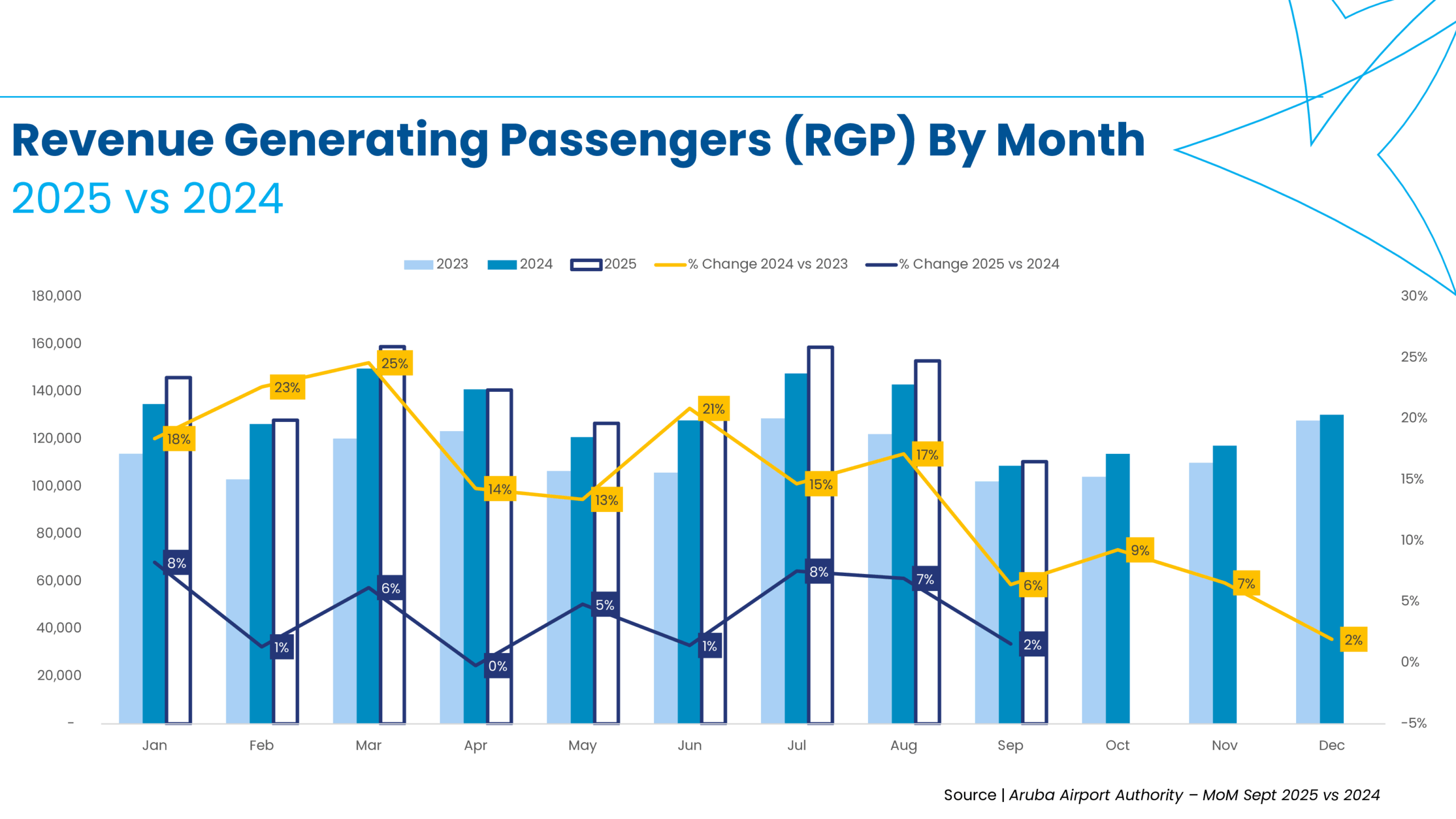
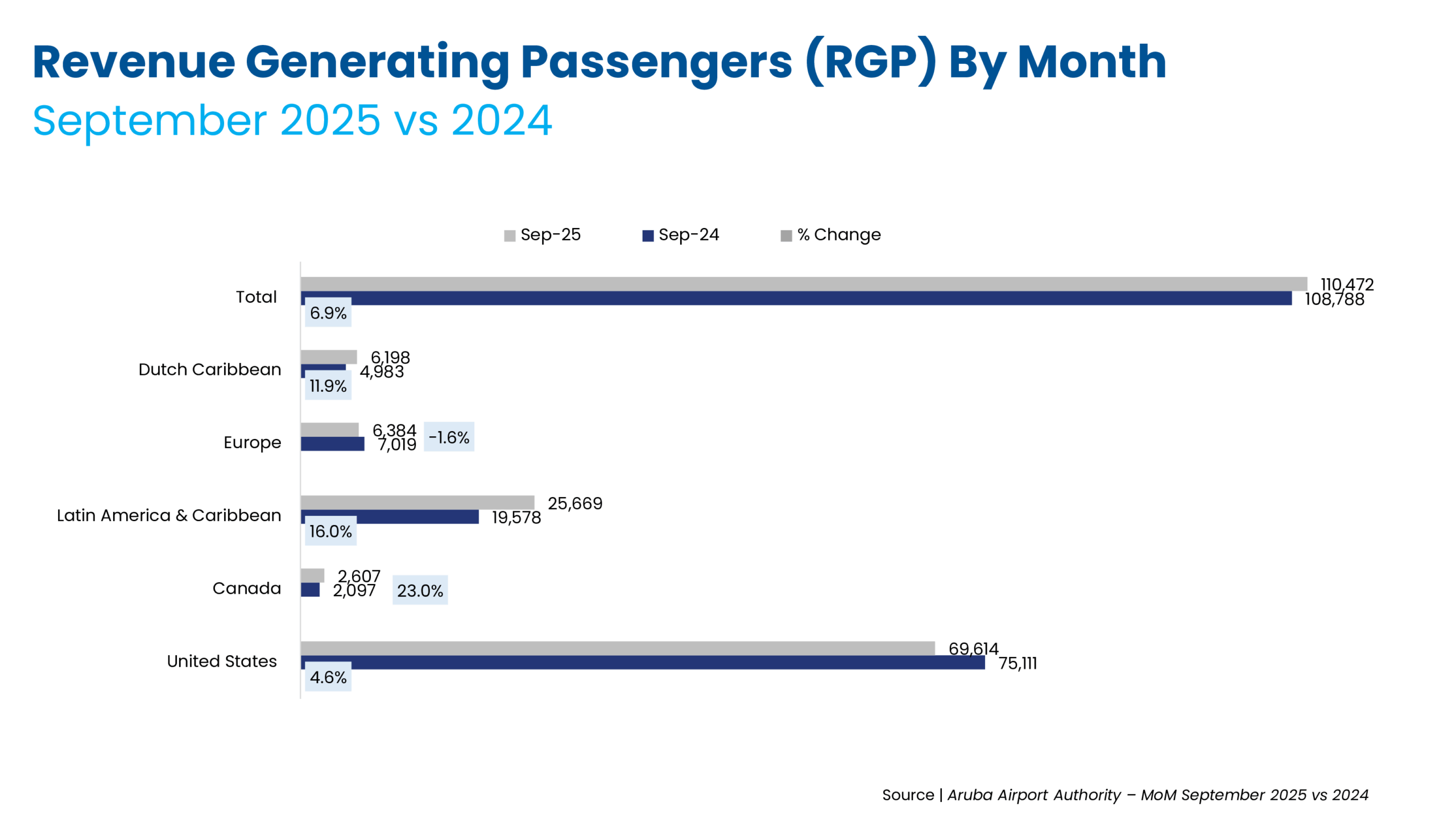
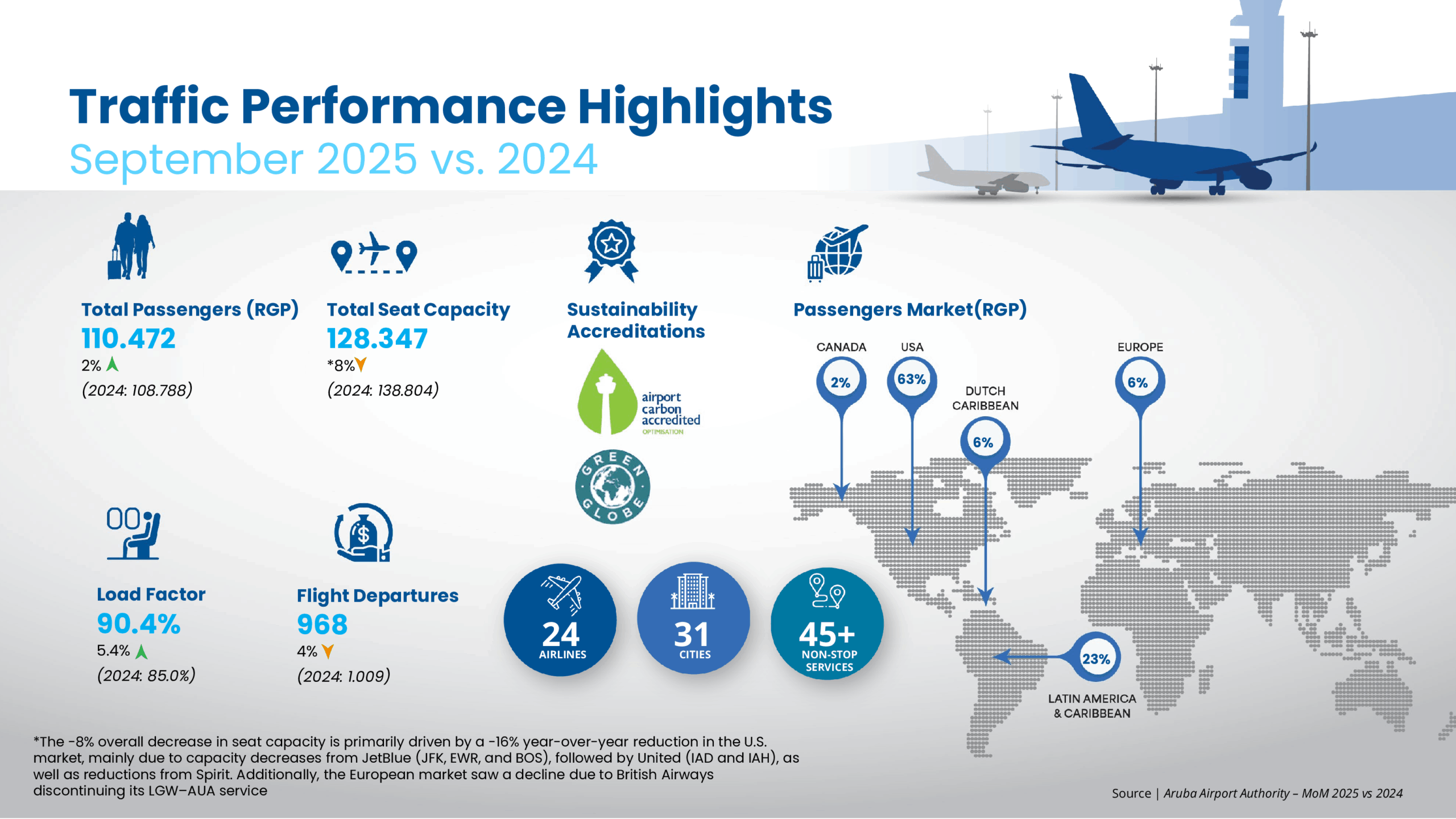
The Aruba Air Traffic 2025 report confirms a 2% rise in total passengers compared to 2024, signaling consistent recovery in air travel demand.
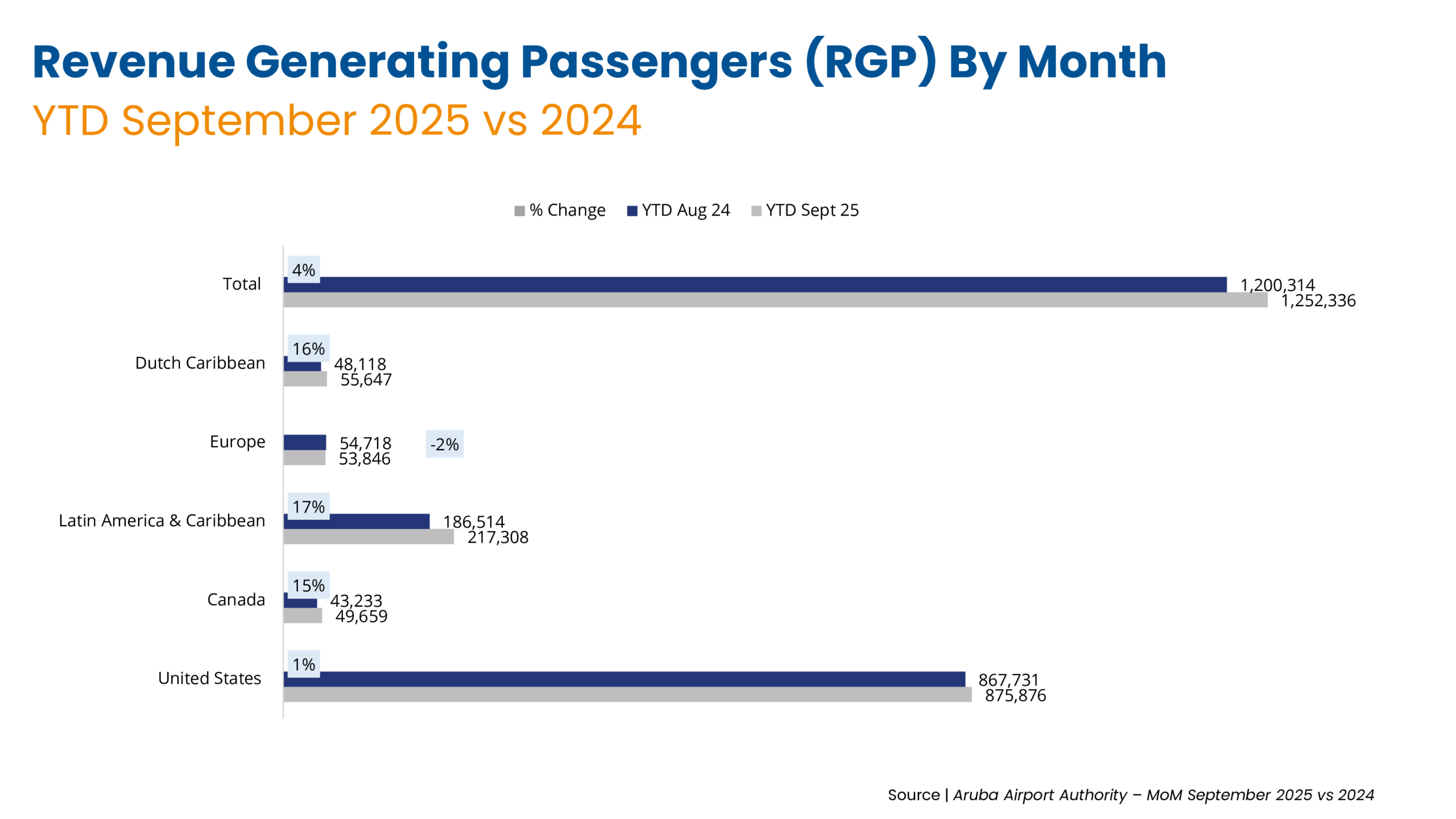
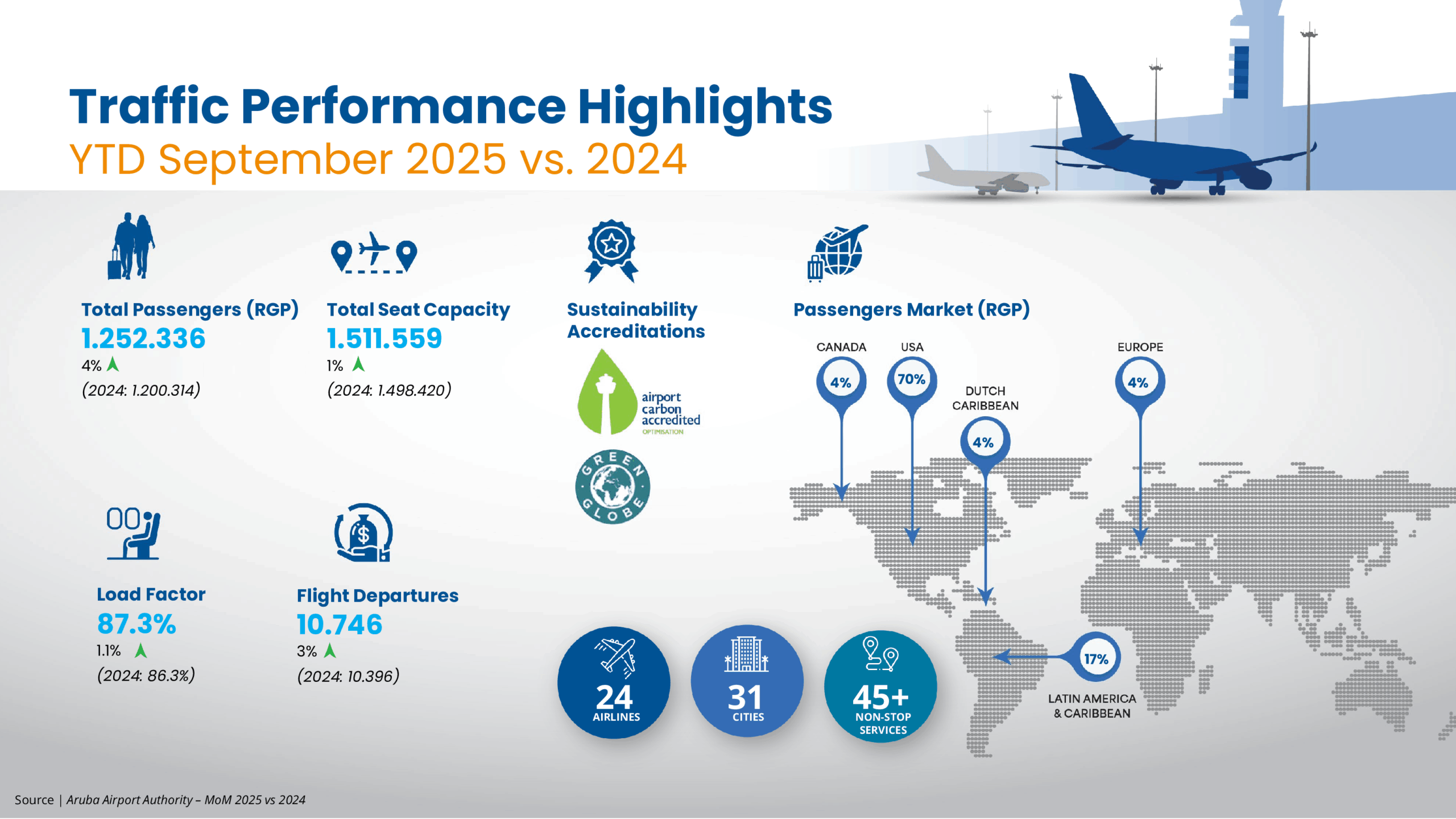
In September 2025, Aruba recorded 110,472 revenue-generating passengers (RGP) versus 108,788 in the same period of 2024. The year-to-date total reached 1.25 million passengers, up from 1.20 million last year.
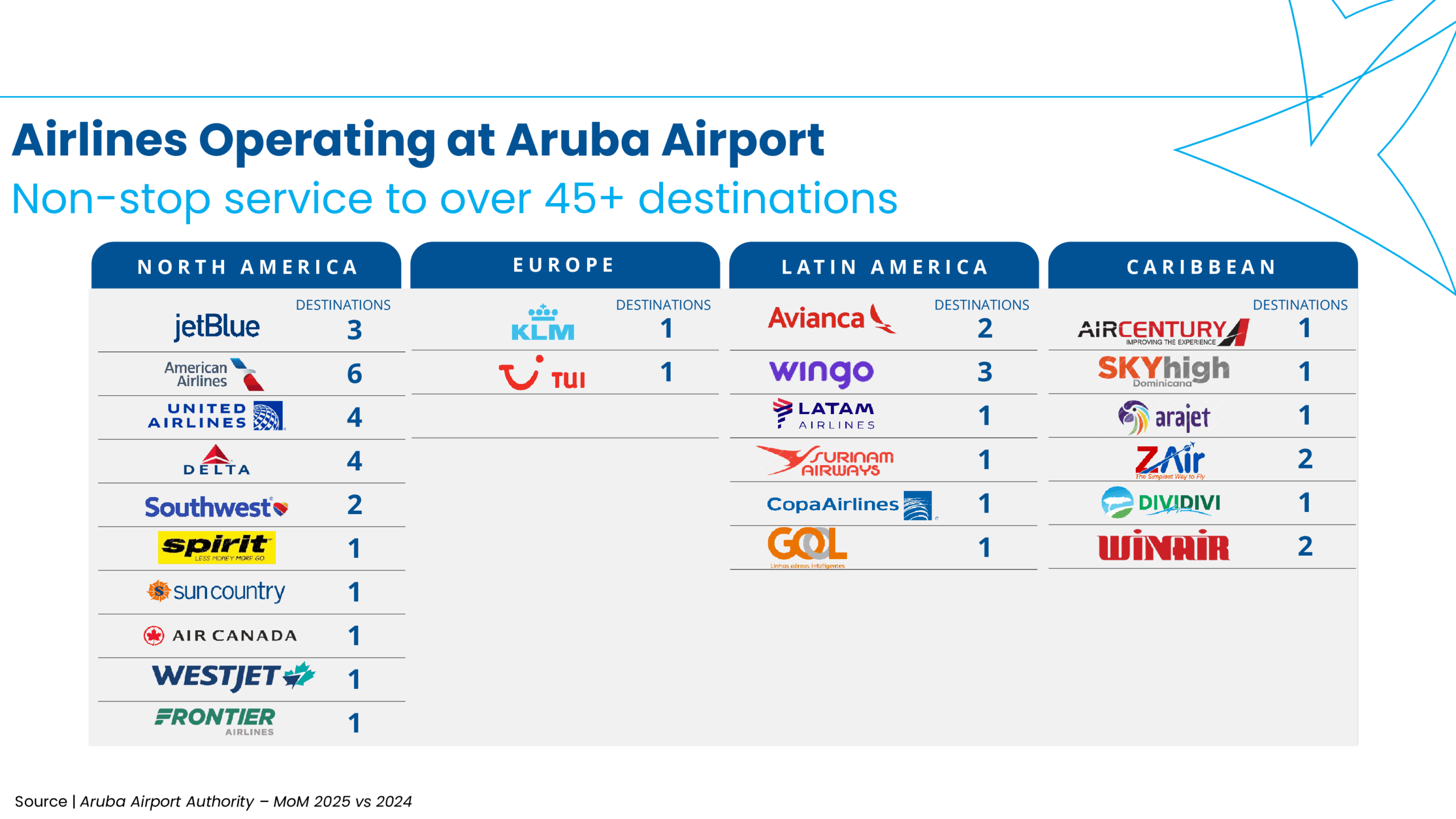
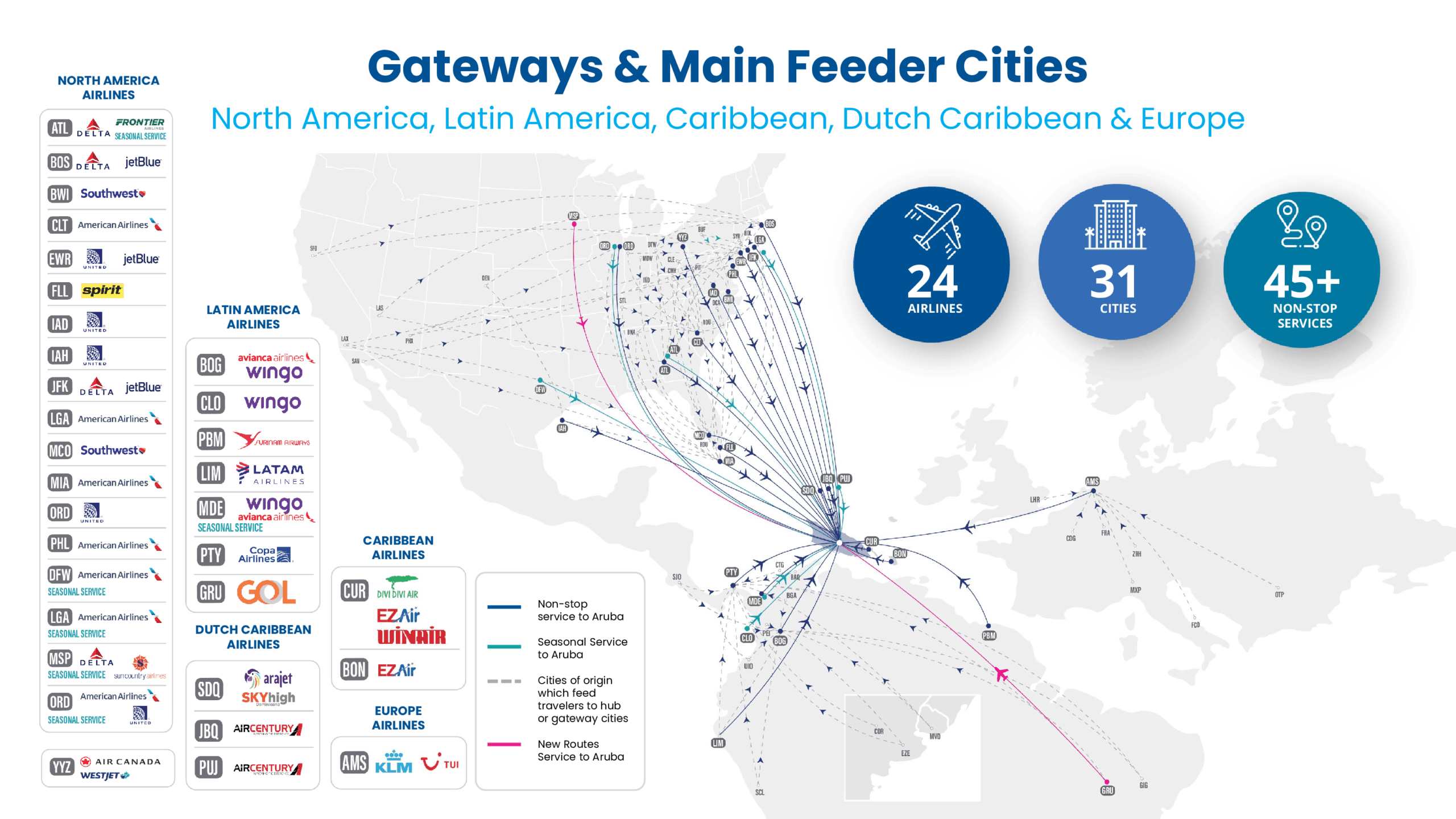
24 Airlines, 31 Cities, 45+ Nonstop Routes
Aruba’s airport continues to expand its international network, hosting 24 airlines that serve 31 cities with over 45 nonstop routes. Connections span North America, Latin America, Europe, and the Caribbean, demonstrating the island’s strategic role in regional and transatlantic travel.


Passenger Growth and Market Share Trends
North America Dominates Aruba’s Air Traffic
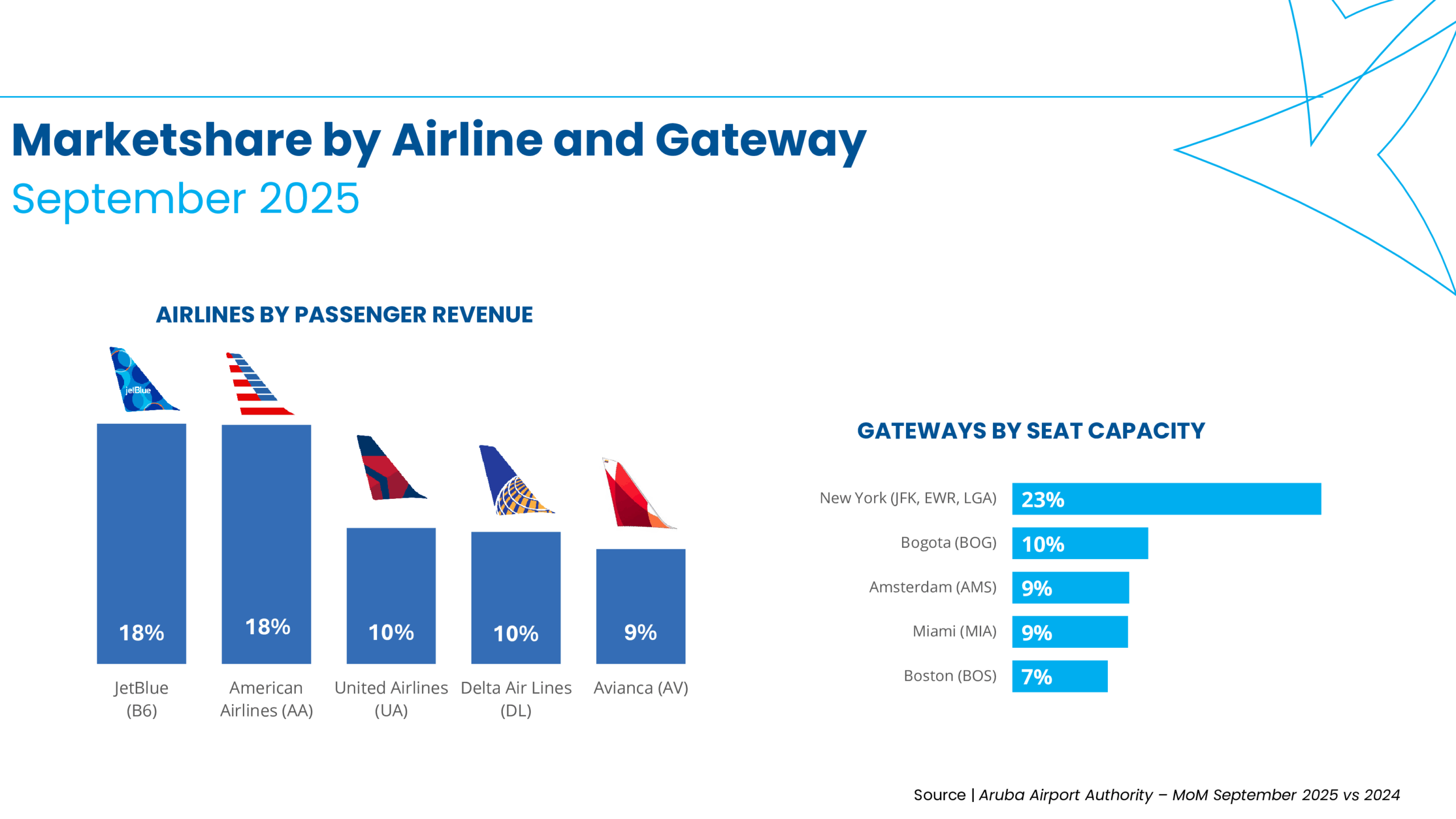
North America remains Aruba’s strongest air travel market, representing 63% of all passengers. Major carriers like JetBlue, American Airlines, Delta, and United Airlines continue to drive high traffic volumes, supported by frequent service from New York, Boston, and Miami.
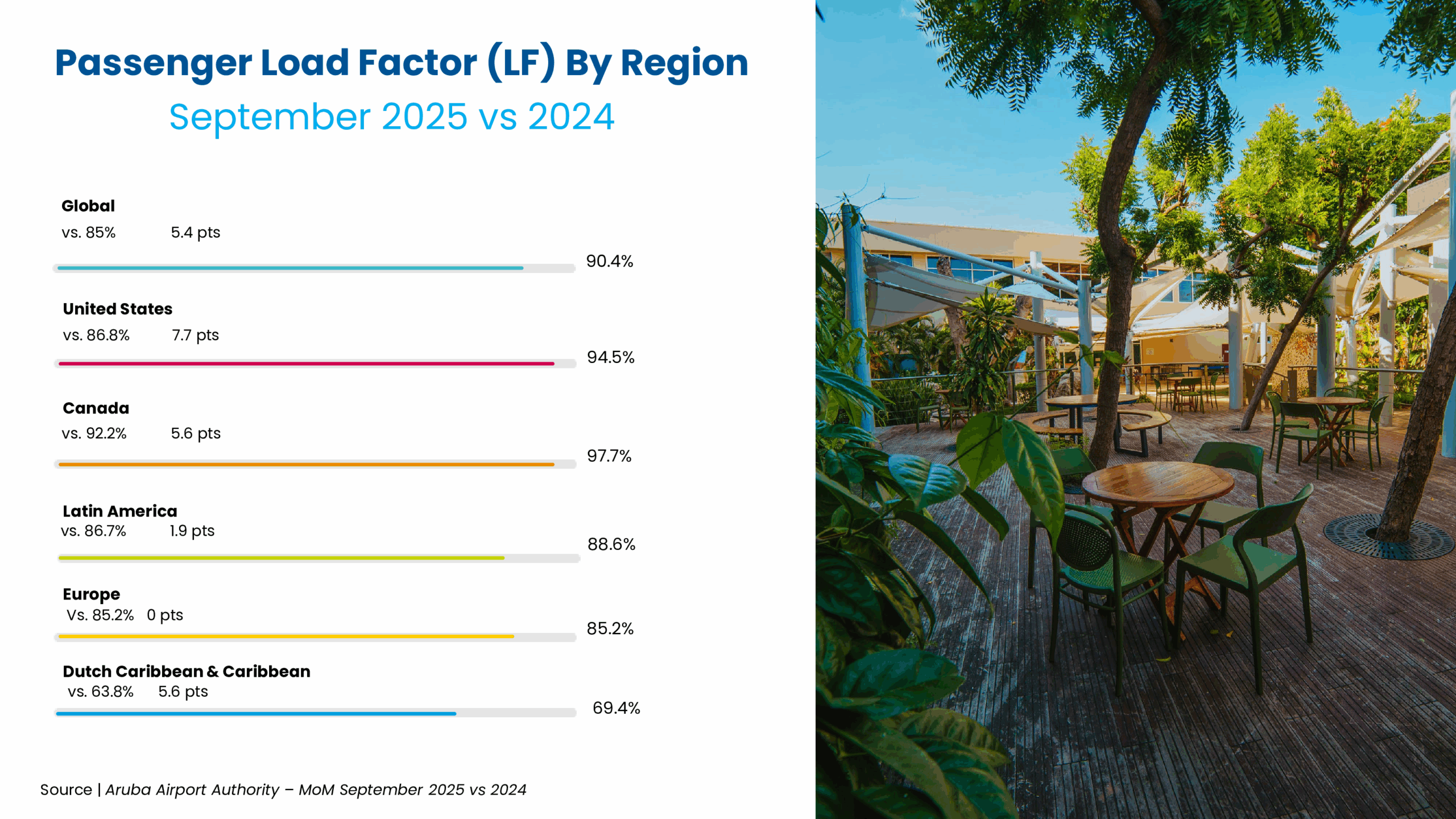
Even with an 8% reduction in seat capacity, the load factor rose to 90.4%, proving that demand remains high and flights are operating efficiently.
Latin American and Caribbean Markets on the Rise
The Latin America and Caribbean segment captured 23% of total passengers, with robust growth in routes from Bogotá, Panama City, and Curaçao. Airlines such as Avianca and Copa Airlines continue to expand their reach, enhancing connectivity across the region.
European and Canadian Performance
Despite British Airways discontinuing its London–Aruba (LGW–AUA) route, Europe maintained stable traffic via KLM’s Amsterdam service. Meanwhile, Canada achieved a record 97.7% load factor, showing exceptional demand and consistent seasonal performance.
Airline and Route Performance Highlights
Top-Performing Airlines
Based on Aruba Airport Authority data:
- JetBlue and American Airlines each hold 18% market share.
- United Airlines and Delta Air Lines follow with 10% each.
- Avianca leads Latin American travel with 9%.
These carriers collectively contribute to Aruba’s expanding reach, connecting the island to key business and leisure destinations.


Popular Gateways and Hubs
The leading gateways by seat capacity include:
- New York (JFK, EWR, LGA)
- Bogotá (BOG)
- Amsterdam (AMS)
- Miami (MIA)
- Boston (BOS)
These cities serve as major feeder hubs for both North American and European travelers visiting Aruba.
Passenger Load Factor and Efficiency
A load factor measures how efficiently airlines fill available seats. In September 2025, Aruba’s global load factor reached 90.4%, a strong indicator of post-pandemic recovery and optimized airline operations.
Regional Load Factor Breakdown
- United States: 94.5%
- Canada: 97.7%
- Europe: 85.2%
- Latin America: 88.6%
- Dutch Caribbean: 69.4%
These figures demonstrate that Aruba Air Traffic 2025 is thriving, especially in long-haul and regional markets.
Seat Capacity and Flight Movements
While total seat capacity dropped by 8% (from 138,804 in 2024 to 128,347 in 2025), the increase in load factors proves higher efficiency and sustained demand.
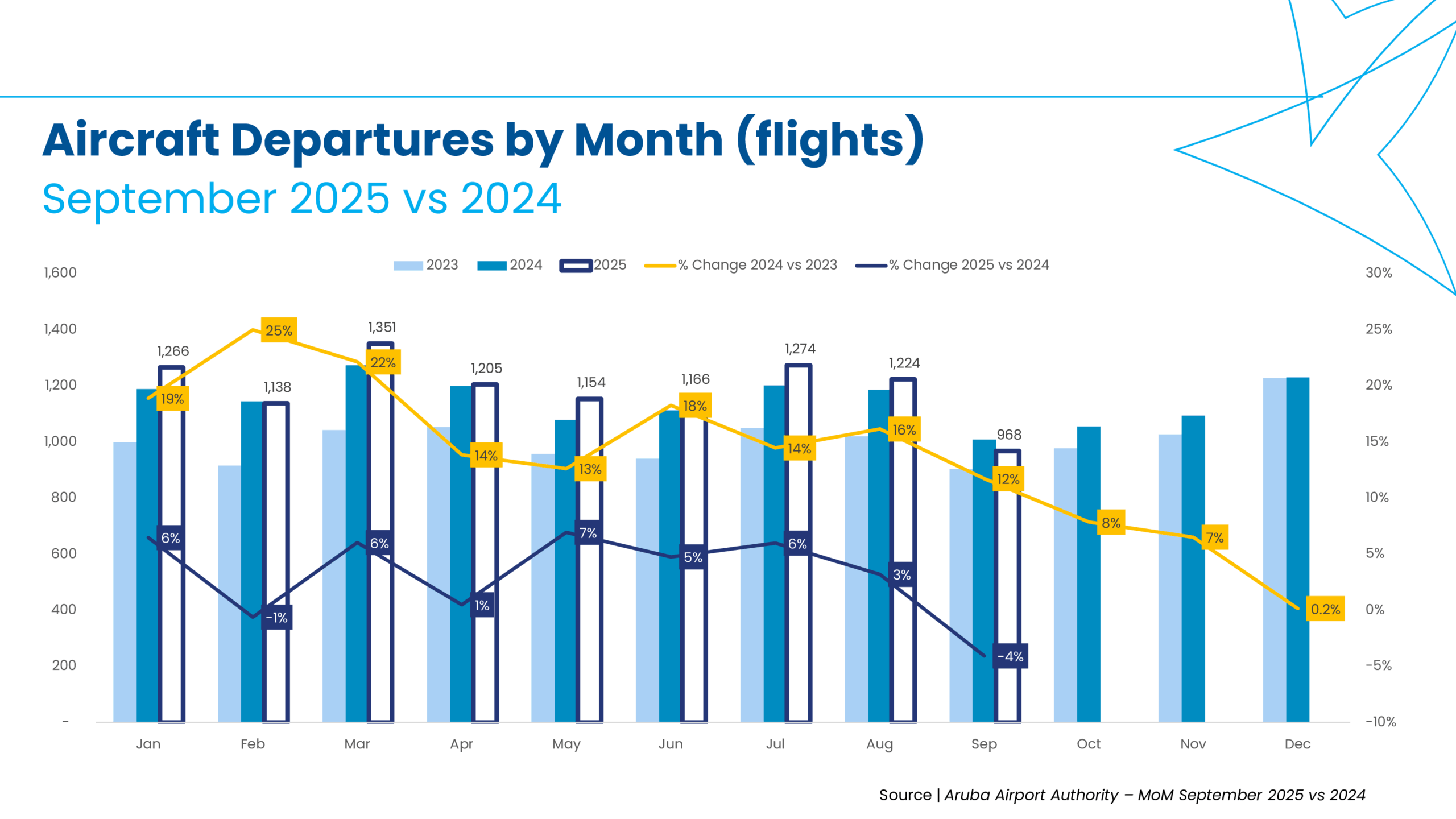
Flight departures decreased slightly to 968, reflecting temporary adjustments in airline schedules from JetBlue, United, and British Airways.
However, YTD 2025 seat capacity reached 1.51 million, demonstrating stable long-term growth across the aviation sector.
Winter 2025–2026 Flight Schedule Expansion

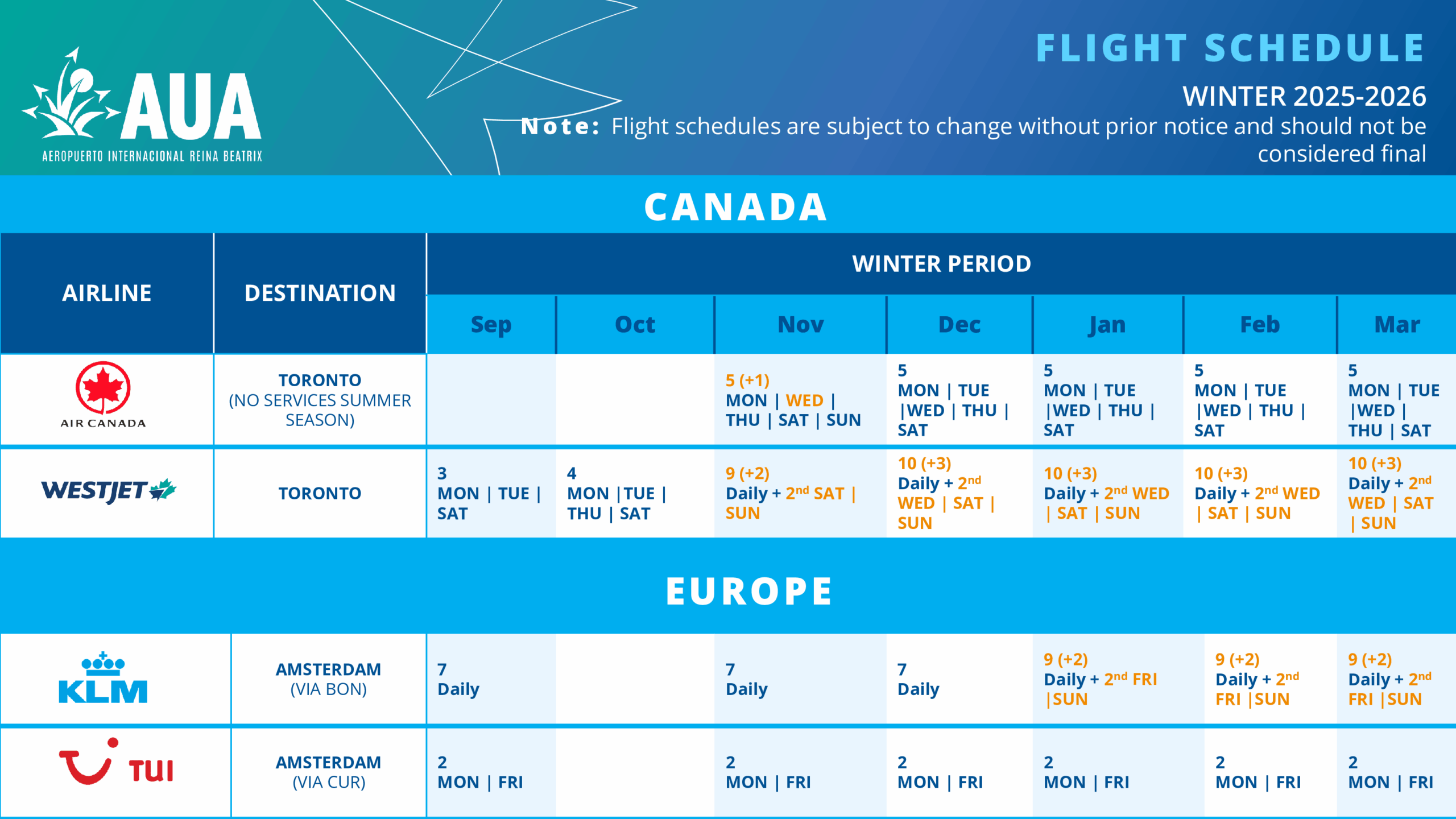
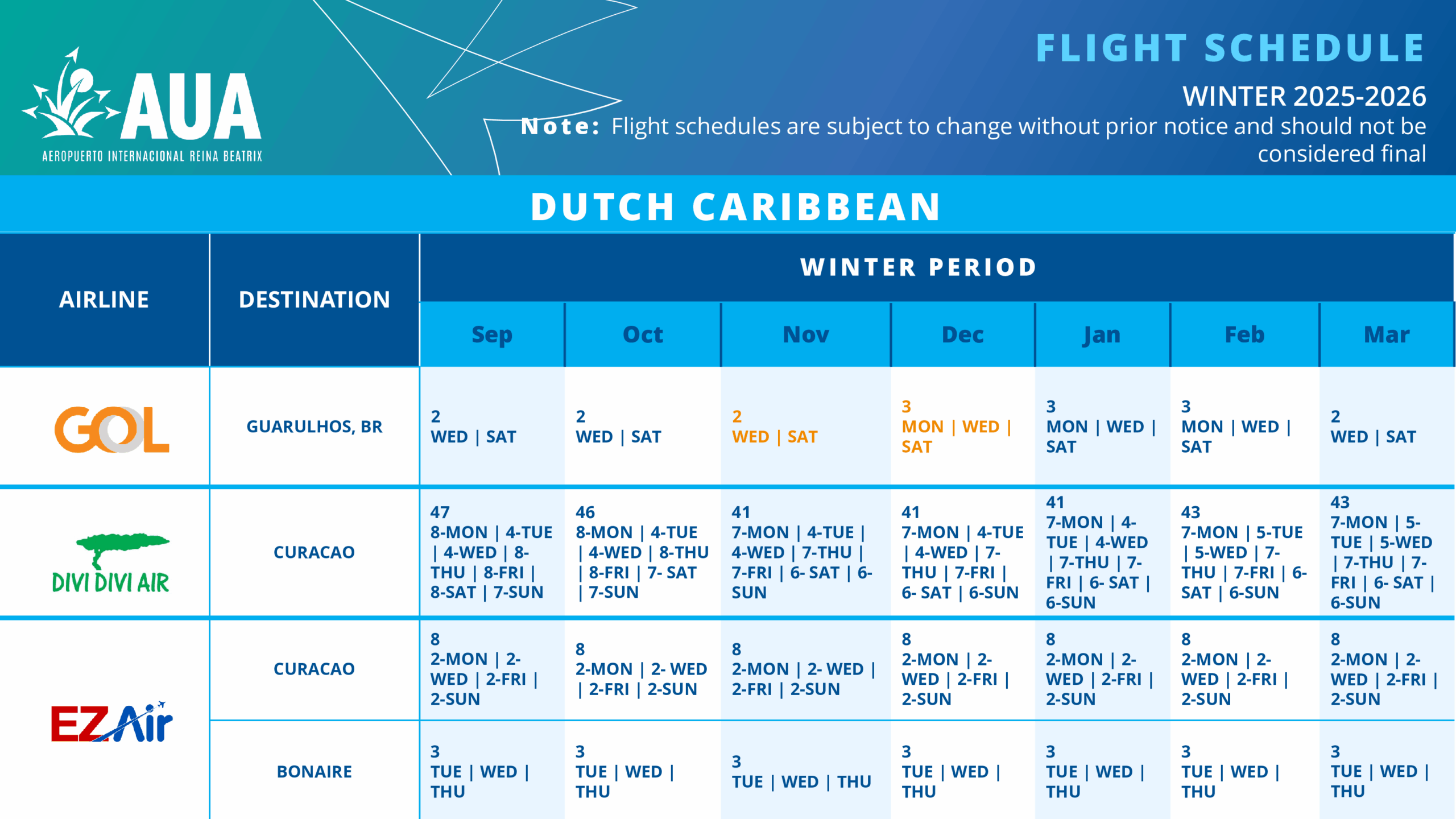
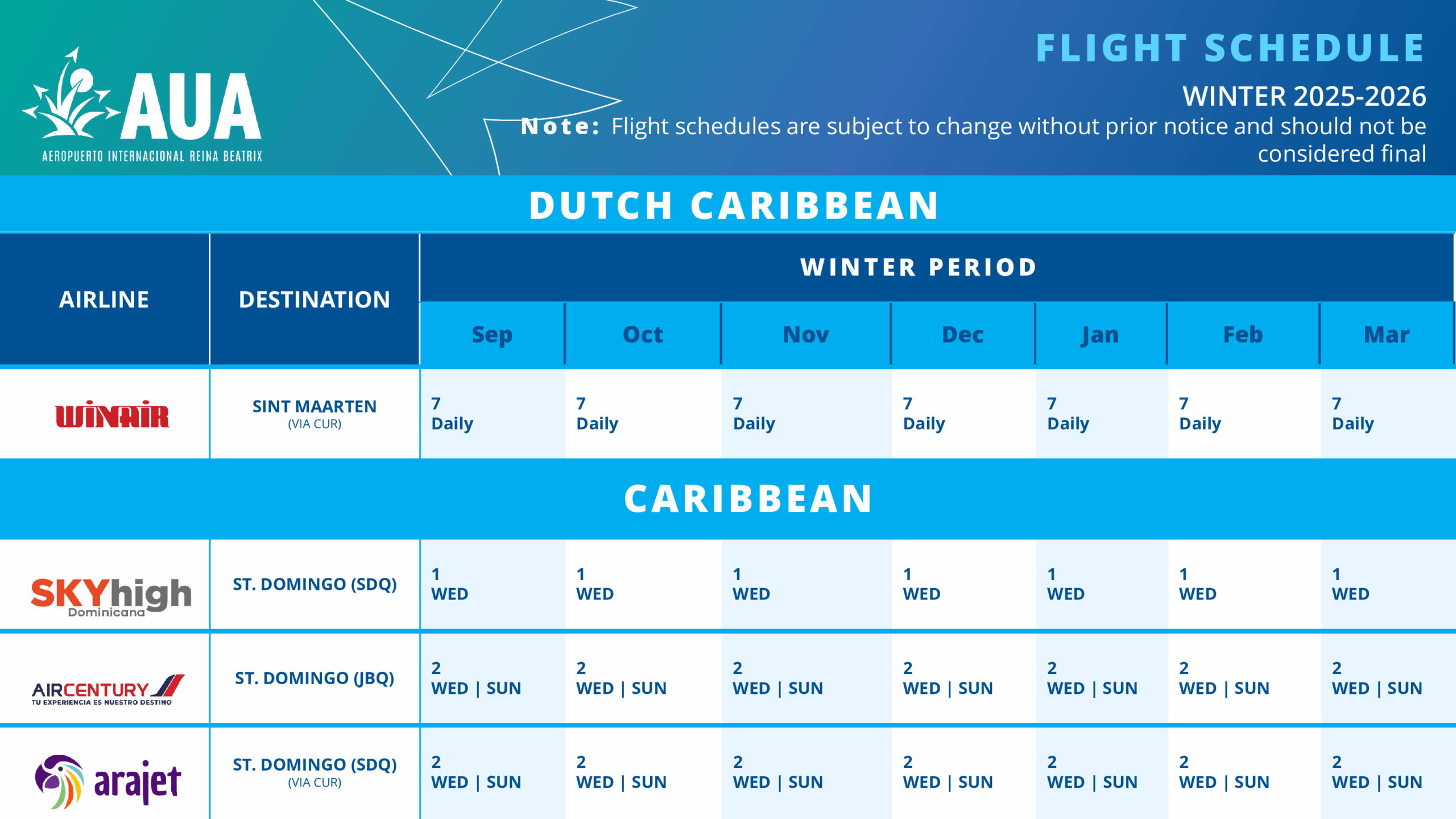
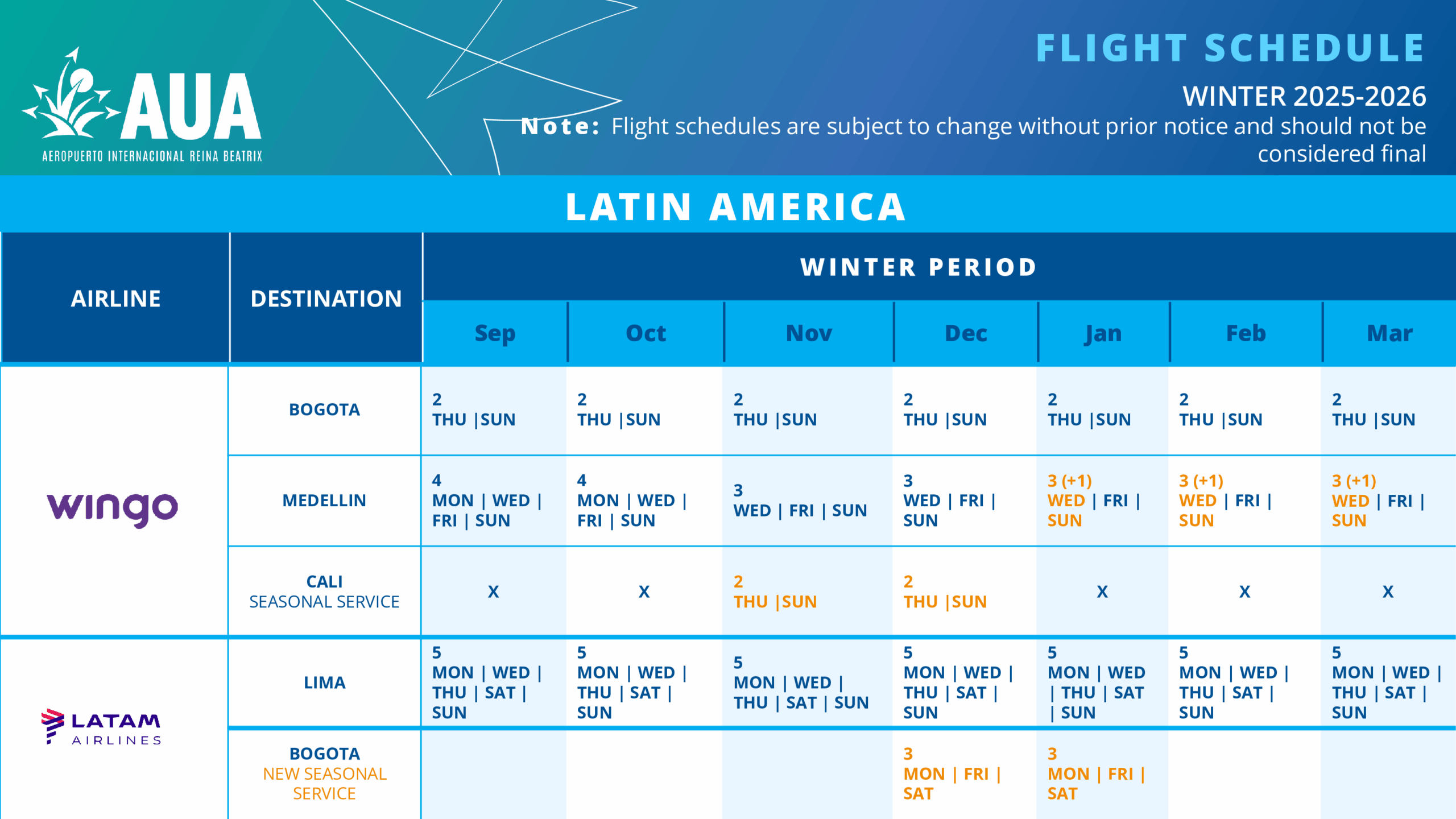
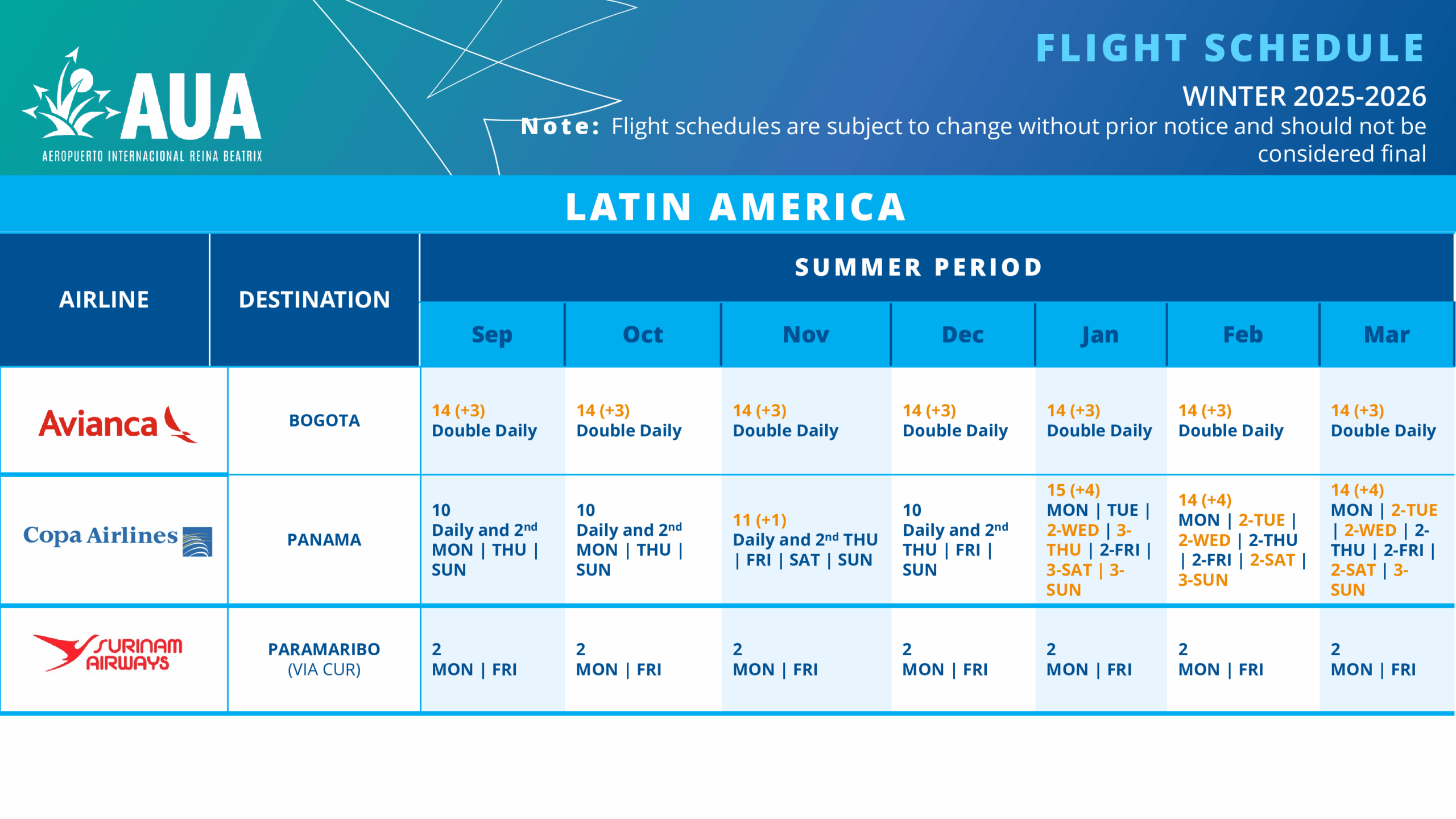
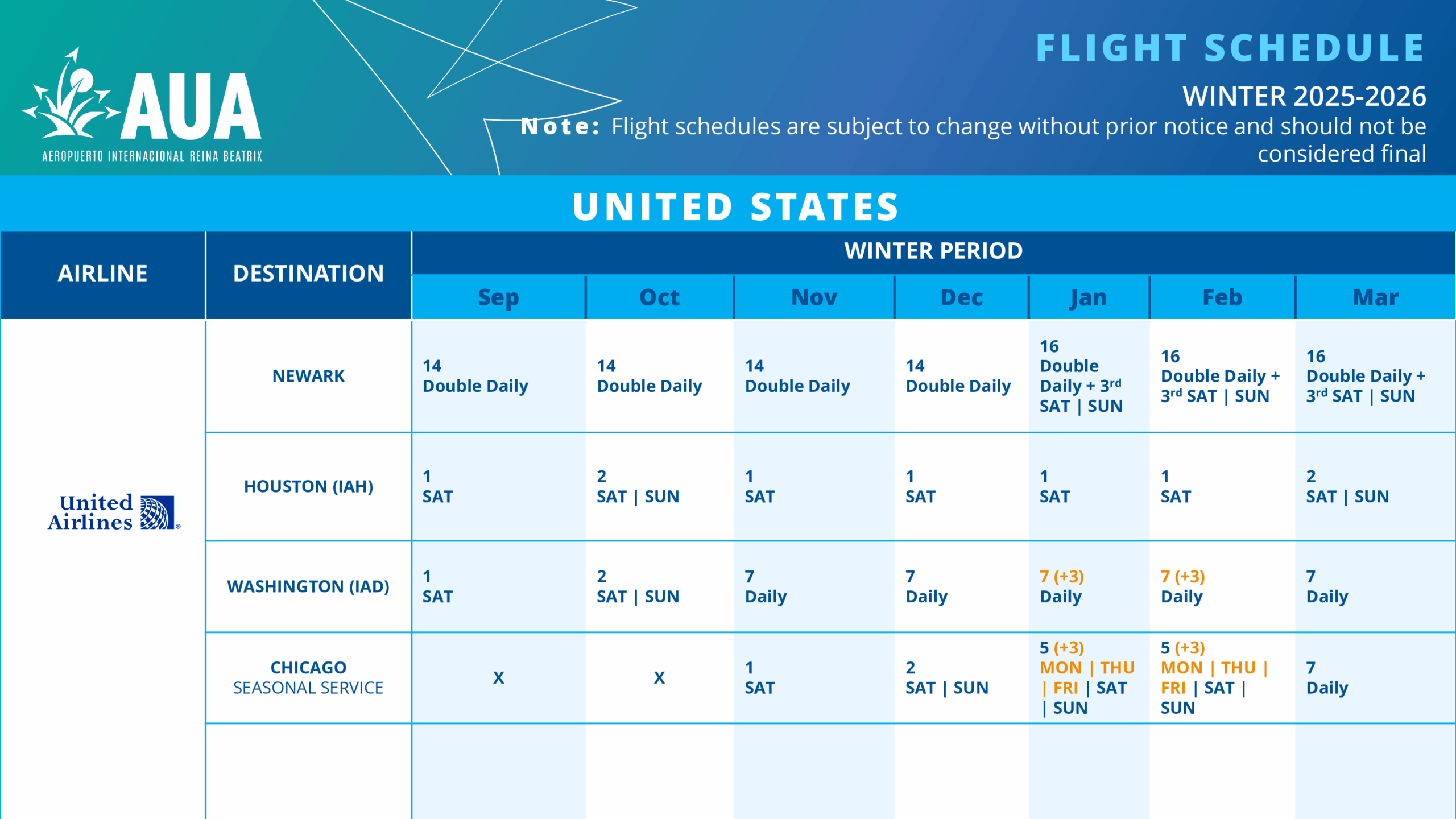
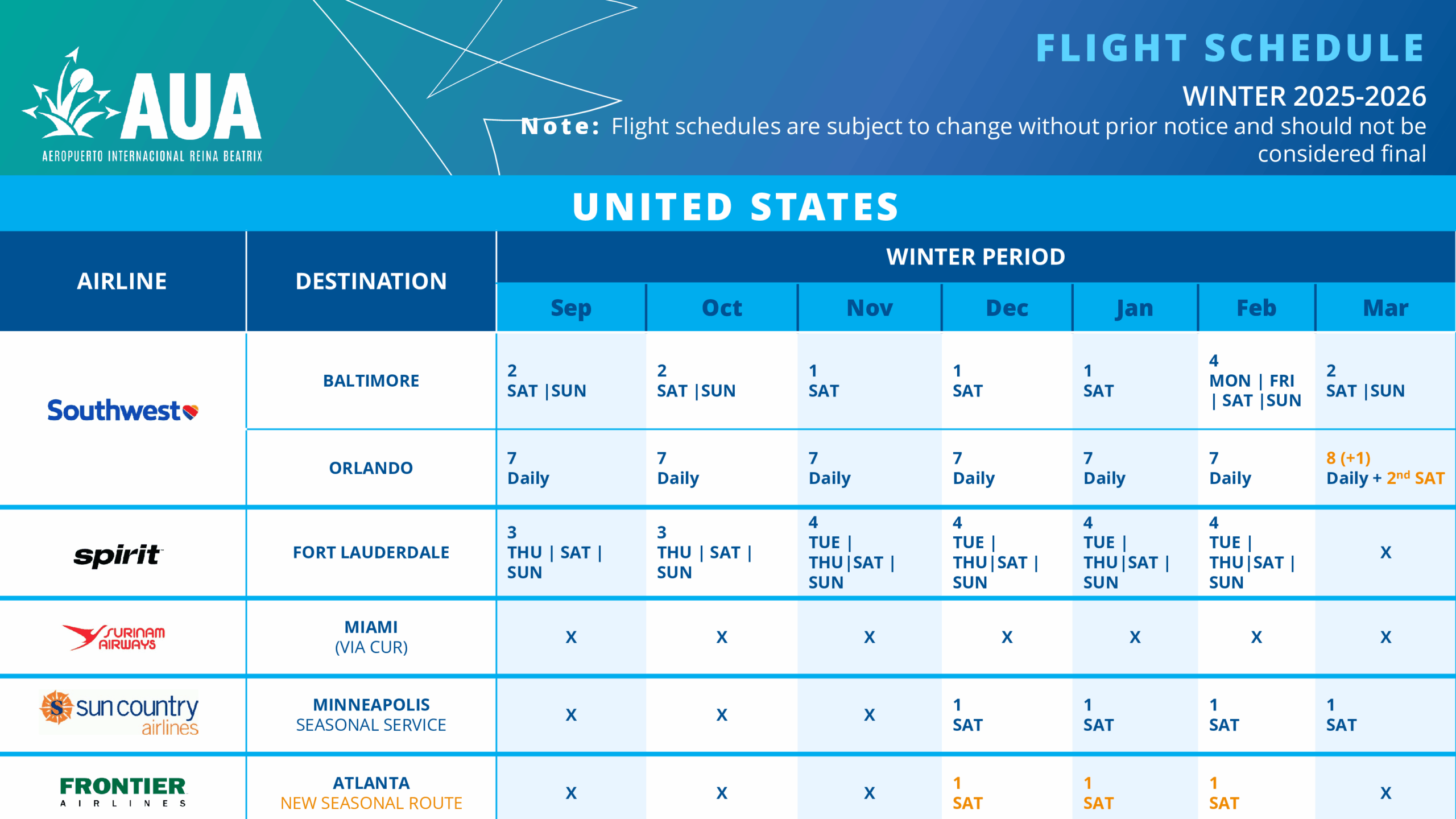
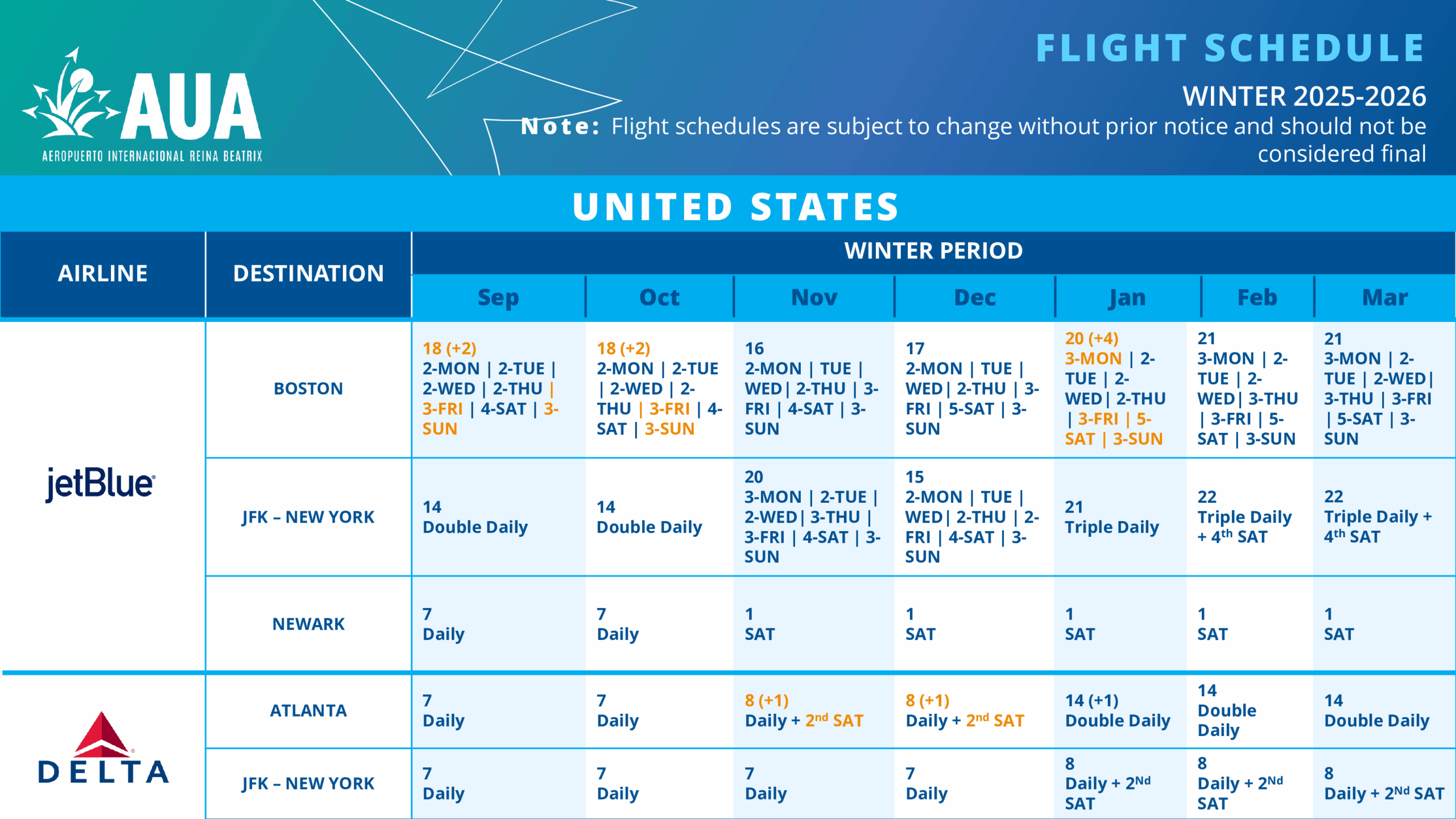
The Winter 2025–2026 schedule brings more frequency and seasonal routes from major cities, including:
- Chicago, Dallas, and Minneapolis (seasonal U.S. routes)
- Toronto and Montreal (enhanced Canadian service)
- Bogotá and Panama City (Latin America expansion)
These updates show Aruba’s commitment to maintaining year-round connectivity while catering to both leisure and business travelers.


Sustainable Growth and Aviation Strategy
The Aruba Airport Authority continues to align its operations with international sustainability standards. Through eco-certification programs and partnerships with global organizations like the Airports Council International (ACI), Aruba ensures greener, more efficient air travel.
This approach not only boosts environmental responsibility but also enhances Aruba’s reputation as a leading sustainable aviation hub in the Caribbean.
Year-to-Date Overview and Future Outlook
Year-to-Date Passenger Growth
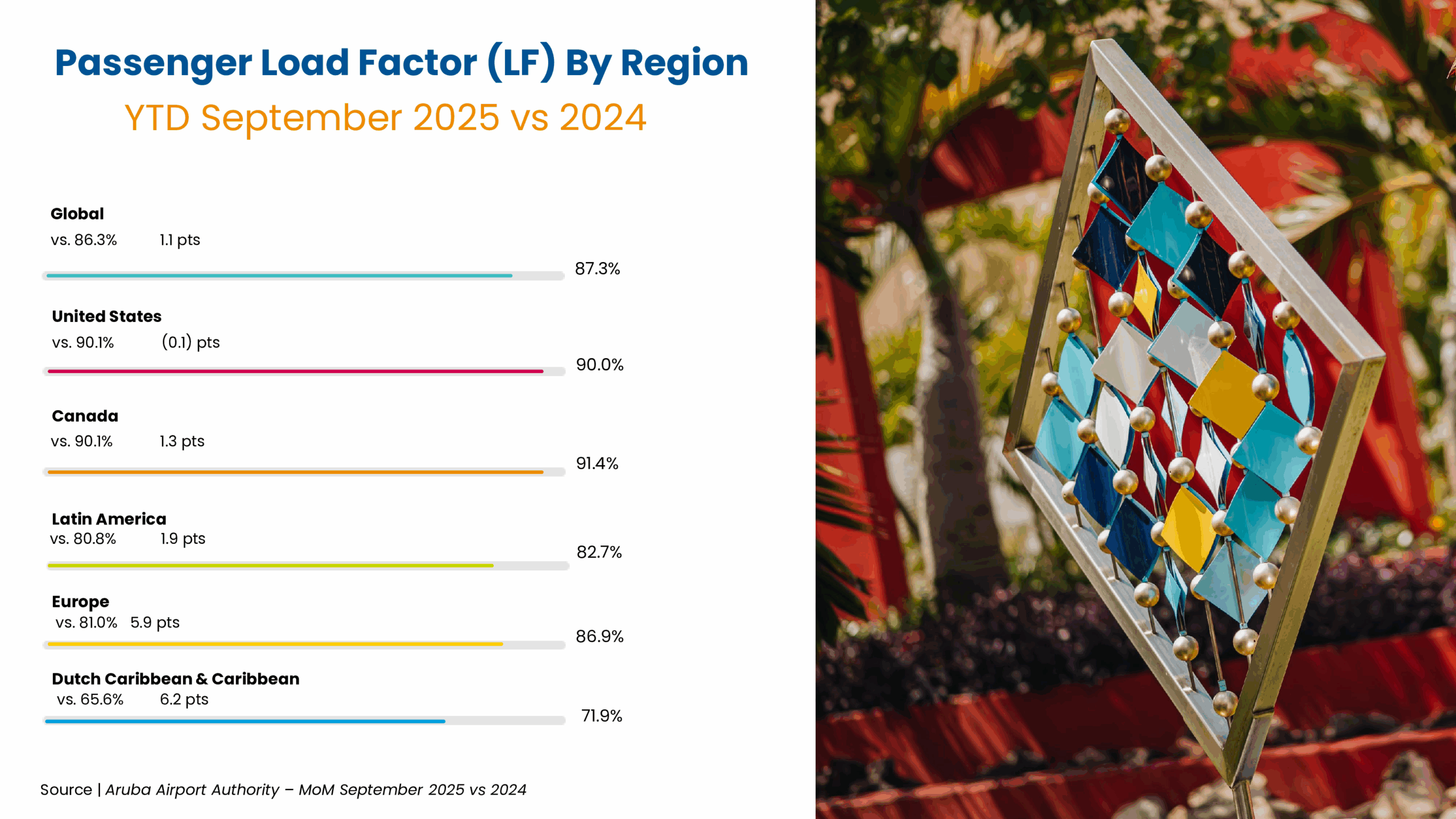
From January to September 2025, passenger numbers grew by 4%, reaching 1.25 million compared to 1.20 million in 2024.
The United States and Canada lead this growth, accounting for 74% of total arrivals, while Latin America and the Caribbean jointly contributed 23%.
2026 Outlook – More Growth Ahead
The Aruba Airport Authority projects continued growth in 2026 with the introduction of new international partnerships and modern airport facilities. These advancements will strengthen Aruba’s position as a Caribbean air travel leader, balancing expansion with sustainability.
Conclusion – Aruba’s Aviation on the Rise
The Aruba Air Traffic 2025 report clearly showcases progress in passenger numbers, airline efficiency, and market resilience. Despite reduced seat capacity, the island achieved record-high load factors and consistent growth.
Aruba’s aviation sector remains well-positioned to embrace the next phase of travel demand, blending innovation, sustainability, and world-class service.
For more local news, visit us and follow our social media pages. Share your news with us by sending it to info@arubaonline.news.