

Climate Change in Aruba: A Growing Challenge for Nature, Communities & the Economy
Aruba stands as one of the Caribbean’s most beloved destinations, drawing millions of visitors annually with its pristine beaches, crystal-clear waters, and year-round sunshine. Yet beneath this idyllic surface, the island confronts an escalating environmental crisis that threatens its natural ecosystems, economic prosperity, and community well-being. Climate change impacts on Aruba island is no longer a distant concern for Aruba it is reshaping the island’s present and future in profound ways.
The urgency of this challenge stems from the island’s unique vulnerability. As a small island developing state with limited land area, restricted freshwater resources, and an economy heavily dependent on natural beauty, Aruba faces disproportionate climate risks despite contributing minimally to global carbon emissions. The interconnected nature of the island’s environment, society, and economy means that environmental stress rapidly cascades into social and economic disruption.
Understanding Aruba’s Climate Vulnerability
The Small Island Disadvantage
Small island developing states (SIDS) are among the world’s most climate-vulnerable nations, according to the Intergovernmental Panel on Climate Change (IPCC). These nations share common challenges: limited physical space for adaptation, high population density in coastal zones, economic dependence on climate-sensitive sectors, and constrained financial resources for resilience building.


Aruba exemplifies these vulnerabilities. With most of its population, infrastructure, and economic activity concentrated along the coast, the island has minimal capacity to relocate communities or assets inland when threats emerge. A small temperature increase or modest sea-level rise can trigger disproportionately large consequences across multiple sectors simultaneously.
Observed Climate Changes
Scientific monitoring reveals clear climate stress signals across Aruba’s environment. The island is experiencing increasingly hot and dry conditions, with weather patterns becoming less predictable than in previous decades. Heat seasons extend longer, droughts intensify, and when precipitation arrives, it often comes in sudden, heavy bursts that overwhelm drainage systems and trigger flash flooding.
Sea surface temperatures around Aruba have risen measurably, contributing to multiple ecological stresses. These warming trends align with global patterns but carry localized consequences that affect everything from reef health to agricultural viability to public health safety.
The Critical Role of Natural Ecosystems
Nature-Based Infrastructure
Aruba’s natural systems coral reefs, mangrove forests, seagrass meadows, and sand dunes function as living infrastructure that protects the island from climate hazards. These ecosystems provide services worth millions of dollars annually, including wave attenuation, shoreline stabilization, fish habitat provision, and recreational opportunities that support tourism.
When these natural systems degrade, Aruba loses both environmental stability and economic resilience. The island becomes more exposed to storm surge, coastal erosion, and flooding threats that directly impact homes, hotels, roads, and utilities.


Coral Reefs Under Unprecedented Stress
The Global Bleaching Crisis
Coral reefs worldwide are experiencing the most severe bleaching event on record, according to the National Oceanic and Atmospheric Administration (NOAA). Since January 2023, bleaching-level heat stress has affected 84.4% of the world’s coral reef areas, with mass bleaching documented in at least 83 countries and territories. This fourth global bleaching event surpasses all previous episodes in both extent and severity.
How Coral Bleaching Occurs
When ocean temperatures rise above normal levels, corals expel the symbiotic algae living in their tissues, causing them to turn white a process called bleaching. While bleached corals are not immediately dead, they are severely stressed and vulnerable to disease and mortality. Prolonged heat exposure can kill entire reef sections.
Consequences for Aruba
Aruba has experienced multiple coral bleaching events in recent years, with recovery rates slowing significantly. The consequences ripple through the island’s ecology and economy:
- Biodiversity loss: Fish populations decline as reef habitat degrades, affecting marine food webs
- Tourism impact: Snorkeling and diving experiences become less attractive as reef health diminishes
- Coastal vulnerability: Without coral reefs acting as natural breakwaters, wave energy reaches shorelines unimpeded, accelerating erosion
- Economic costs: Artificial coastal protection infrastructure costs exponentially more than maintaining healthy reefs
The relationship between responsible tourism and environmental protection has never been more critical, as 96% of travelers now demand sustainable practices from destinations they visit.
Mangroves and Seagrass: Coastal Guardians in Decline
Mangrove Ecosystems Under Pressure


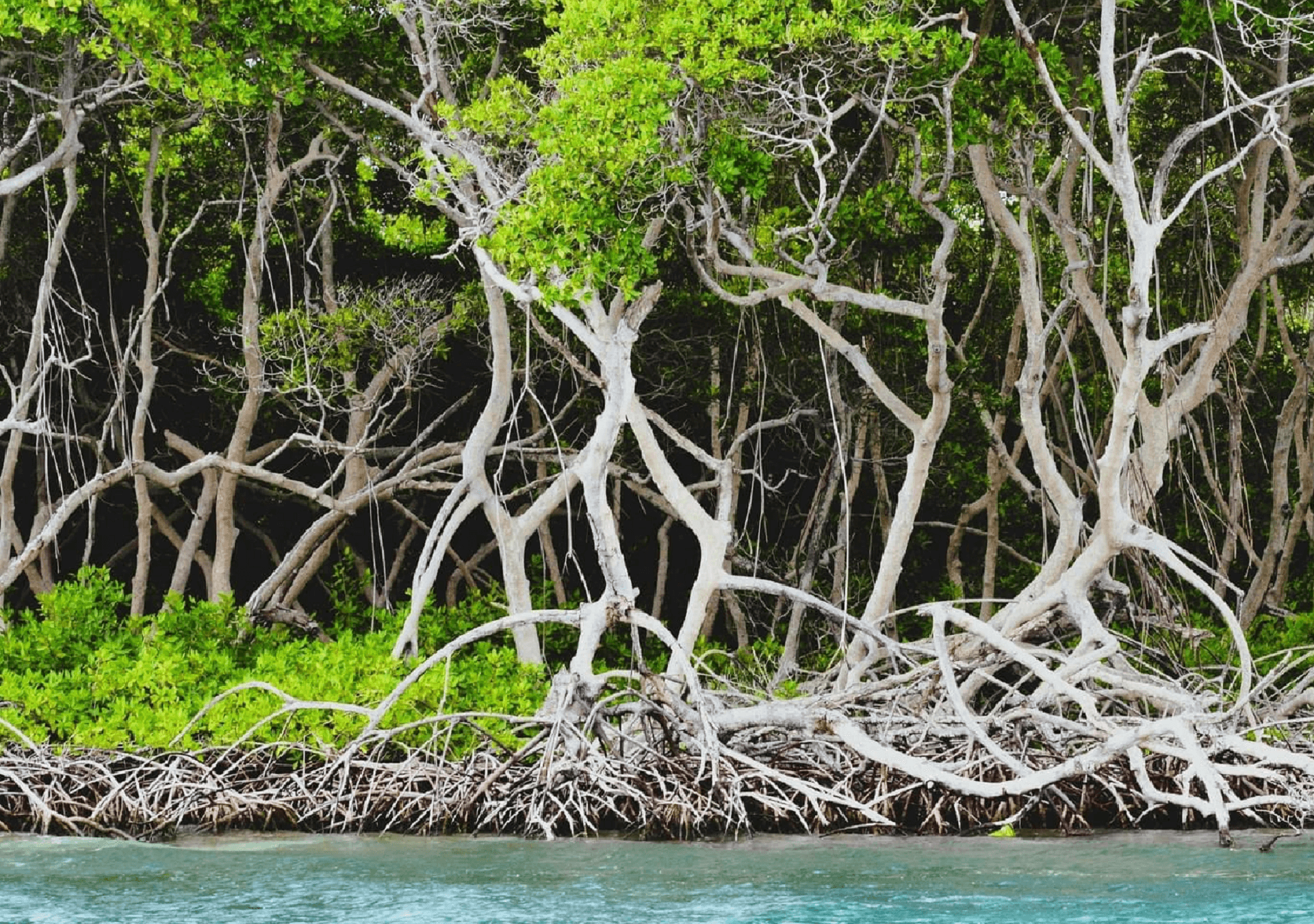
Mangrove forests create dense root networks that anchor coastlines, preventing erosion while serving as nurseries for commercially important fish species. These salt-tolerant trees also filter pollutants, store carbon, and buffer storm surge impacts.
However, coastal development has reduced mangrove coverage in several Aruba locations. When mangroves disappear, shoreline erosion accelerates, fish populations decline, water quality deteriorates, and coastal communities face increased storm vulnerability.
Seagrass Meadows Facing Multiple Threats
Seagrass beds stabilize seafloor sediments, provide food for sea turtles and fish, and support marine biodiversity. These underwater meadows face mounting pressures from sediment runoff, boat anchoring damage, pollution, and rising water temperatures.
The loss of seagrass further undermines coastal resilience and marine ecosystem health, creating cascading effects throughout Aruba’s nearshore environment.
Sand Dunes: Fragile Barriers Against the Sea
Sand dunes form natural buffers protecting inland areas from storm waves, wind, and high-tide flooding. These accumulations of wind-blown sand help preserve beaches and shield coastal neighborhoods and tourism infrastructure from storm damage.
Yet dunes are inherently fragile. Off-road vehicle traffic, construction activities, and heavy pedestrian use destabilize dune structures. Once damaged, dunes require decades to recover naturally. As sea levels rise and storms potentially intensify, maintaining intact dune systems becomes increasingly crucial for protecting coastal property and infrastructure.
Rising Temperatures and Public Health Impacts
Heat Stress on Communities
Aruba’s warming trend extends beyond ocean temperatures to atmospheric conditions. Longer and more intense heat seasons reduce outdoor comfort and create public health risks, particularly for vulnerable populations including elderly residents, outdoor workers in construction and tourism services, children, and visitors unaccustomed to tropical heat.
Heat-related illnesses such as dehydration, heat exhaustion, and heat stroke are becoming more frequent. Healthcare systems must adapt to address these emerging challenges while maintaining capacity for other health needs.
Implications for Daily Life
Extended heat periods affect daily routines, work productivity, energy consumption for cooling, and outdoor recreation opportunities. When temperatures become unbearable during midday hours, tourism experiences suffer, and economic activity shifts to cooler times of day creating operational challenges for businesses.
Economic Vulnerability in a Tourism-Dependent Economy
The Tourism Foundation
Tourism generates more than 70% of Aruba’s gross domestic product, making the industry central to the island’s economic stability. Visitor spending supports employment across hospitality, retail, food service, transportation, recreation, and construction sectors. This economic concentration creates significant climate vulnerability because tourism depends fundamentally on environmental quality.
Climate Threats to Tourism Competitiveness
Multiple climate impacts threaten Aruba’s tourism appeal:
- Environmental degradation: Beach erosion, reef damage, and ecosystem decline diminish the natural attractions that draw visitors to Aruba
- Comfort concerns: Increasing heat reduces outdoor activity time and visitor satisfaction with daytime experiences
- Infrastructure vulnerability: Coastal hotels, restaurants, and roads face repair costs and structural risks from erosion and storm intensity
- Experience quality: Declining marine life reduces appeal of signature activities like snorkeling and diving
Maintaining competitiveness requires protecting natural assets while adapting tourism operations to changing conditions.
Coastal Development and Risk Exposure
Concentration of Assets and People
Aruba’s most active residential and commercial zones cluster along the coastline, placing the majority of the island’s population, infrastructure, and economic assets in areas facing the highest climate risks. As sea levels rise and coastal hazards intensify, properties nearest the shore confront escalating threats from erosion, flooding, and storm damage.
Housing Pressure and Population Growth
Growing population and housing demand have driven development into vulnerable coastal areas. When storms or floods occur, these communities experience disproportionate impacts. The challenge of providing adequate housing while minimizing climate risk exposure requires careful spatial planning and development regulations.
Building Climate Resilience: Solutions and Strategies
Ecosystem Protection and Restoration
Nature-based solutions offer cost-effective climate adaptation that provides multiple benefits:
- Coral restoration: Establishing coral nurseries and transplanting healthy corals to damaged reef areas can accelerate recovery while supporting marine biodiversity
- Mangrove reforestation: Expanding mangrove coverage enhances coastal protection, improves water quality, and creates fish habitat
- Dune restoration and protection: Restricting vehicle access, installing walkways to concentrate foot traffic, and planting native vegetation strengthens dune systems
- Seagrass conservation: Reducing pollution and sediment runoff while preventing anchor damage helps preserve seagrass meadows
Research consistently shows that maintaining and restoring natural ecosystems costs far less than building artificial coastal protection infrastructure while delivering broader ecological and social benefits.
Integrated Climate Planning
Effective climate adaptation requires coordination across government agencies, private sector entities, and community organizations. The development of a National Climate change impacts on Aruba island Resilience Council represents a crucial step toward integrated planning that addresses climate risks systematically rather than in isolated, reactive responses.
Comprehensive climate planning must consider sea-level rise projections, heat exposure patterns, urban drainage capacity, ecosystem restoration priorities, and infrastructure adaptation needs. This coordination ensures that adaptation investments complement rather than conflict with each other.
Smart Development and Spatial Planning
Future development decisions must incorporate climate risk assessments and adaptation considerations from the planning stage. This means:
- Avoiding new construction in high-risk coastal zones
- Requiring climate-resilient building standards for coastal properties
- Improving urban drainage systems to handle intense rainfall events
- Preserving and restoring natural protective ecosystems
- Creating setback zones from shorelines to accommodate erosion
- Incorporating green infrastructure into urban design
Aruba’s tourism strategy increasingly emphasizes sustainability and environmental protection, recognizing that long-term tourism success depends on maintaining environmental quality.
Economic Diversification
Reducing dependence on tourism strengthens overall economic resilience:
- Renewable energy expansion: Developing wind and solar power capacity reduces fossil fuel dependence while creating green jobs
- Climate-smart agriculture: Enhancing local food production using drought-resistant crops and efficient irrigation reduces import dependence
- Marine conservation careers: Building capacity in reef restoration, marine research, and ecosystem monitoring creates skilled employment
- Cultural and ecological tourism: Expanding nature-based and cultural tourism experiences diversifies tourism offerings beyond beach and resort experiences
A more diverse economy can better withstand sector-specific shocks while providing residents with varied employment opportunities.
Community Engagement and Social Resilience
Participatory Adaptation
Effective climate adaptation requires community participation in planning and implementation. Local knowledge, cultural practices, and community priorities must inform adaptation strategies to ensure they address real needs and gain public support.
Education and accessible information help residents understand climate risks, recognize adaptation options, and participate in resilience-building efforts. Community-based approaches to adaptation often prove more sustainable and effective than top-down technical solutions alone.
Equity Considerations
Climate change impacts on Aruba island affect different populations unequally. Low-income residents, elderly individuals, people with health conditions, and communities in vulnerable locations face greater risks. Climate adaptation planning must address these equity dimensions to ensure protection reaches those most at risk.
Aruba has welcomed many migrants from neighboring countries, creating diverse communities that enrich island society. As climate pressures increase, social support networks and public services must scale appropriately to maintain community stability and ensure that adaptation benefits reach all residents.
The Path Forward: Resilience and Opportunity
While Climate change impacts on Aruba island are significant, Aruba possesses substantial strengths for building resilience. The island has strong institutions, an educated workforce, scientific expertise, community commitment to environmental protection, and growing recognition of adaptation urgency.
Success requires sustained commitment across multiple fronts:
- Protecting and restoring natural ecosystems that provide coastal protection and ecological services
- Implementing comprehensive climate adaptation planning that coordinates actions across sectors
- Investing in resilient infrastructure designed for future climate conditions
- Diversifying the economy to reduce tourism dependence while maintaining environmental quality
- Engaging communities in adaptation planning and implementation
- Pursuing international climate finance to support adaptation projects
- Maintaining and strengthening partnerships between government, private sector, NGOs, and communities
Climate action represents not only a survival strategy but an opportunity to preserve what makes Aruba unique—its natural beauty, cultural identity, and quality of life. By acting decisively now, the island can continue thriving while setting an example for other small island states facing similar challenges.
Conclusion
Climate change impacts on Aruba island is fundamentally reshaping life in Aruba, affecting the island’s environmental health, economic stability, and community well-being. Coral reefs, mangroves, seagrass beds, and sand dunes—the natural systems that protect coastlines and support marine life face unprecedented stress from warming temperatures, changing rainfall patterns, and rising seas.
The island’s tourism-dependent economy faces climate threats that could undermine competitiveness if natural attractions degrade. Coastal communities confront increasing exposure to erosion, flooding, and storm damage as sea levels rise and extreme weather potentially intensifies.
Yet Aruba has the resources, knowledge, and commitment needed to build a climate-resilient future. By prioritizing ecosystem protection and restoration, implementing comprehensive adaptation planning, diversifying the economy, and engaging communities in resilience-building, the island can navigate climate challenges while preserving its identity and prosperity.
The choices made today will determine whether Aruba continues as a thriving island community or struggles with mounting climate impacts. The path toward resilience requires action now but it offers the opportunity to create a more sustainable, equitable, and environmentally sound future for all who call Aruba home or visit its shores.
For more local news, visit us and follow our social media pages. Share your news with us by sending it to info@arubaonline.news.