
Understanding Aruba’s Mounting Social Vulnerabilities
Aruba is widely celebrated for its turquoise waters, thriving tourism industry, and welcoming culture. Yet, beneath the postcard-perfect image, the island is grappling with a growing network of social vulnerabilities. These challenges are becoming increasingly urgent as climate impacts intensify. The interconnected issues of population density, healthcare limitations, migration pressures, and insufficient climate planning are placing Aruba at a crossroads. To build true resilience, the island must embrace coordinated, long-term climate adaptation strategies that acknowledge and respond to social risk factors.
Understanding Aruba’s Rising Social Vulnerabilities
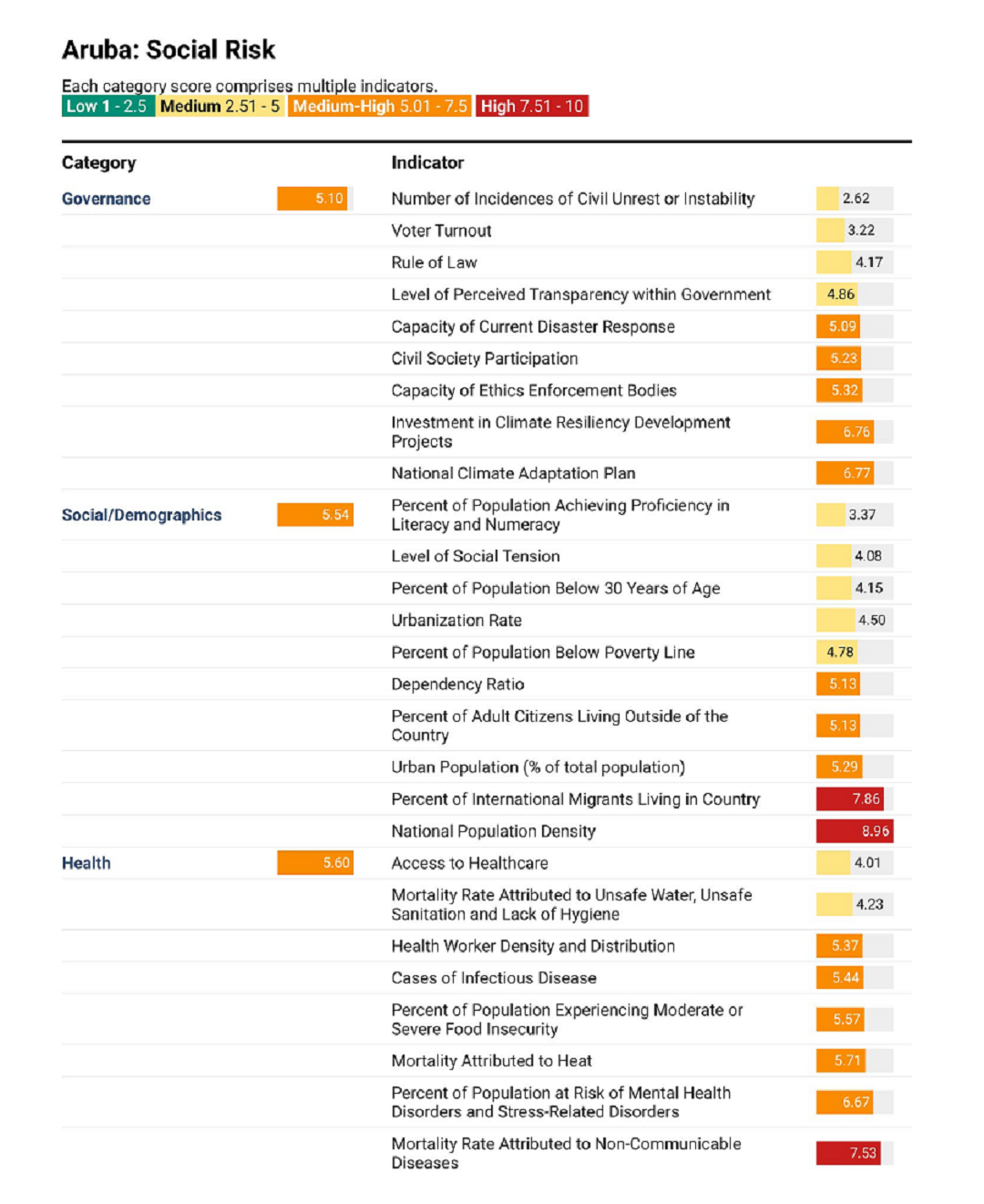
Recent assessments show Aruba scoring an average of 6.05 out of 10 in overall social risk indicators placing it in the medium-high vulnerability range. The core concern is that climate adaptation efforts remain fragmented, handled separately by sectors rather than through a unified national strategy. This disjointed approach makes it difficult to deal with overlapping issues such as demographic pressure, environmental hazards, and limited land availability.
Aruba’s social risk challenges include:


- Rapidly increasing population density
- Health system strain, particularly from chronic illnesses
- Migration and refugee pressures
- Income inequality hidden behind a zero-poverty statistic
- Lack of transparent and integrated governance systems
These vulnerabilities collectively shape how well Aruba can respond to climate disruptions, making Aruba social risk climate adaptation a matter of immediate national concern.
Extreme Population Density Raises Climate Vulnerability Risks
Record Density Levels in Coastal Zones
Aruba’s overall population density has reached 598 persons per square kilometer, nearly double what was recorded in the 1960s. However, the situation is most critical in coastal and tourism-heavy districts, where density levels exceed 1,000 – 1,500 persons per square kilometer and climb even higher when seasonal visitors are included.
Notably, 46% of all households are located in these heavily populated coastal areas, the same zones most vulnerable to:
- Coastal flooding
- Storm surges
- Sea-level rise
- Heat stress
- Saltwater intrusion affecting water and food systems
Urban Heat Islands and Changing Settlement Patterns
Aruba’s urban population expanded by 70% since 1990, but the percentage living in formal “urban” zones declined due to changing settlement classifications. As built environments spread, urban heat islands have intensified heat exposure—especially risky for older adults and individuals living with chronic diseases.
This pattern amplifies the core issues behind Aruba social risk climate adaptation, where the physical location of communities intersects directly with health and safety vulnerabilities.


Healthcare System Under Strain
Growing Burden of Non-Communicable Diseases
Aruba’s health sector scored a medium-high vulnerability rating of 5.47, driven largely by alarming rates of non-communicable diseases (NCDs):
- 98% of the population has at least one NCD risk factor
- 46% are classified as obese
- 38% have three to five risk factors such as smoking, high blood pressure, or inactivity
Climate change is expected to intensify heat-related illnesses and air-quality-related health complications, placing greater demand on already limited medical resources.
Mental Health Challenges
The mental health risk score of 6.53 underscores how stress, economic uncertainty, and climate anxiety affect individuals and families. Nearly half of residents report moderate anxiety or depressive symptoms. Notably, research shows that connection to natural environments supports emotional well-being a reminder that nature preservation is also a public health strategy.
Healthcare Access Limitations
Aruba depends heavily on public financing for healthcare, and staffing levels remain low compared to neighboring nations. Hospitals are also located in low-lying flood-prone areas, meaning disaster events could block access to critical care facilities.
Migration Pressures and Social Stability Concerns
Venezuelan Refugee Situation
Aruba hosts approximately 17,000 Venezuelan migrants and refugees, the highest ratio of refugees to population in the world. Many lack legal employment protections or access to services, leaving them vulnerable and increasing social strain.
Potential Risks Without Integration Planning
Although current tensions are low, lack of integration policies could become a risk factor during climate disasters. If displaced or undocumented groups are excluded from response systems, it may trigger humanitarian or social instability concerns.
Income Inequality Behind Zero-Poverty Claims
While Aruba reports 0% extreme poverty, income distribution reveals a different reality. Nearly 49% of households share only 20.5% of total income, limiting their ability to adapt to climate impacts such as relocating inland, installing cooling systems, or improving building resilience.
Income inequality is therefore deeply tied to Aruba social risk climate adaptation, shaping who can recover fastest during crises.


Governance and Financial Barriers Limit Effective Climate Action
Aruba currently lacks a national climate adaptation plan, leading to siloed solutions rather than coordinated resilience strategies. Transparency gaps, limited civil society involvement, and constrained climate financing further complicate progress.
The National Climate Resilience Council (NCRC)
Launched in 2024, the NCRC aims to:
- Strengthen climate literacy
- Coordinate cross-sector adaptation planning
- Mobilize climate finance
- Conduct resilience and risk assessments
However, success will depend on ensuring funding transparency and community participation.
Moving Forward: Toward Integrated Climate Resilience
To protect its people, economy, and natural environments, Aruba must adopt a holistic adaptation framework that connects housing, health systems, population management, tourism development, and emergency planning. Climate resilience is not only environmental it is deeply social.
The future of Aruba social risk climate adaptation depends on:
- Coordinated planning across all sectors
- Stronger healthcare and mental health support
- Fair and inclusive migration policies
- Transparent and accountable governance
- Investment in vulnerable communities and natural resource protection
Aruba’s ability to thrive in a warming world will hinge on how well it addresses these interconnected challenges today.
For more local news, visit us at Aruba Online News and follow our social media pages. Share your news with us by sending it to info@arubaonline.news.