Aruba Reports Significant Decline in Dengue Cases
According to recent reports, Aruba has experienced a substantial decrease in dengue cases. The Centers for Disease Control and Prevention (CDC) highlighted the Caribbean as a high-risk area for dengue, but local health authorities confirm a notable drop in positive cases on the island.
Key Insights from Recent Reports
Dengue Risk and Global Statistics
The CDC’s August report underscores that nearly half of the global population, approximately 4 billion people, resides in dengue-risk areas. The report emphasizes that individuals living or traveling to these regions are at risk of contracting dengue. Travelers are advised to seek specific information about their destinations to aid in prevention and planning.
Dengue Trends in the Caribbean
Frequent dengue infections are reported in the Caribbean, Central America, South America, and Pacific islands. The CDC has noted a higher number of dengue cases from returning travelers from countries such as Colombia, Cuba, El Salvador, Guatemala, Honduras, India, Mexico, the Dominican Republic, and Trinidad and Tobago.


Local Measures and Public Health Efforts
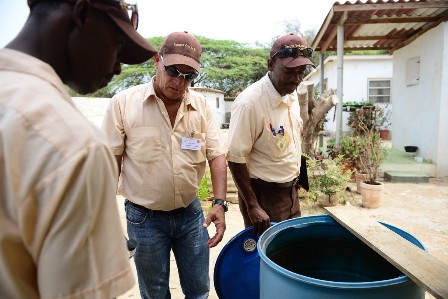
In response to the dengue situation, the Gele Koorts en Muskieten Bestrijding (GKMB) has emphasized the importance of preventive measures. Their goal is to safeguard community health by controlling and combating mosquito-borne diseases. Luis Chong, head of the GKMB, ensures that continuous monitoring and control measures are in place, including inspections and immediate actions in high-risk areas.
According to Jurette Croes from the Public Health Department (DVG), the number of positive dengue cases in Aruba has significantly declined, with only about one case per month. While some probable cases are reported, most tests return negative results. The GKMB continues regular controls, particularly in areas with potential mosquito breeding sites such as tire shops and vulnerable facilities.
Addressing Fumigation Concerns
Chong notes that fumigation practices have changed. Traditional methods involving broad spraying are no longer as effective due to environmental damage and limited impact on mosquito larvae. Updated approaches are being adopted to address mosquito breeding more efficiently.
Image Credit: bondia.com
For more local news, visit us and follow our social media pages. Share your news with us by sending it to info@arubaonline.news.