Aruba Airport September 2024 Traffic Report: Key Insights
In September 2024, Aruba Airport recorded a significant increase in air traffic, showcasing its growing appeal as a premier travel destination. With total outbound seat capacity surging and a rise in revenue-generating passengers, this report dives deep into the trends driving Aruba’s air travel success.
Air Traffic Performance: September 2024 vs. 2023
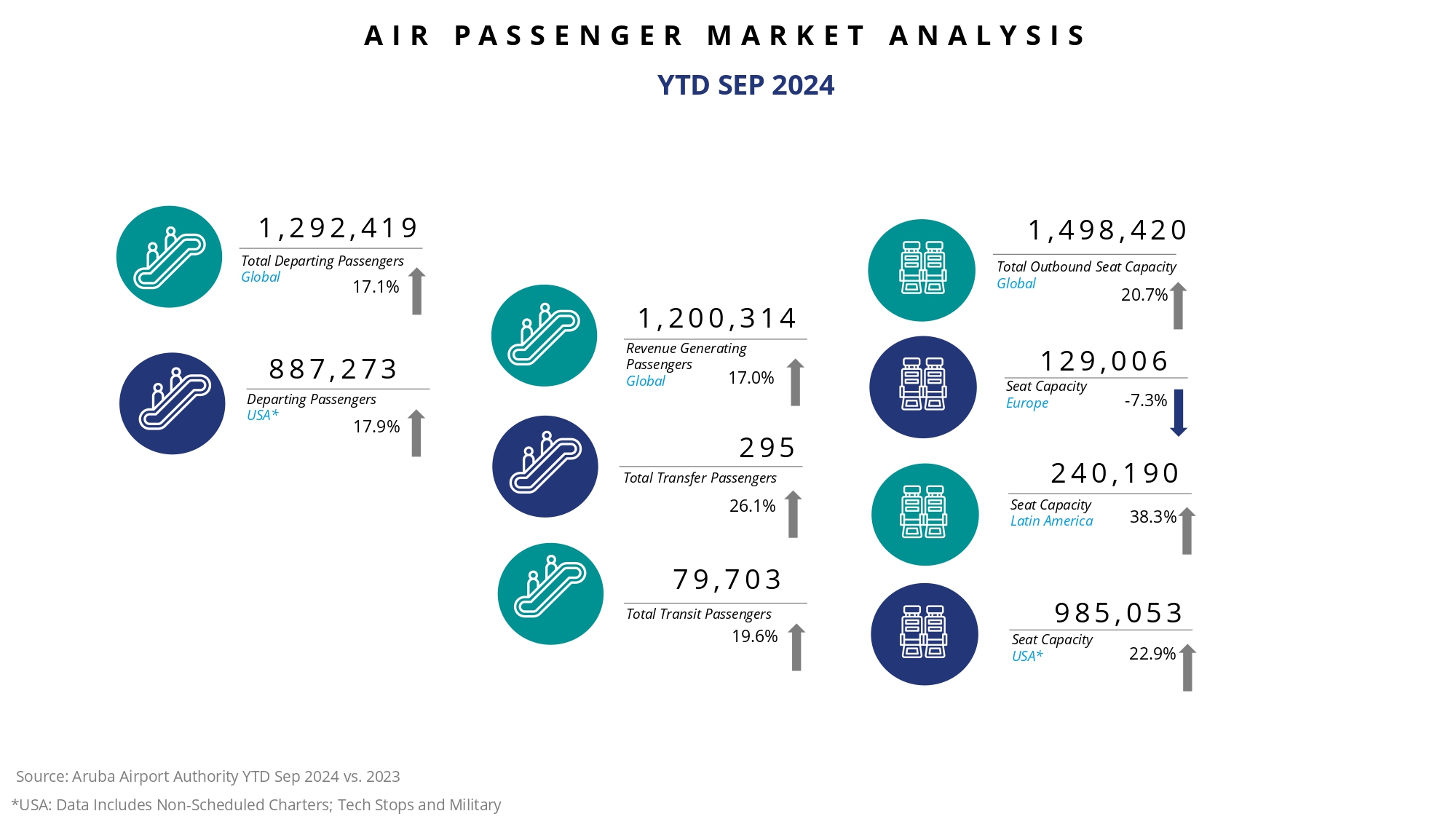
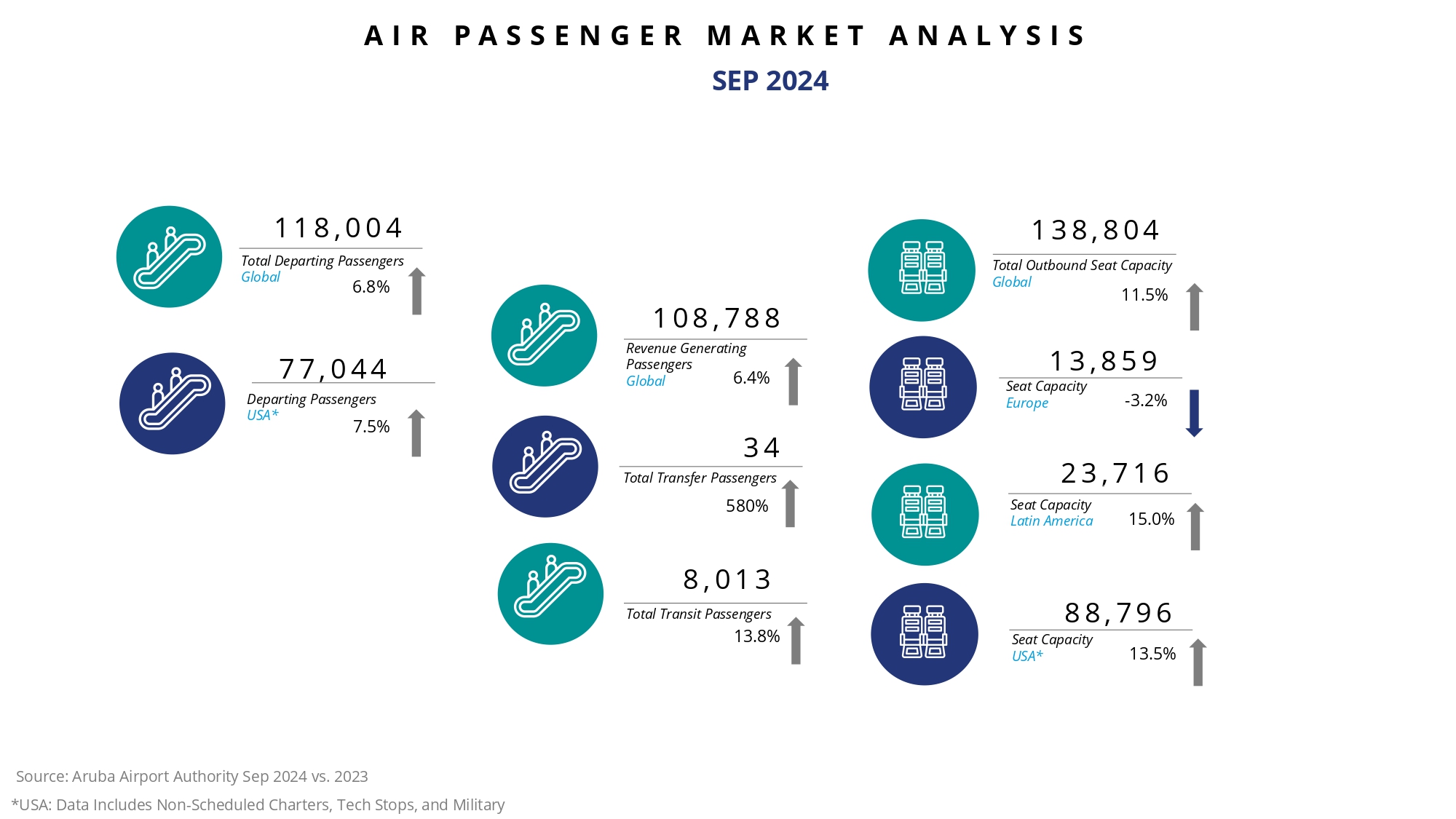
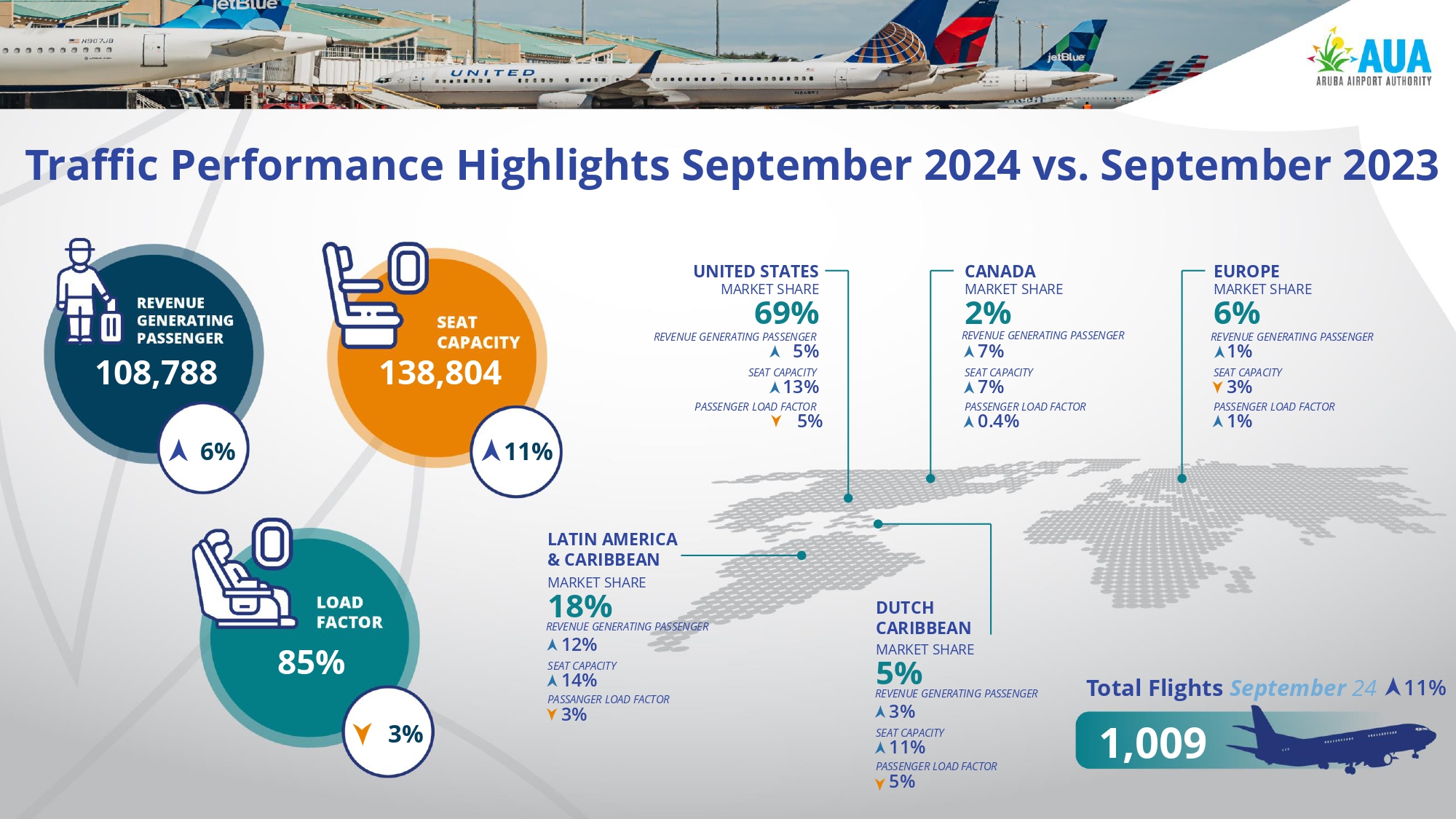
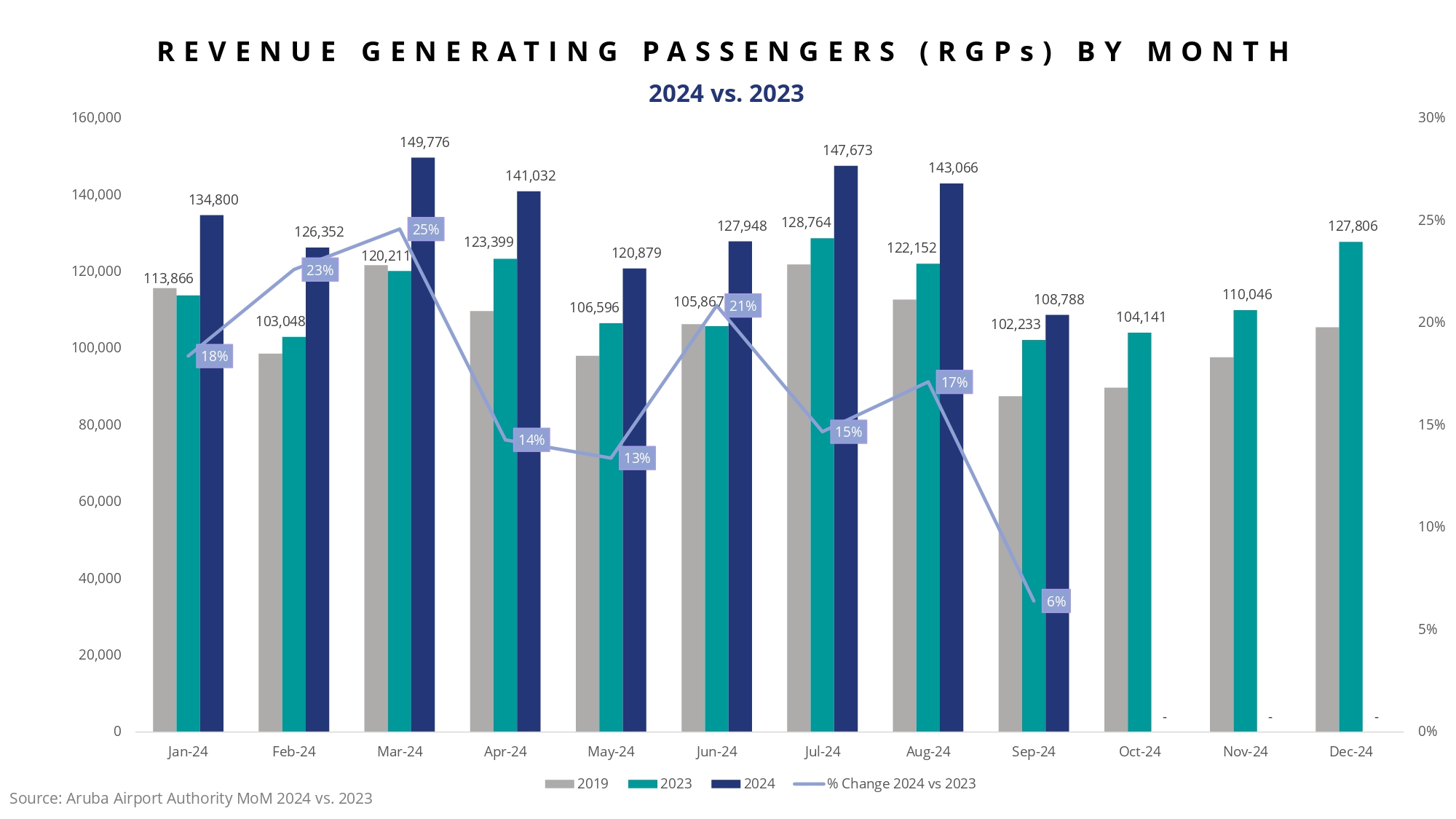
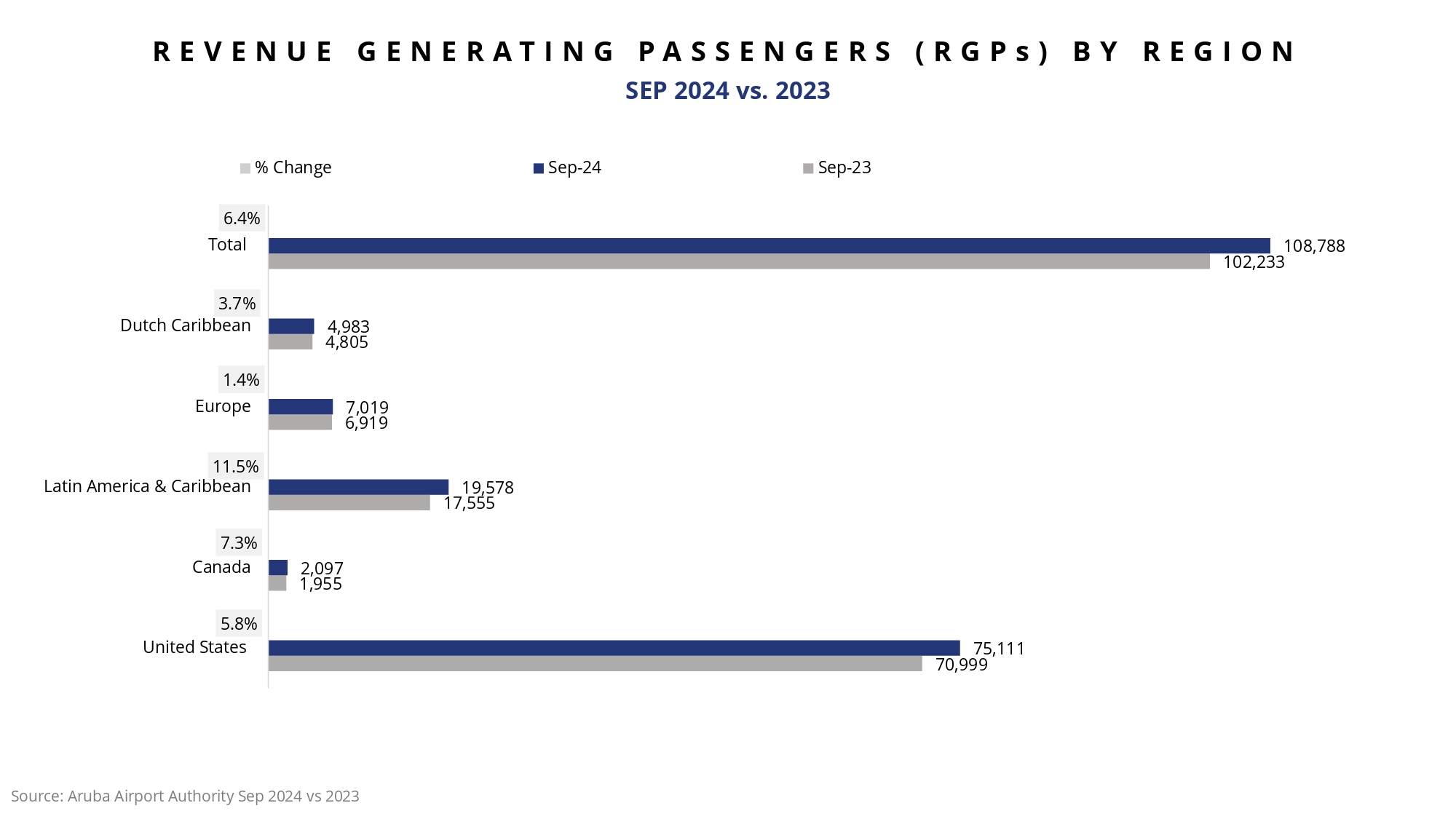
Aruba Airport saw an impressive 17% year-over-year growth in revenue-generating passengers, reaching 108,788 in September 2024. This figure highlights the recovery and growth of air travel to Aruba. Several regions, including the United States, Canada, Latin America, and the Dutch Caribbean, contributed to the overall increase in traffic. The United States alone accounted for 69% of the total market share, emphasizing its importance in Aruba’s air traffic landscape.


Regional Market Share Breakdown
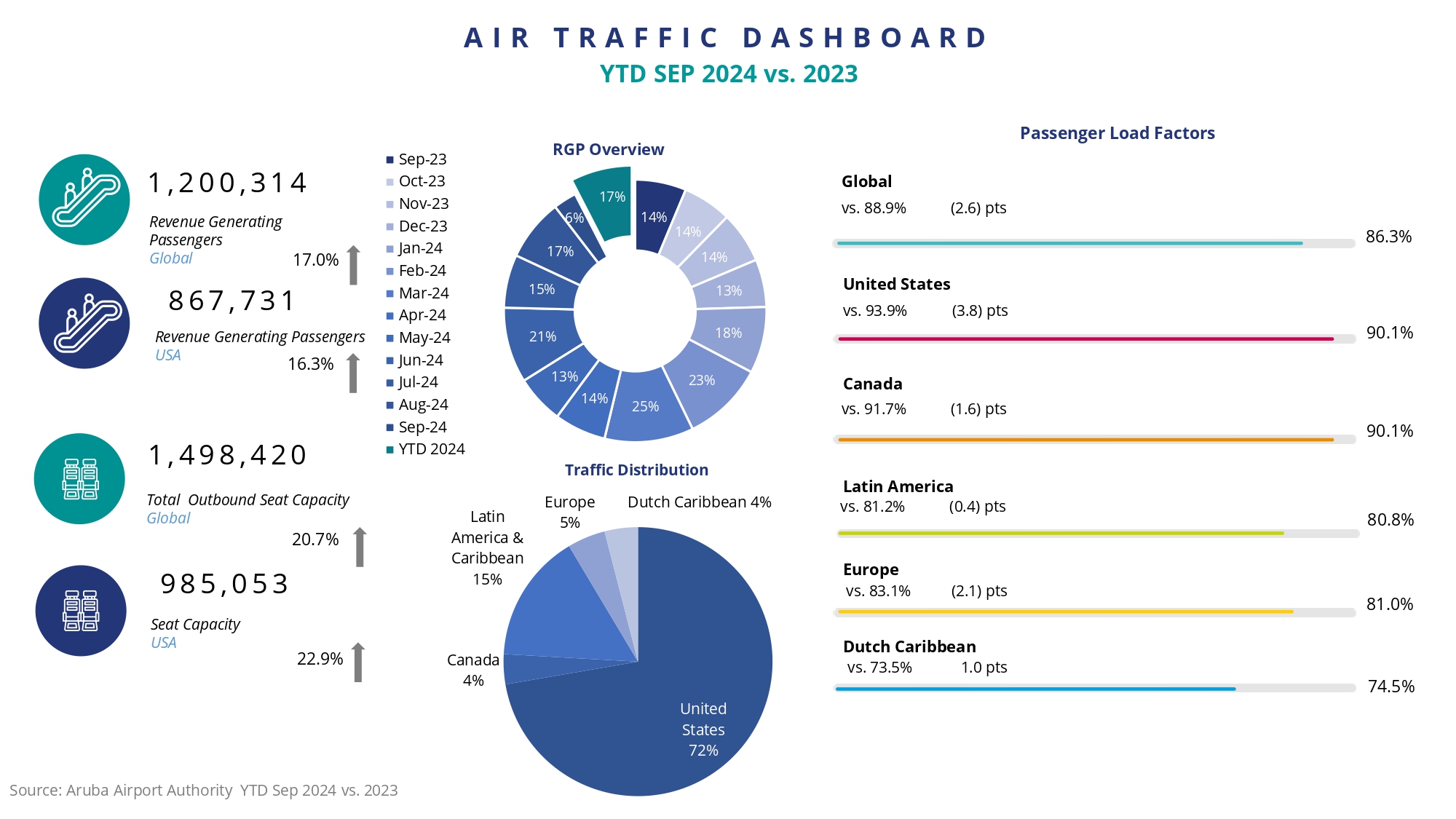
The United States continues to dominate the market, contributing 69% of revenue-generating passengers, while Canada and Europe held smaller but noteworthy shares of 7% and 6%, respectively. The Latin American and Caribbean region made up 18%, reflecting a 12% increase in seat capacity. Interestingly, the Dutch Caribbean showed a modest 5% market share, but with notable growth in seat capacity and passenger load factors.
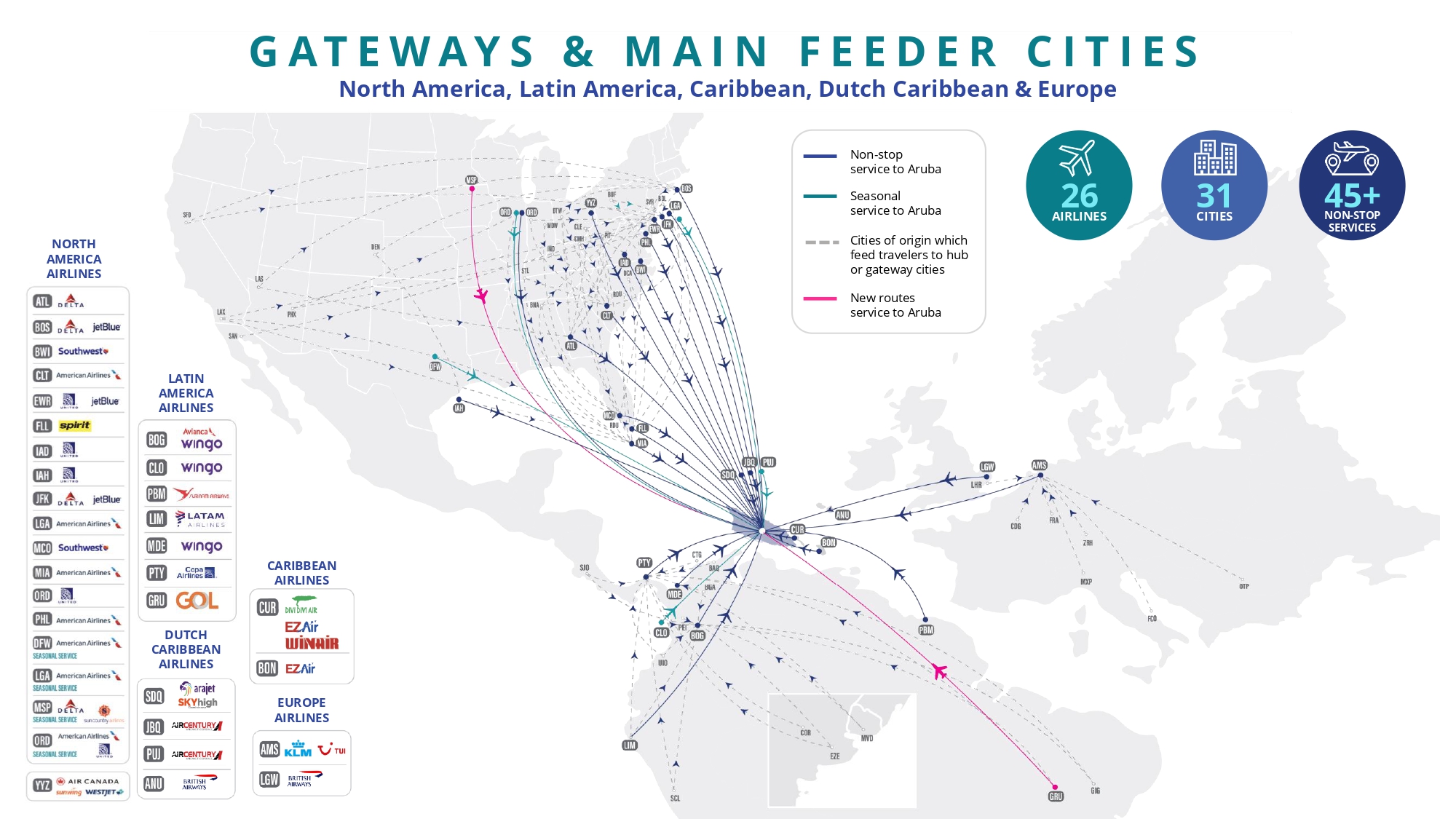
These figures demonstrate the resilience and growing demand in these regions. With continuous service to over 45 international destinations, Aruba Airport is solidifying its position as a key Caribbean hub.
Airline Market Share and Load Factors
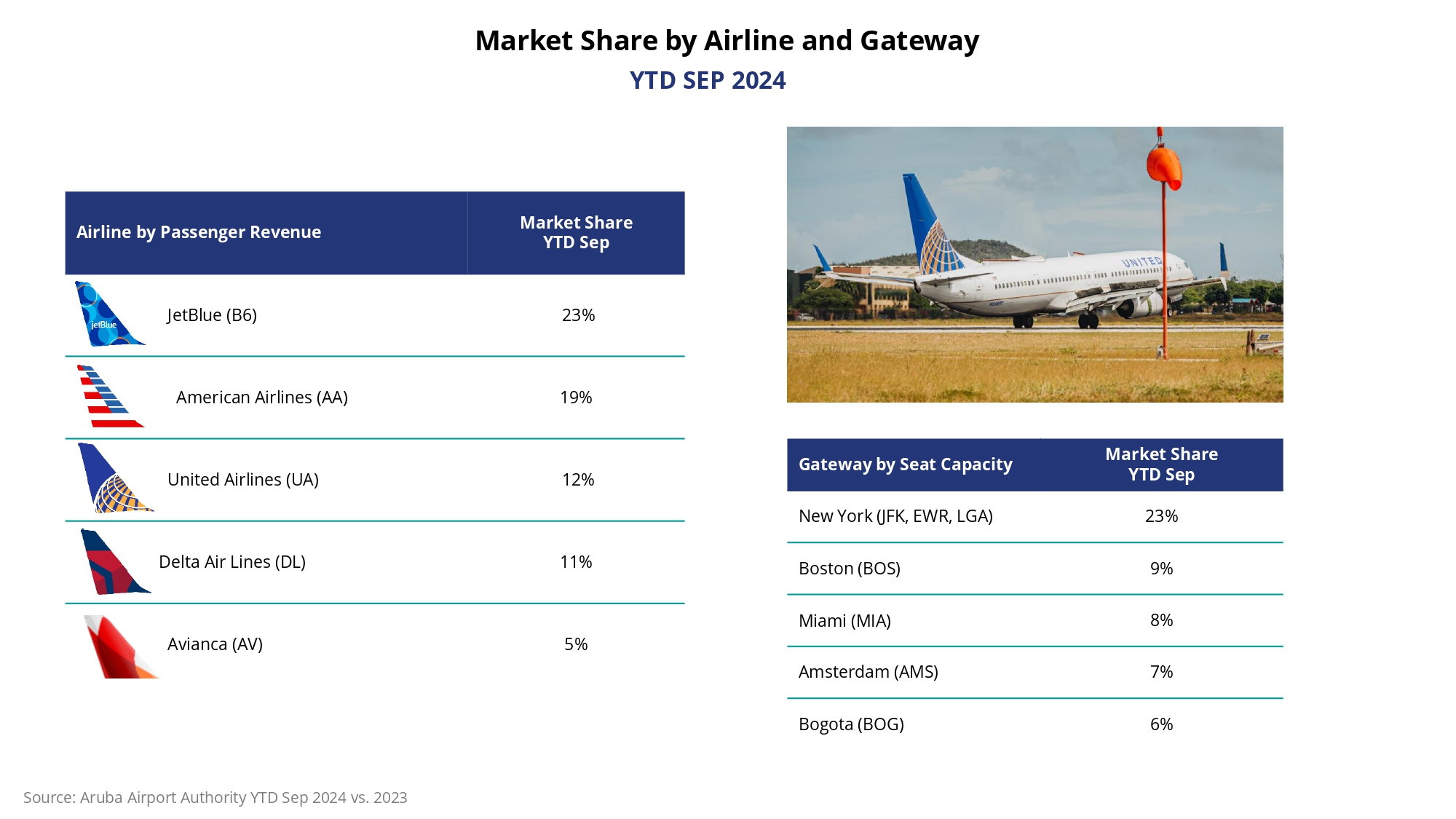
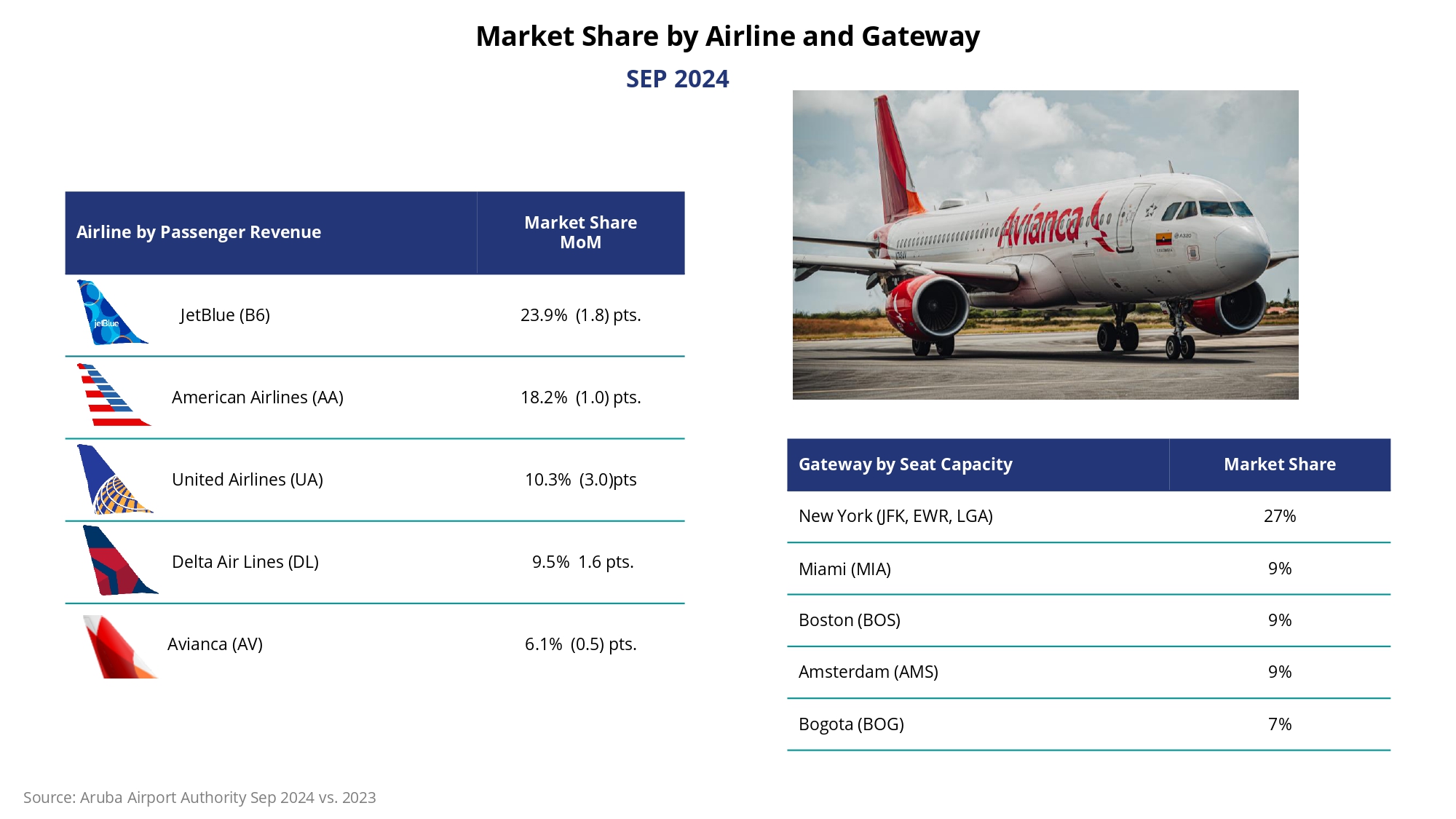
JetBlue led the market in passenger revenue, with a 23.9% market share in September 2024. Other major players included American Airlines (18.2%), United Airlines (10.3%), and Delta Air Lines (9.5%). Avianca also played a role, particularly in Latin American routes, with a market share of 6.1%.
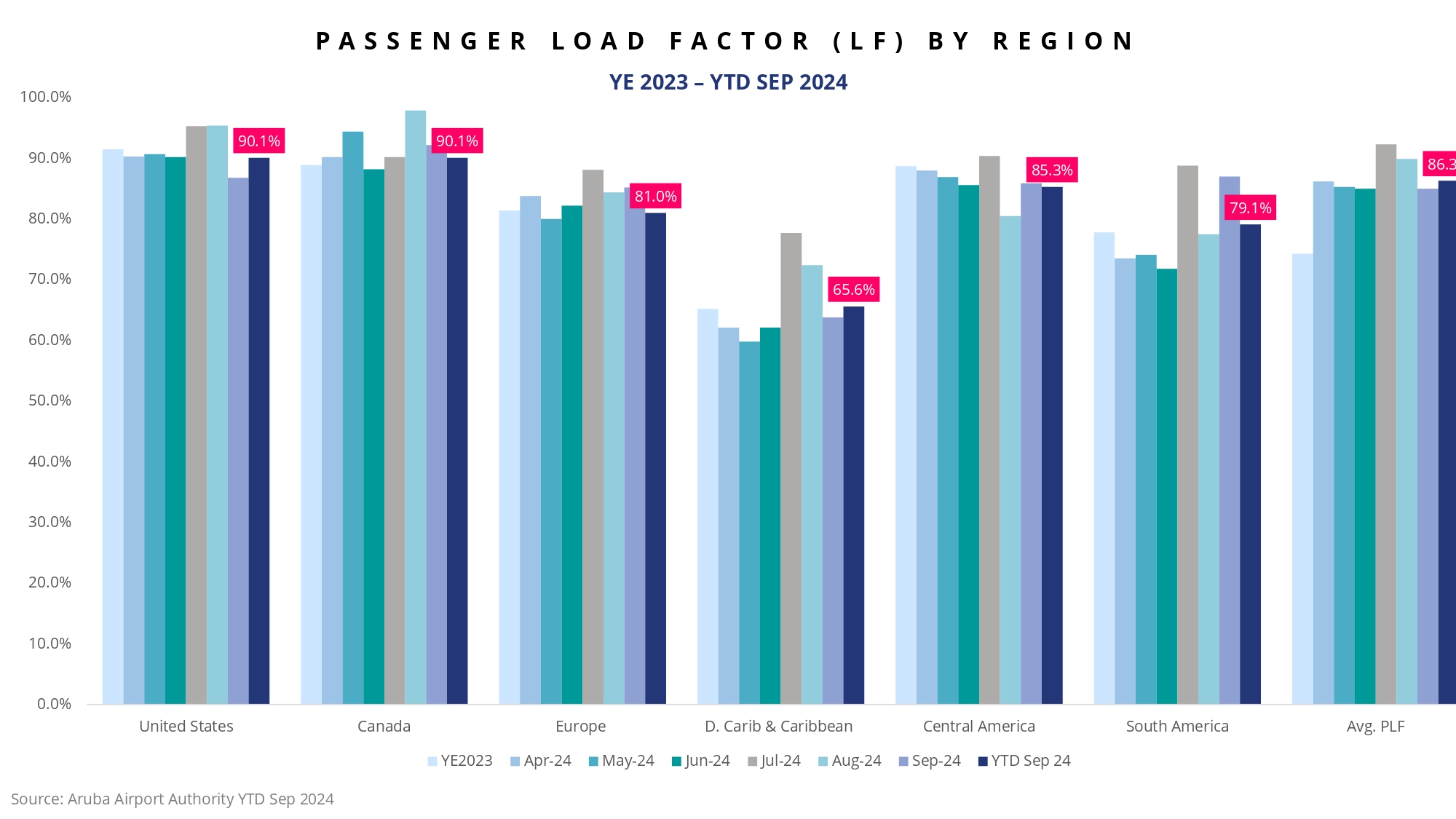
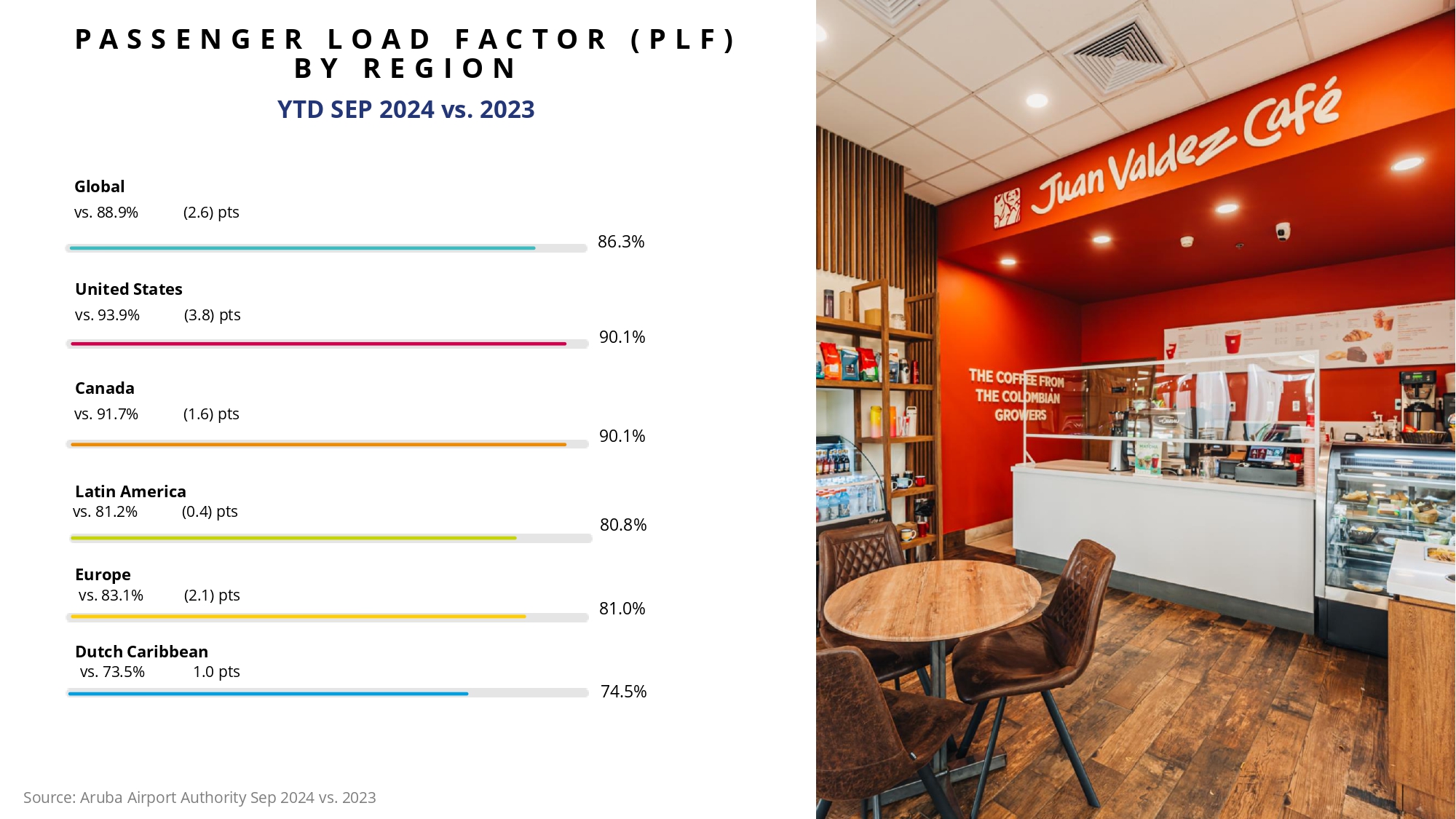
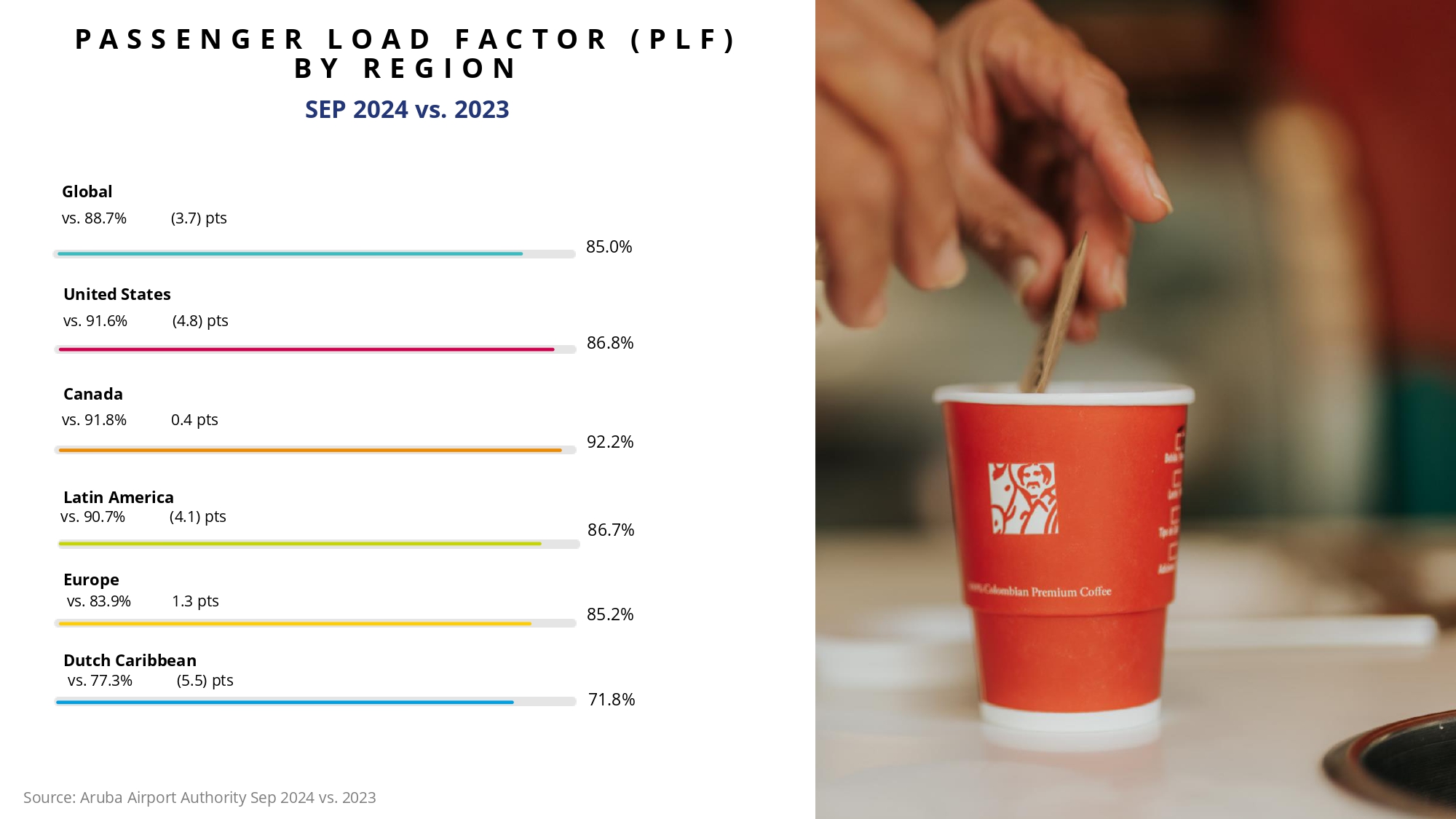
Passenger load factors remained robust across various regions. For the United States, the average load factor was 86.3%, while Europe saw an 81% load factor, reflecting a steady flow of visitors from these markets.


Key Trends in Flight Operations
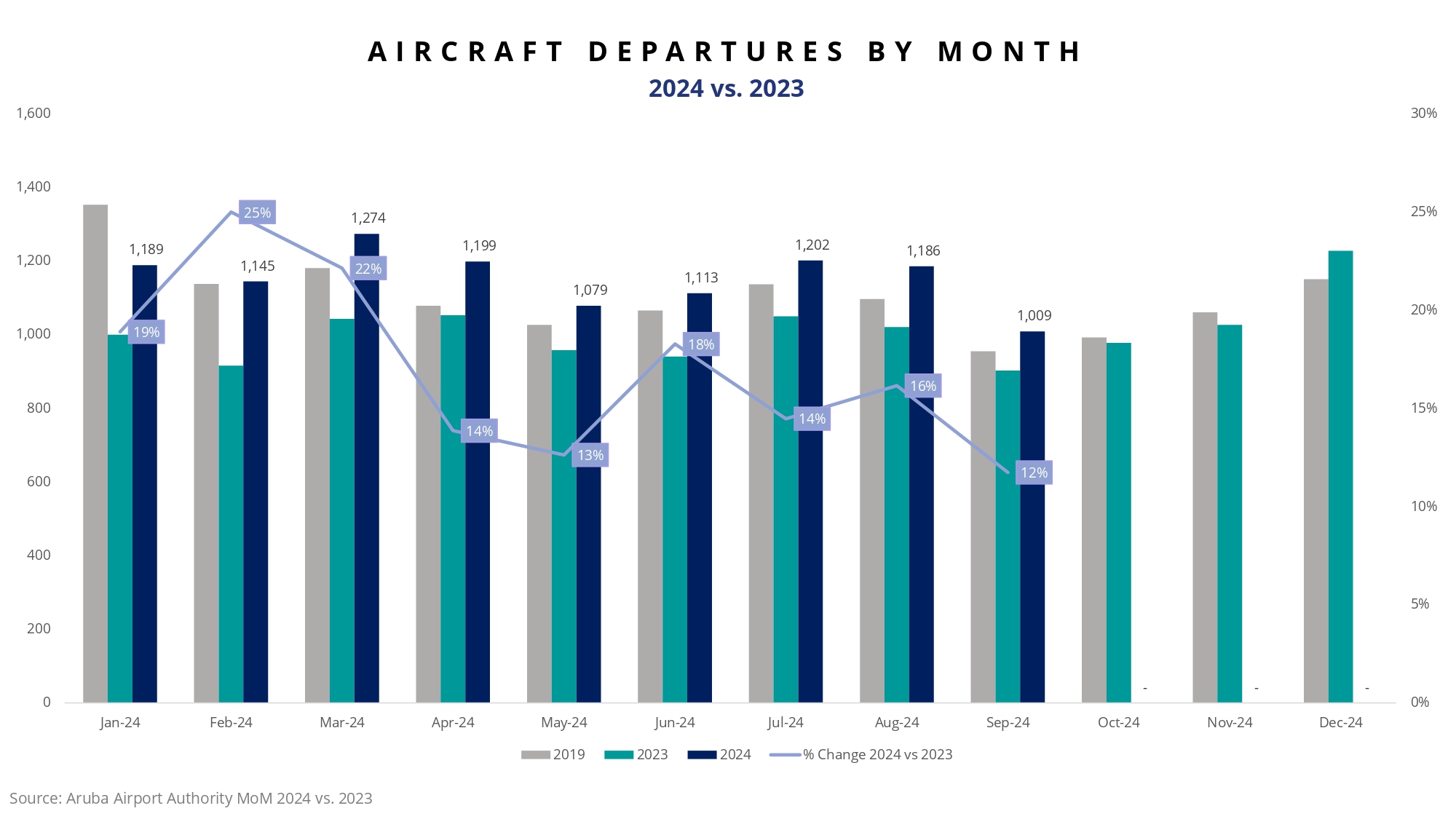
Aruba Airport’s flight operations have expanded, with airlines increasing services to cater to rising demand. Notably, JetBlue increased its flights from key U.S. cities like New York and Boston, while Delta Air Lines enhanced its service from Atlanta. United Airlines also expanded its capacity with additional flights from Newark and Chicago.
Growth in Latin American Routes
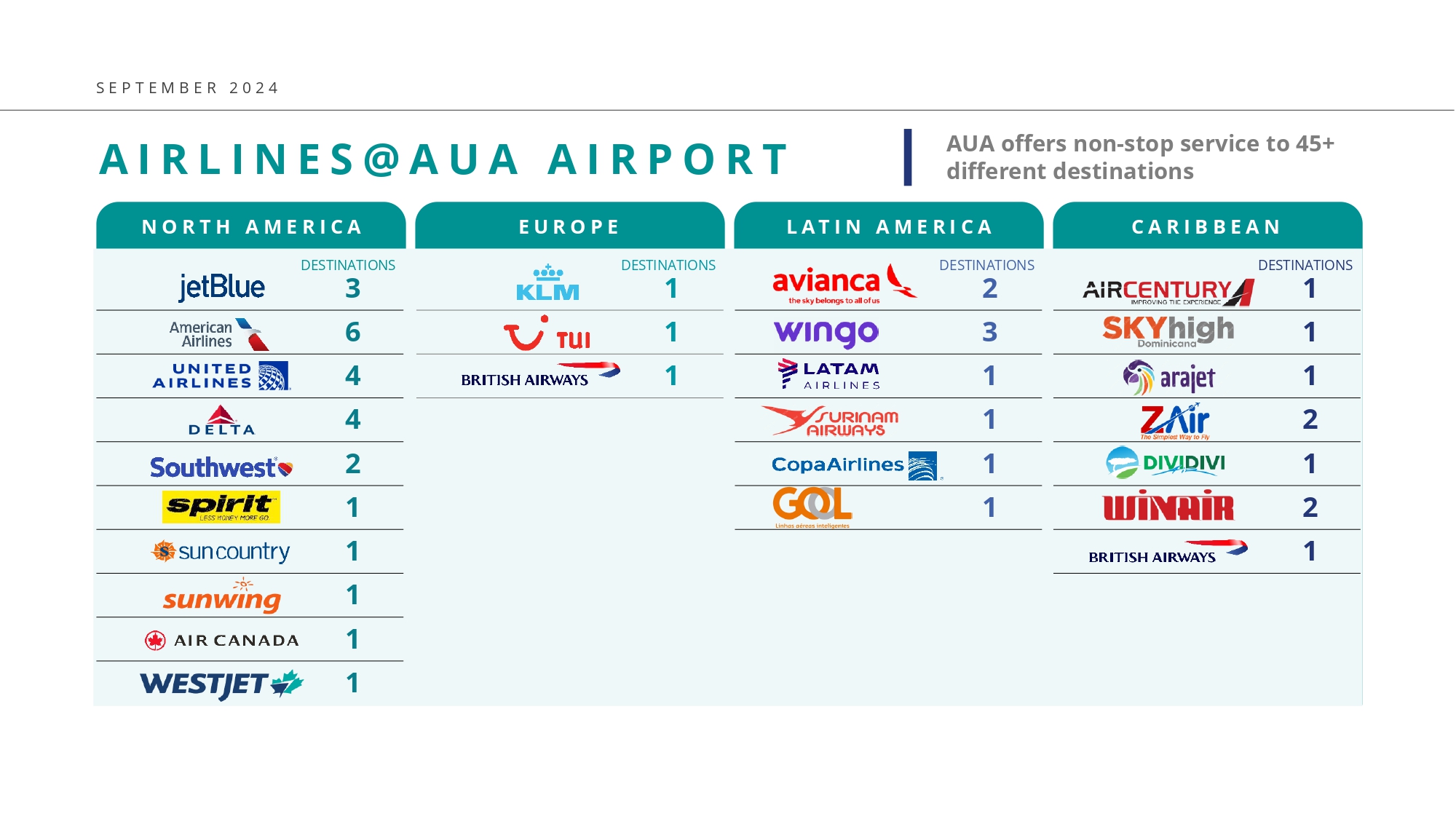
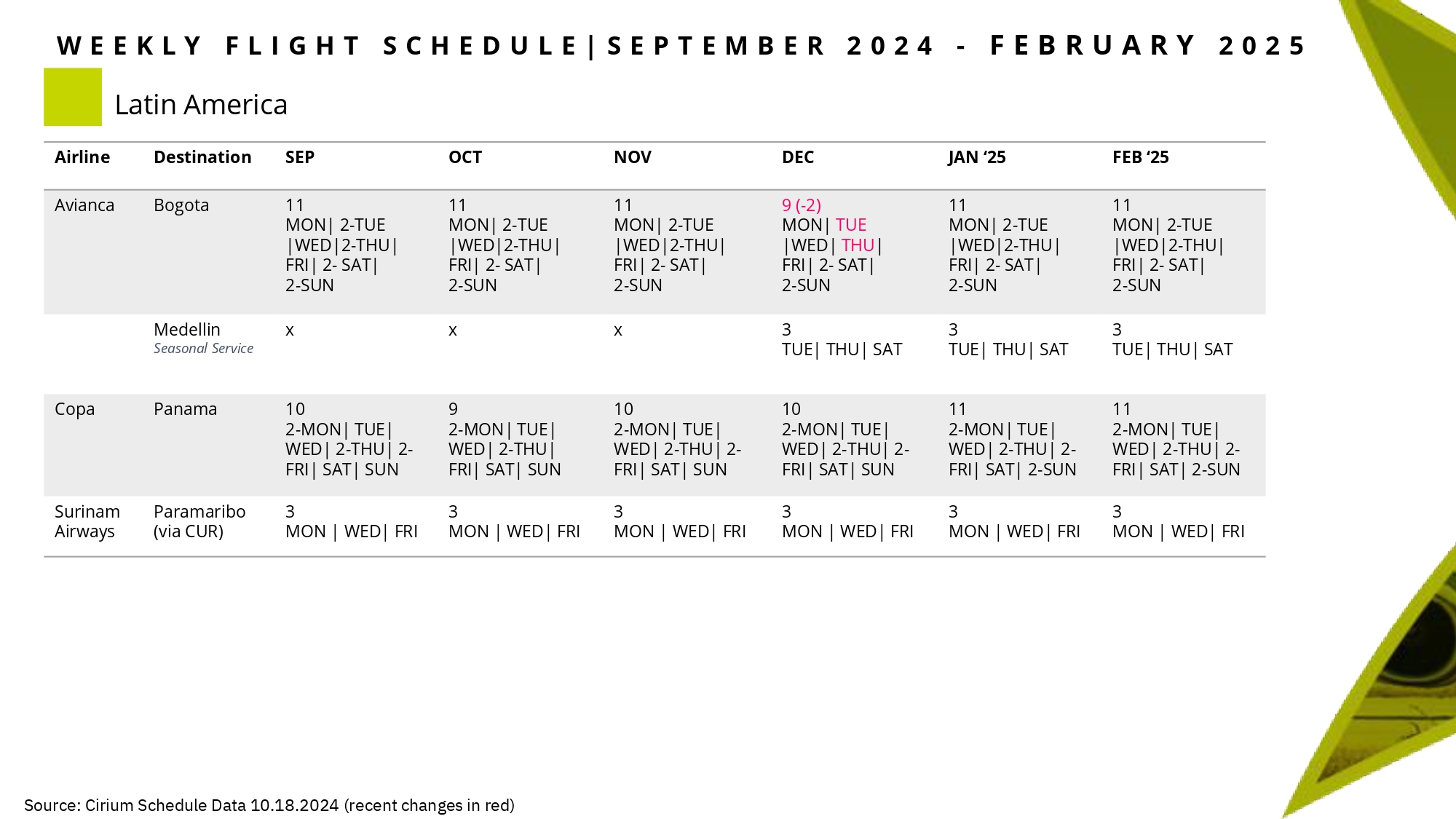
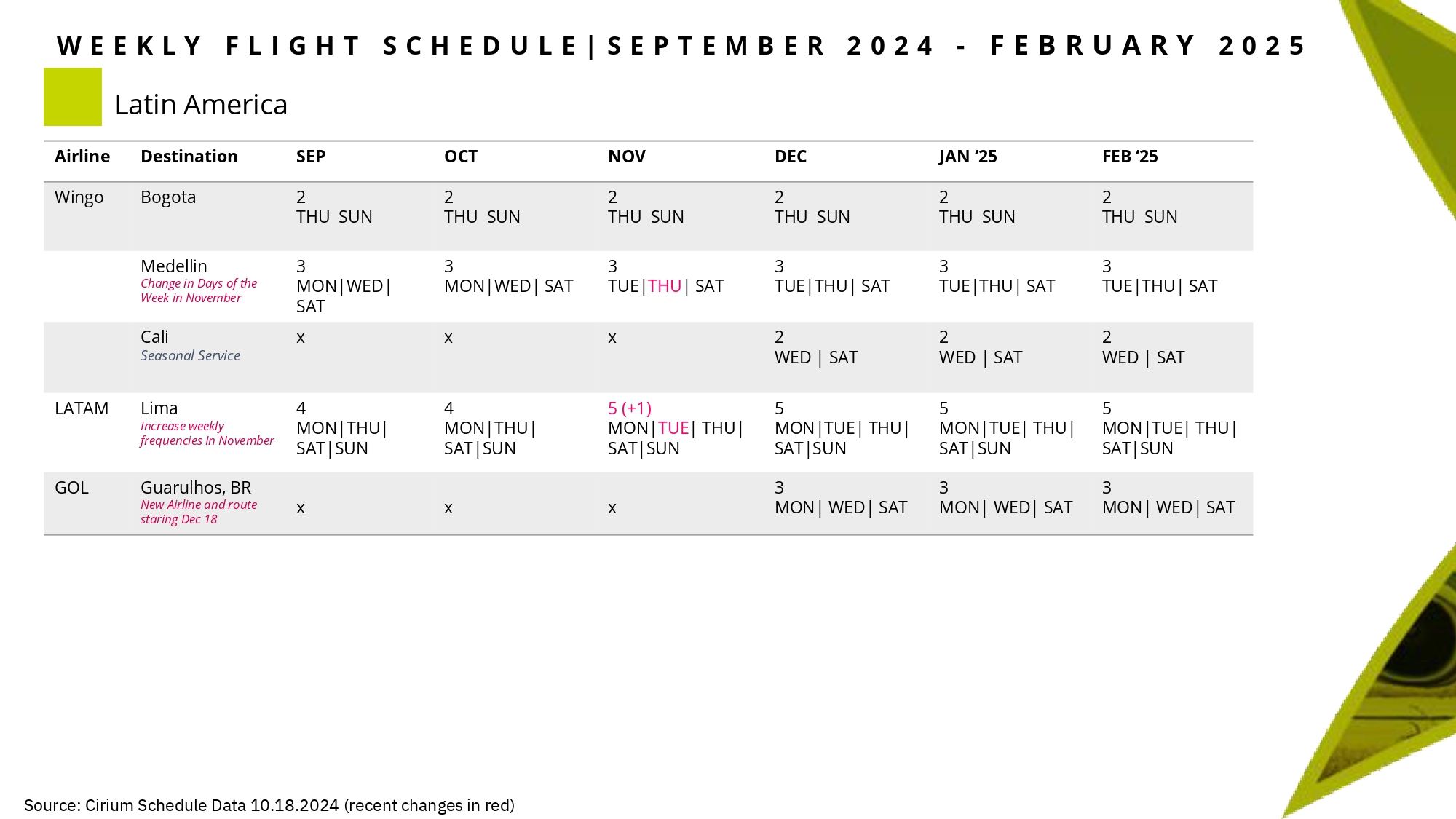
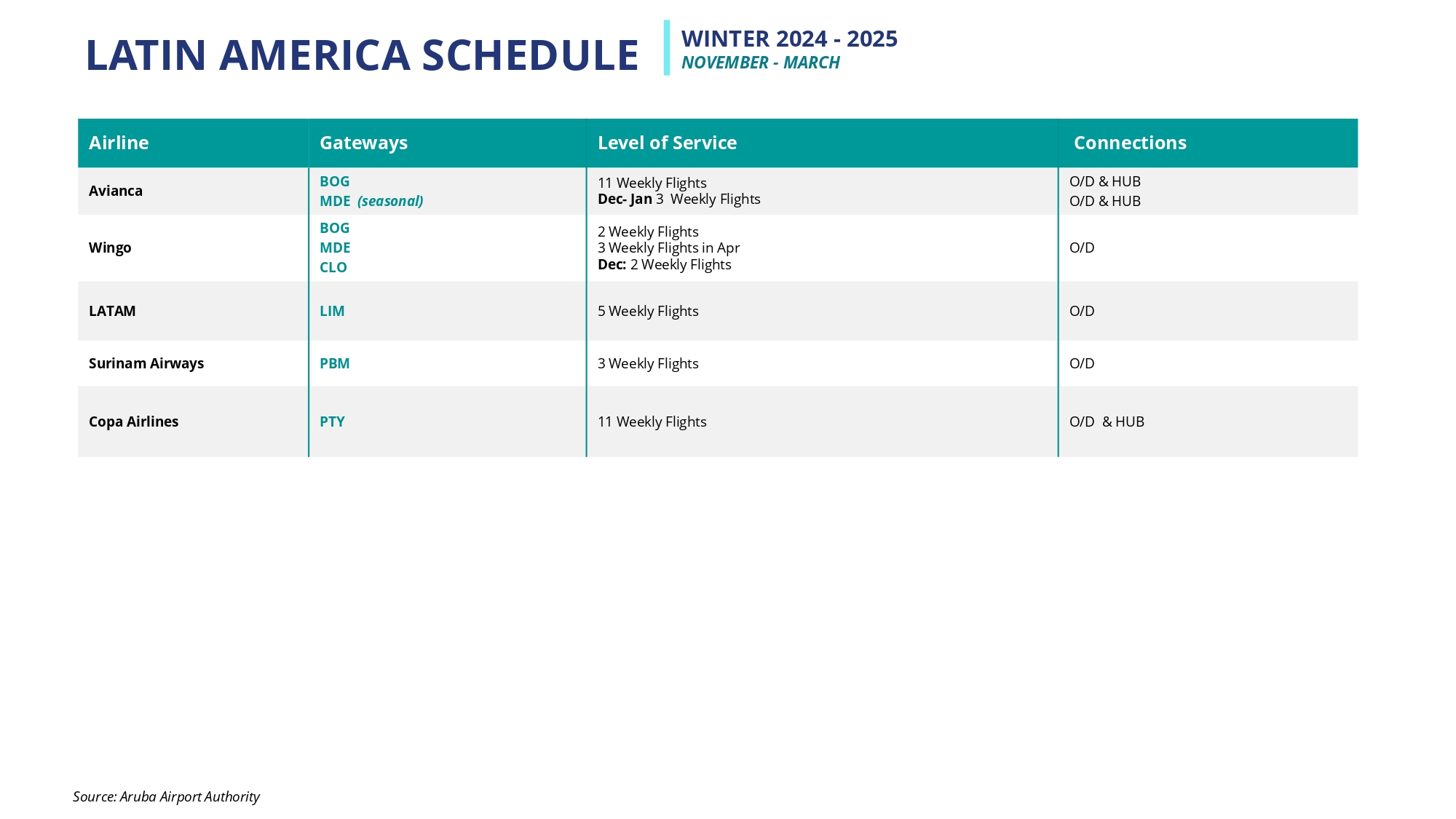
Latin American routes experienced notable growth in September 2024, with seat capacity rising by 14%. Avianca and Copa Airlines played significant roles in boosting traffic from major Latin American hubs like Bogota and Panama City. LATAM increased its frequency to Lima, and Surinam Airways saw an increase in passengers from Paramaribo.
Aruba’s Air Service Development for Winter 2024-2025
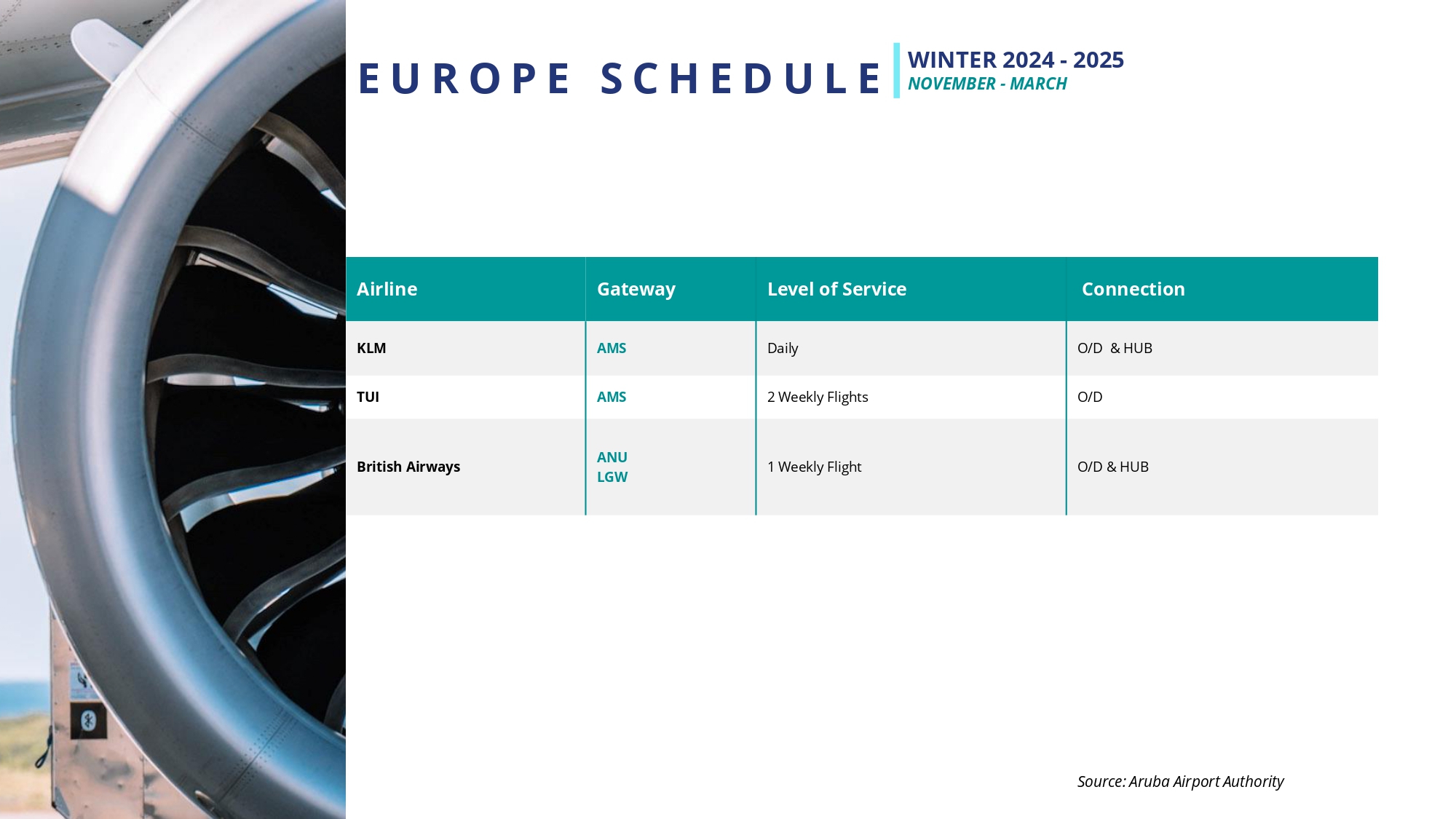
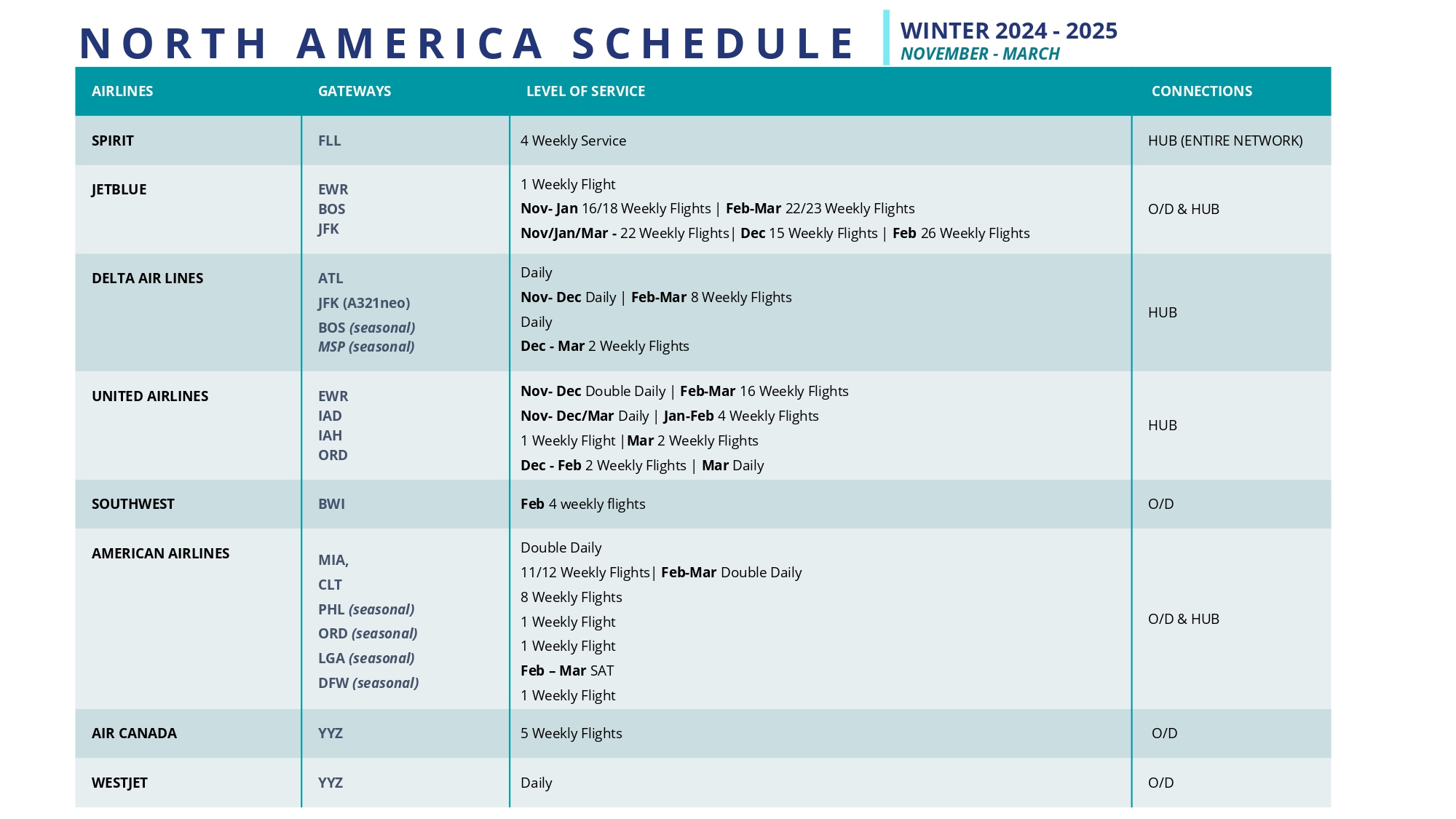
Looking ahead, Aruba Airport is set for further growth, with new and increased flight services in the upcoming winter season. Noteworthy increases in flight frequency are planned for Miami, Charlotte, and Toronto, which are expected to drive even more traffic to the island.
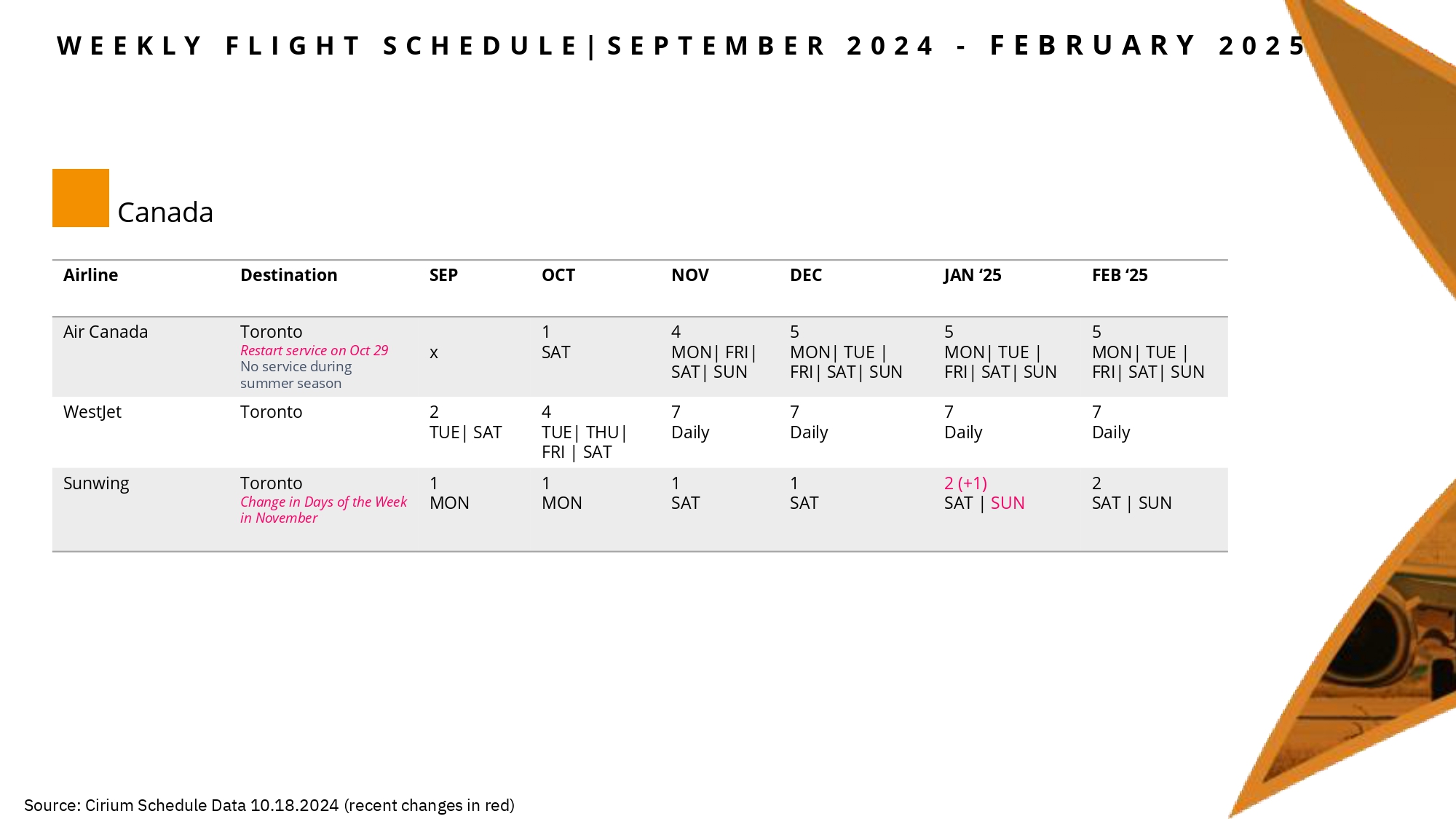
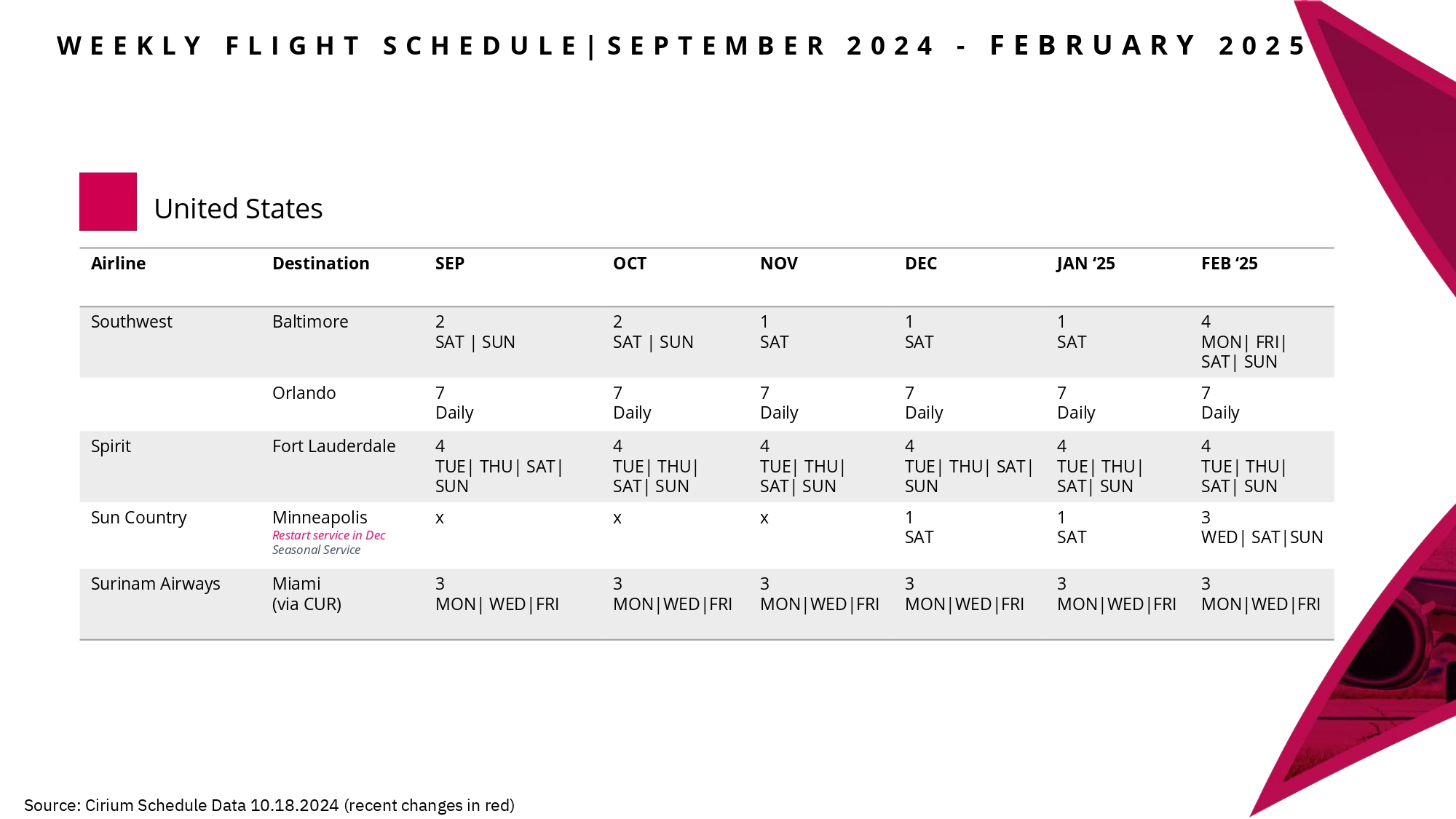
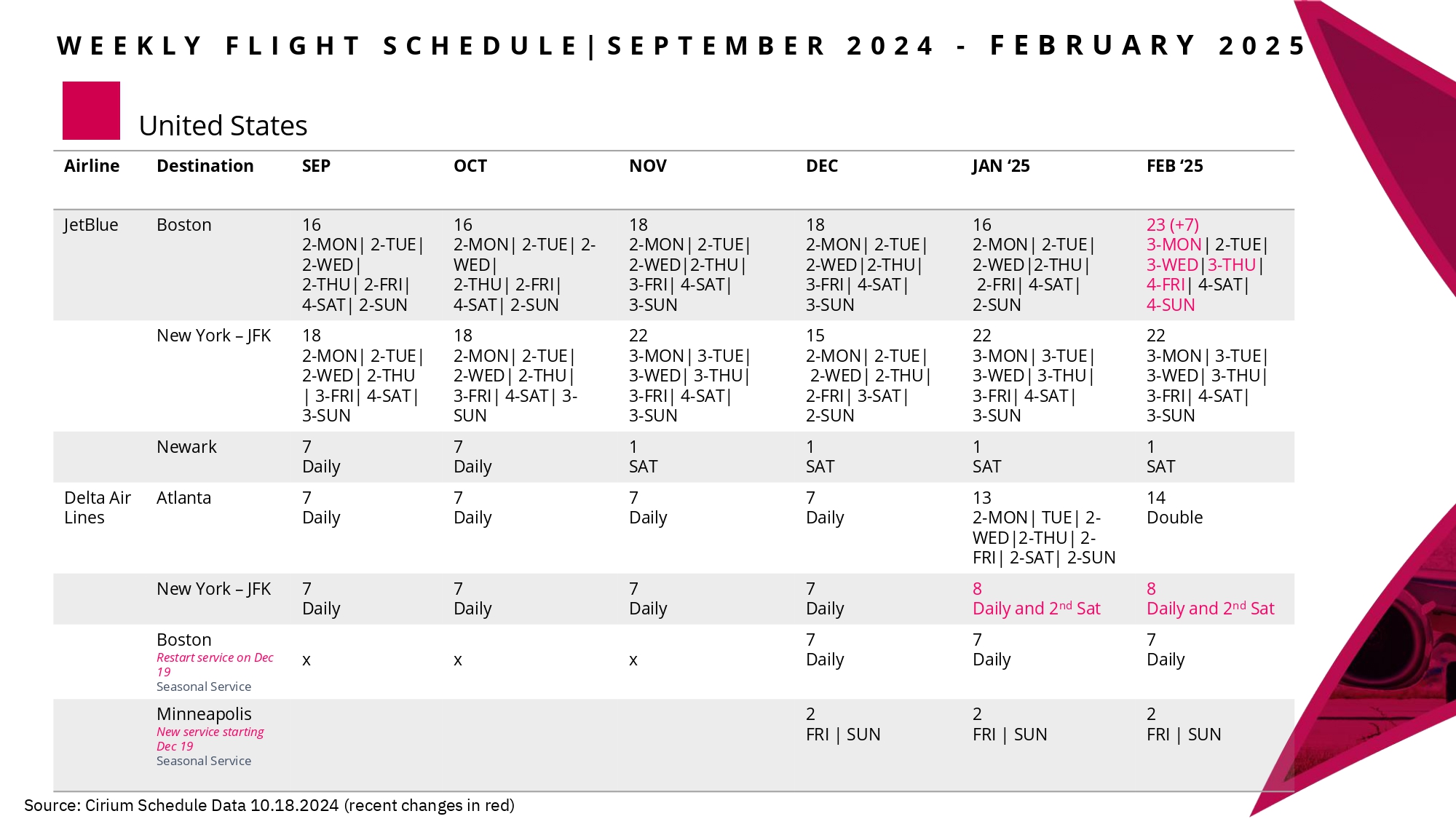
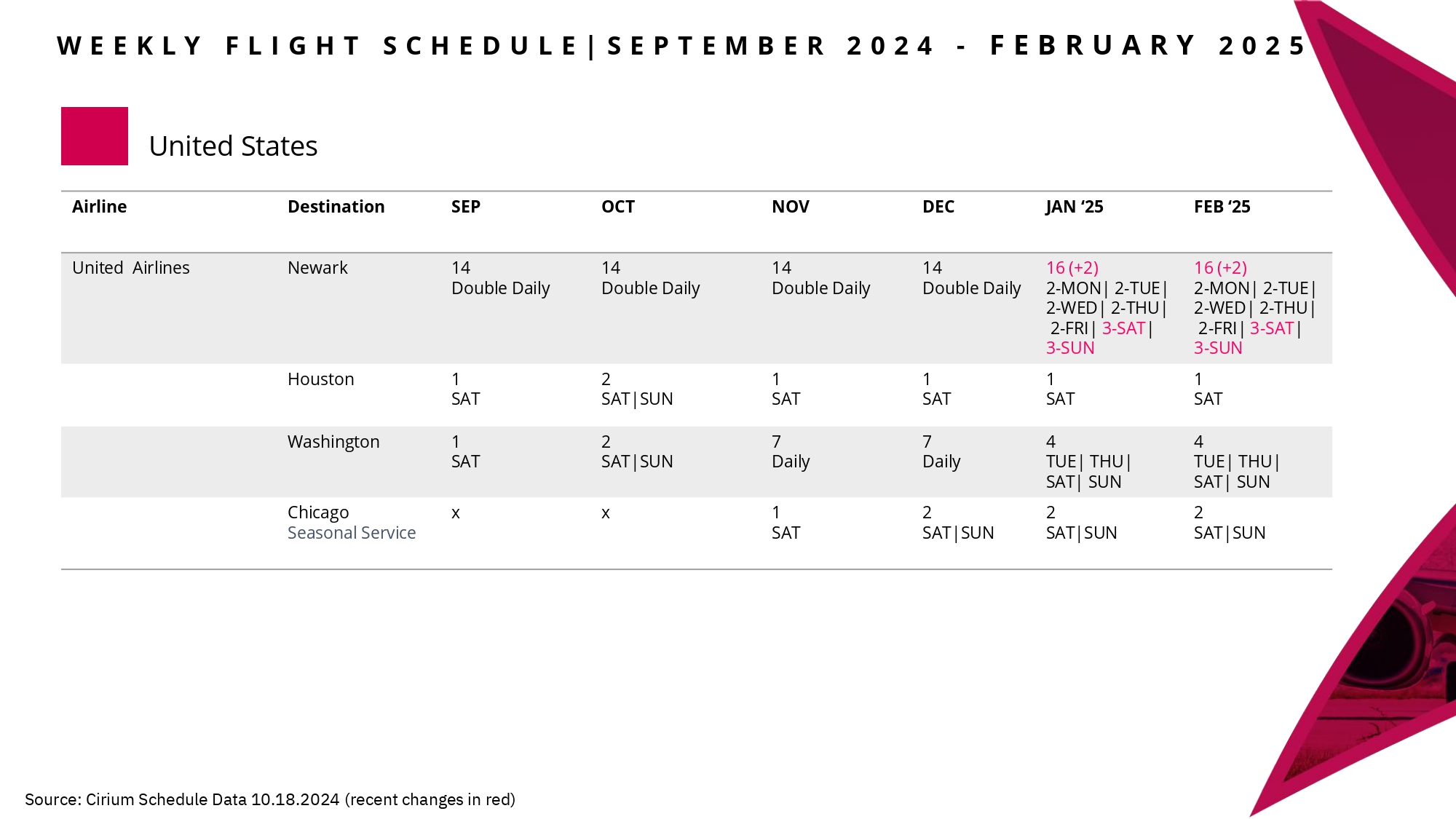
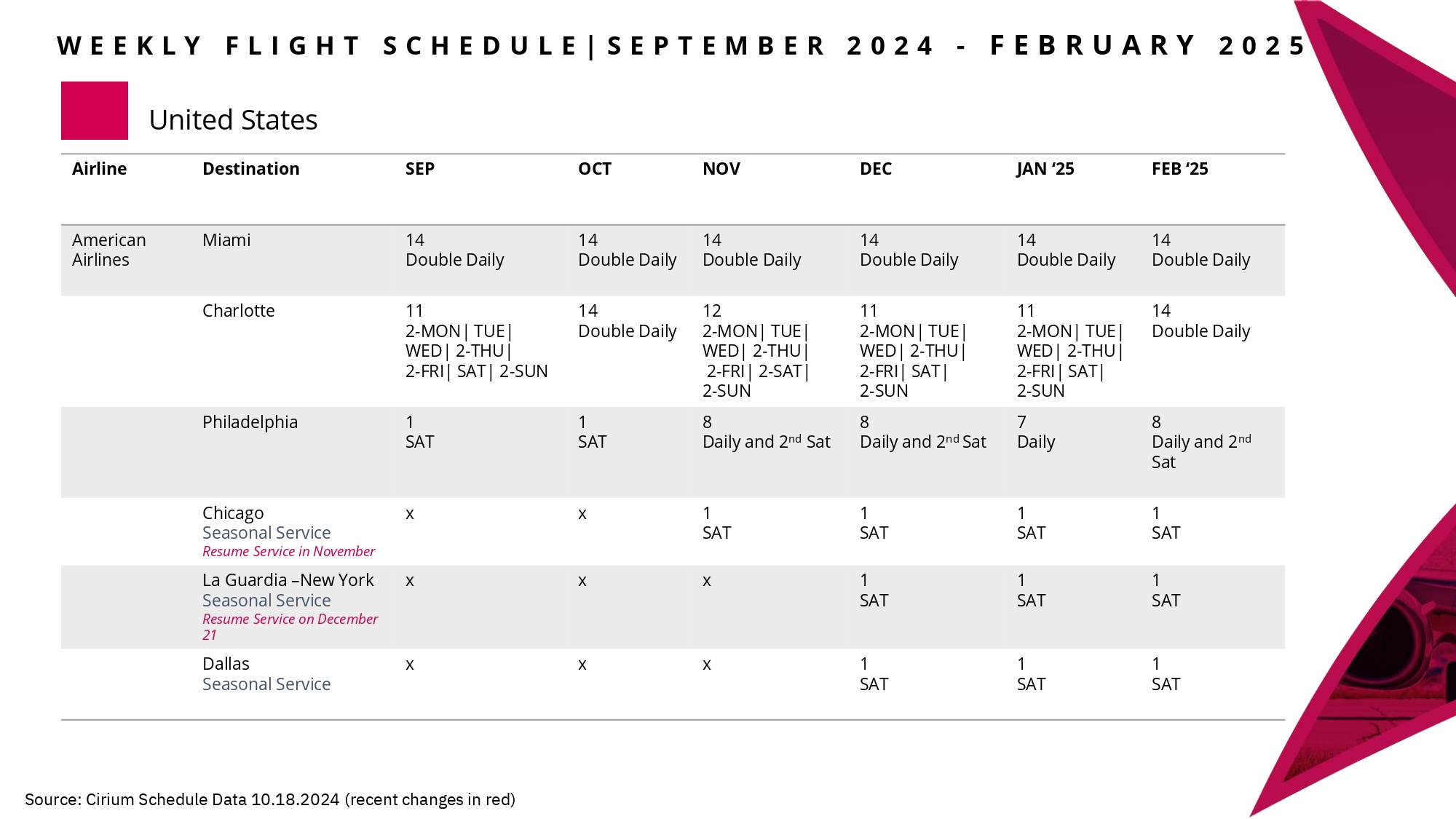
Aruba remains a desirable destination, and the expanded winter schedule promises to bring even more tourists from North America, Europe, and Latin America.
Find more on Aruba’s travel industry at the Aruba Tourism Authority.
Conclusion
In summary, Aruba Airport’s September 2024 performance reflects a growing trend in global air travel to the island, with rising passenger numbers and expanded flight services. The airport’s ability to maintain strong growth across multiple regions—especially the United States and Latin America—positions it well for continued success.
For more local news, visit us and follow our social media pages. Share your news with us by sending it to info@arubaonline.news.