
Invest in Vital Infrastructure Through Ecosystem Restoration
Small island nations like Aruba are facing accelerating climate impacts that threaten their natural environments, economies, and community well-being. Rising sea levels, stronger tropical storms, heat waves, groundwater stress, and coastal erosion are reshaping ecosystems and infrastructure simultaneously. To address these challenges, it is essential to invest in vital infrastructure through ecosystem restoration, creating long-term climate resilience rooted in nature-based strategies.
Healthy ecosystems coral reefs, mangroves, wetlands, dunes, and seagrass meadows are not just scenic landscapes. They are living infrastructure systems that provide defense, stability, water purification, coastal protection, food resources, and essential habitat. As climate pressures intensify, these ecosystems form the front line of climate resilience for Aruba.
Why Ecosystem Restoration Is Critical for Climate-Resilient Infrastructure
The focus keyword invest in vital infrastructure through ecosystem restoration reflects a strategic response to climate threats. Traditional “hard engineering” solutions such as seawalls and concrete breakwaters can provide immediate protection but often fail over time, cost more to maintain, and degrade natural coastal buffers.


In contrast, ecosystem restoration strengthens natural defenses that adapt and regenerate over time.
Coral Reefs as Natural Breakwaters
Coral reefs protect coastlines from wave damage, erosion and storm surge. However, bleaching driven by warming ocean temperatures has weakened coral ecosystems across the Caribbean.
Studies by the NOAA Coral Reef Conservation Program show coral reefs reduce wave energy by up to 97%
Restoring reefs with heat-resilient coral nurseries and artificial reef structures helps reduce coastal flooding risks, sustain fisheries, and maintain tourism revenue.
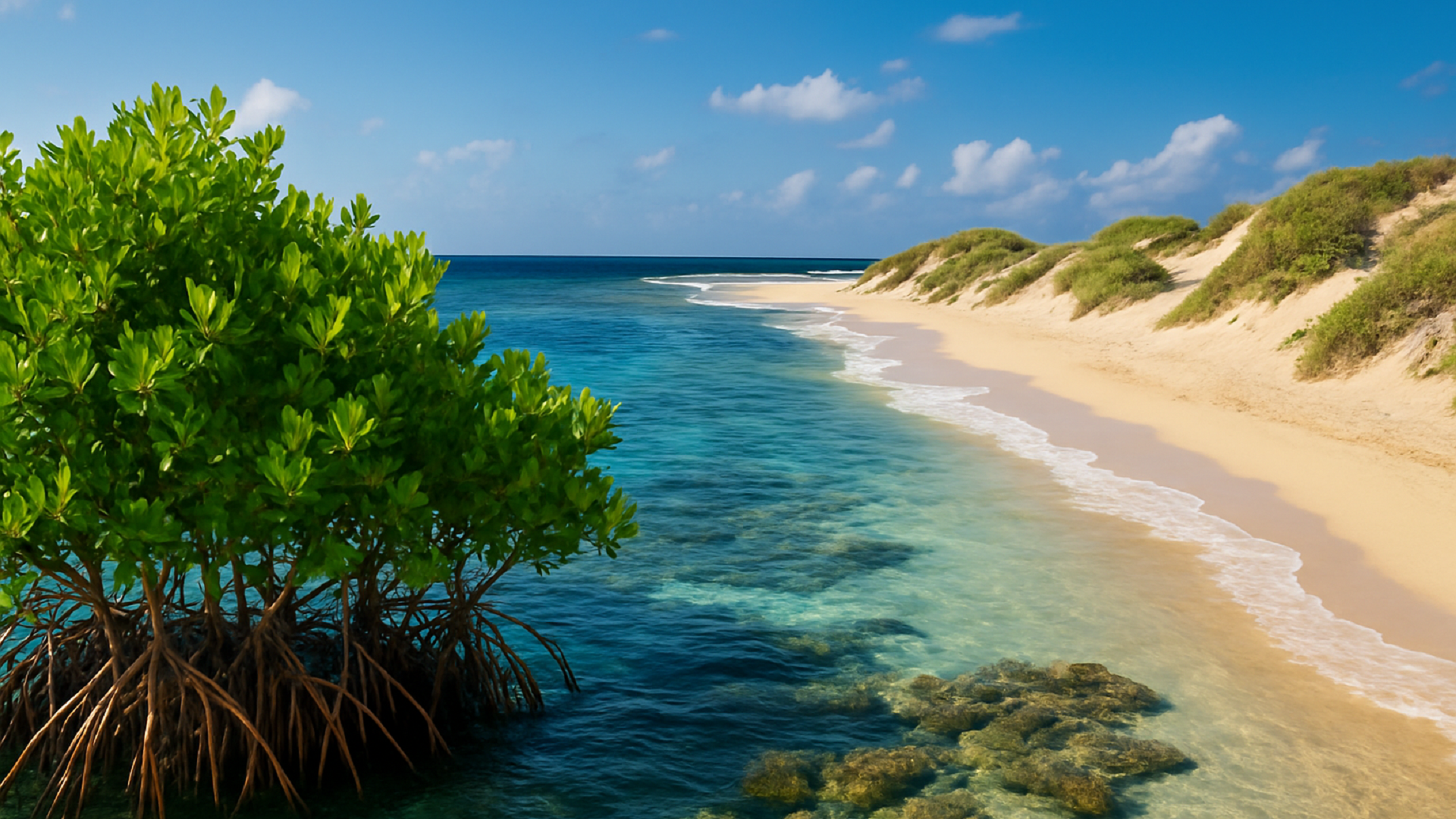
Mangroves Provide Coastal and Ecosystem Stability
Mangrove restoration offers multiple climate resilience benefits:


- Absorbs wave force and prevents coastal erosion
- Stores large quantities of carbon (“Blue Carbon”)
- Provides nursery habitat for fish and marine life
- Filters sediment and pollution from water runoff
Seagrass Beds and Dune Systems Reduce Flooding
Seagrass slows water flow, stabilizes sediment, and improves water clarity. Dunes act as natural sand barriers protecting inland structures.
Both ecosystems are weakened when coastal development removes vegetation, redirects runoff, or accelerates sand loss. Restoring dunes with native vegetation improves storm resilience.
Aruba’s Current Vulnerabilities and the Need to Restore Natural Defenses
Climate assessments show Aruba is experiencing:
| Climate Stressor | Impact |
|---|---|
| Sea Level Rise | Flooding, shoreline loss, infrastructure damage |
| Rising Sea Temperatures | Coral bleaching, weakened fisheries, lost tourism value |
| Coastal Development | Erosion, reduced natural buffering capacity |
| Stronger Storm Systems | Increased property and infrastructure risk |
| Heat Extremes | Public health stress, energy grid strain |
Aruba’s most valuable infrastructure airport, ports, resorts, coastal housing, water production facilities is located along low-lying coastal areas vulnerable to storm surge and flooding.
Priority Strategies to Invest in Vital Infrastructure Through Ecosystem Restoration
The following strategies outline how to invest in vital infrastructure through ecosystem restoration in ways that are targeted, science-driven, and community-supported.
1. Expand Coral Reef Restoration and Marine Protected Areas
Actions needed include:
- Establish coral nurseries using genetically heat-resistant coral fragments
- Create Marine Protected Areas with controlled fishing and tourism activity
- Partner with diving operators and universities to monitor reef health
- Use artificial reef structures to enhance reef regeneration
Successful models exist in Belize, Bonaire, and Palau.
2. Scale Mangrove and Wetland Rehabilitation Efforts
Priority locations include:


- Spanish Lagoon
- Mangel Halto
- The reef and inlet areas affected by coastal modification
Community participation is essential. Local residents and school groups can help plant mangrove seedlings and monitor growth.
3. Restore and Protect Sand Dune Systems
To strengthen dune infrastructure:
- Halt sand removal for construction or landscaping
- Replant native dune vegetation like sea grapes and beach morning glory
- Establish protected dune buffers in development zoning policies
These measures enhance coastal storm protection naturally.
4. Invest in Green Infrastructure Solutions
Green infrastructure includes:
- Bioswales to channel stormwater
- Permeable pavements to reduce flash flooding
- Urban shade corridors and tree planting to reduce heat exposure
This infrastructure reduces pressure on Aruba’s water and energy systems, while improving public comfort and environmental conditions.
5. Integrate Ecosystem Restoration into Tourism Development
Tourism can either harm or help climate resilience, depending on how infrastructure is planned.
Resilient tourism requires:
- Limiting construction in ecologically sensitive zones
- Encouraging eco-tour operators to support restoration efforts
- Developing inland tourism routes to reduce coastal density pressure
- Visitor contributions to conservation funding (already underway with sustainability fees)
Funding and Governance for Long-Term Restoration Success
Nature-based infrastructure requires sustained participation from:
- Government policy agencies
- Local NGOs and conservation groups
- Universities and scientific institutions
- Coastal tourism businesses
- Community and youth organizations
Climate financing opportunities exist through:
- The Caribbean Biodiversity Fund
- Global Climate Fund (GCF)
- International Blue Carbon partnerships
- Private sector sustainability finance portfolios
Clear governance frameworks, transparency, and monitoring are critical to ensure funds support impactful restoration.
Conclusion
To secure Aruba’s future, it is essential to invest in vital infrastructure through ecosystem restoration. Natural ecosystems are not just resources they are living protective systems that sustain the island’s economy, culture, environment, and identity.
As Aruba continues strengthening climate resilience, restoration must become a national priority across sectors, ministries, communities, and generations.
For more local news, visit us at Aruba Online News and follow our social media pages. Share your news with us by sending it to info@arubaonline.news.