
Safeguarding Aruba’s Natural Defenses: Understanding Ecological Risk and the Urgent Need for Restoration
Aruba’s natural environment is not only a symbol of cultural identity, but it is also a frontline defense system protecting communities, wildlife, and the island’s tourism-driven economy. However, findings from the Climate and Ocean Risk Vulnerability Initiative (CORVI) assessment reveal that these critical ecosystems are under significant strain from climate change and human activity. Rising ocean temperatures, coral bleaching, mangrove fragmentation, sand dune degradation, and declining fisheries are placing Aruba’s ecological health at medium-high to high risk.
Protecting Aruba’s environment today means securing its future tomorrow economically, socially, and culturally.
What Ecological Risk Means for Aruba
The CORVI framework organizes ecological vulnerability into multiple categories, including coral reefs, mangroves, seagrass beds, sand dunes, fisheries, water quality, and exposure to climate-related stress. These ecosystems help stabilize coastlines, support marine life, absorb carbon, and sustain tourism meaning the decline of one system often triggers cascading effects across the island.


The data show clear warning signs:
- Coral reefs are bleaching and declining in health
- Mangrove forests are fragmented and limited in coverage
- Seagrass beds and sand dunes are being eroded and damaged
- Fish stocks are under pressure from both habitat loss and overfishing
These combined stressors weaken Aruba’s natural coastal defenses and increase vulnerability to storms, erosion, and sea-level rise.
Coral Reefs Under Stress
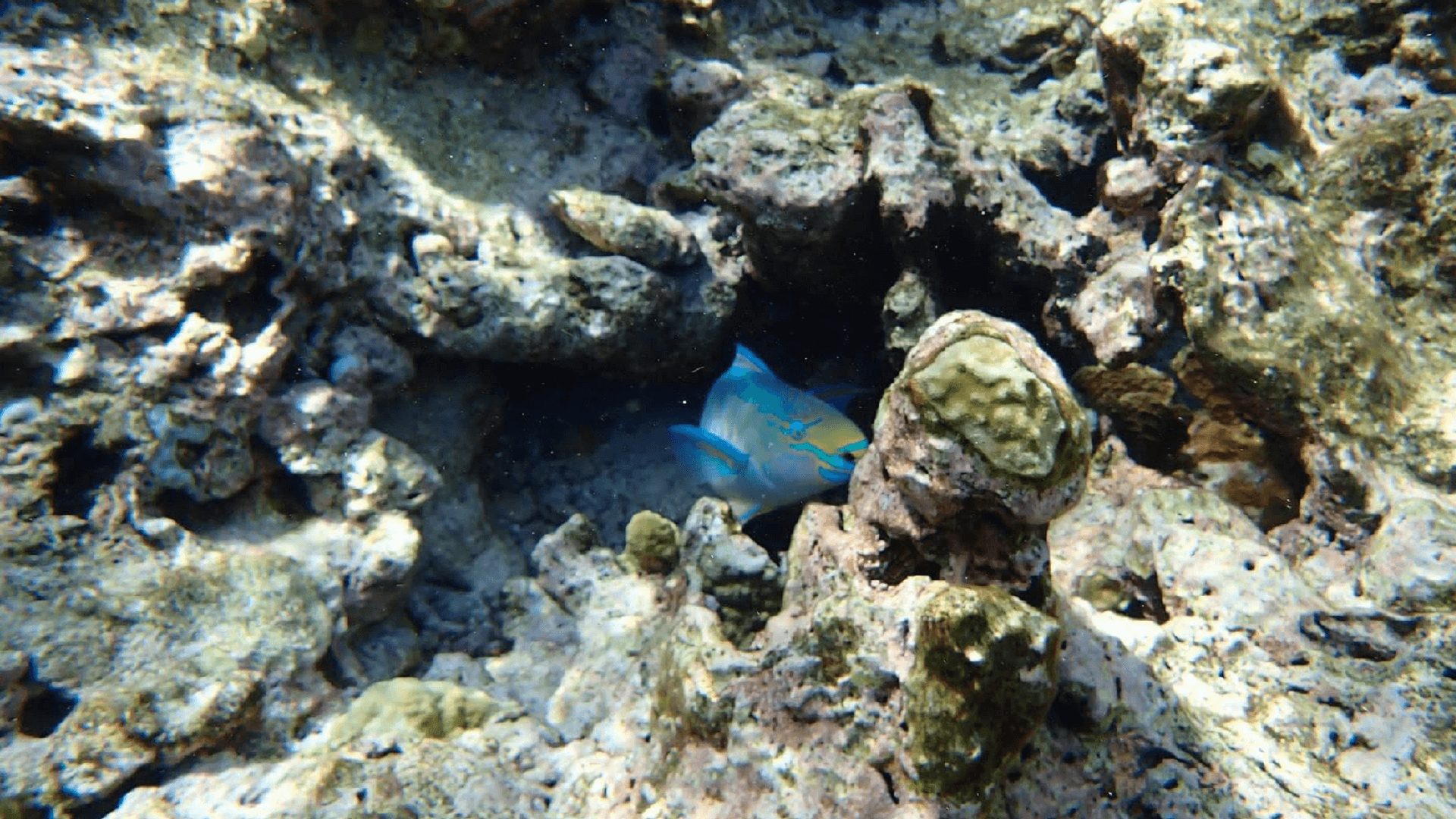
Coral reefs are a defining feature of Aruba’s marine landscape. They support tourism, fisheries, and protect shorelines from wave energy. However, warming waters and changing ocean chemistry are driving coral bleaching and disease outbreaks.
According to experts, eutrophication caused by land-based pollution is a major contributor to unhealthy reef conditions, especially along the northwestern reef areas.
As the report notes:


- Marine heatwaves contribute to repeated bleaching
- Algal overgrowth reduces coral resilience
- Pollution and sediment runoff intensify reef degradation
If reef decline continues, Aruba risks losing not only biodiversity, but also the economic value associated with diving, snorkeling, and water recreation, which are core pillars of the tourism industry.

Mangrove Forests: Limited but Critical
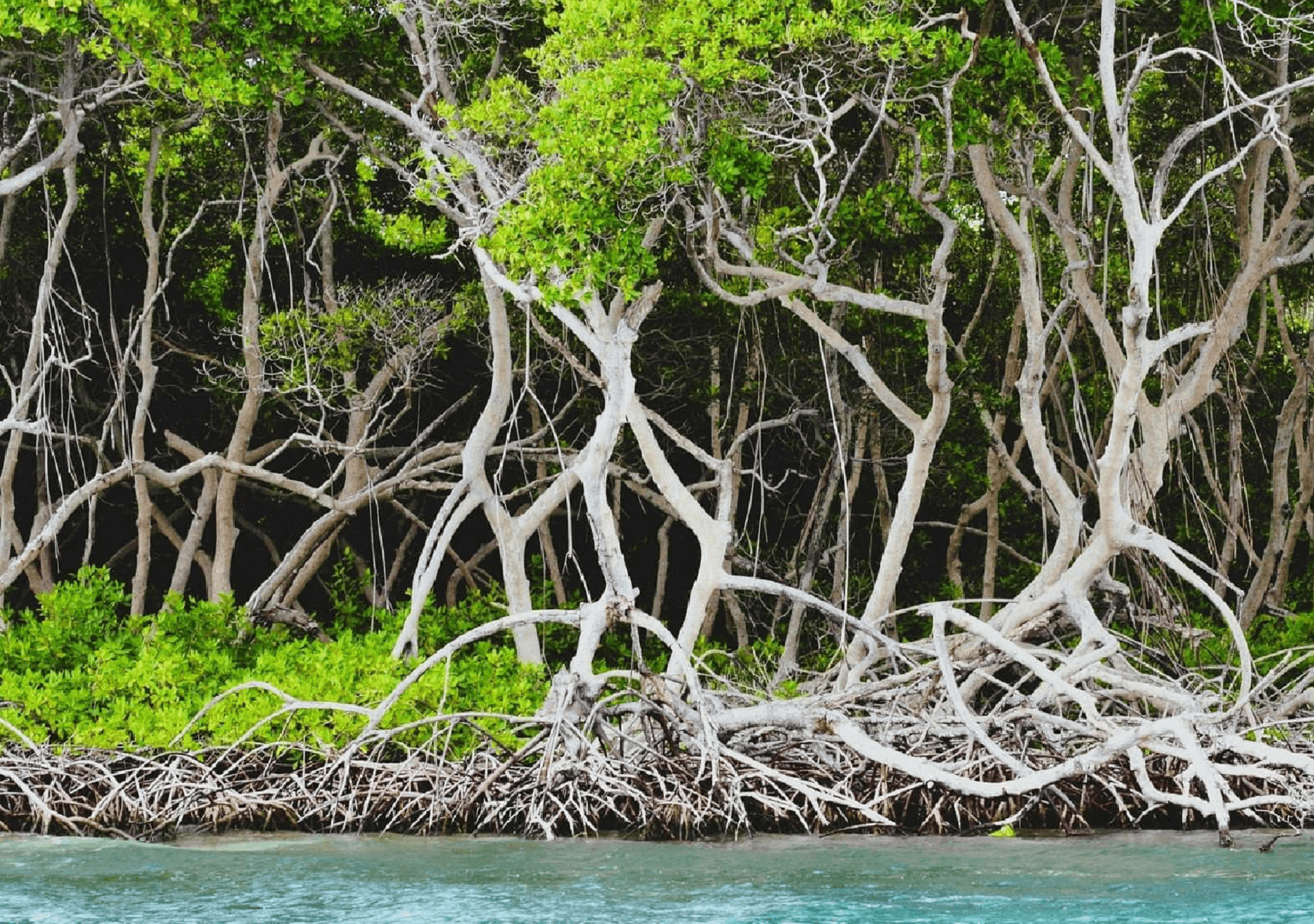
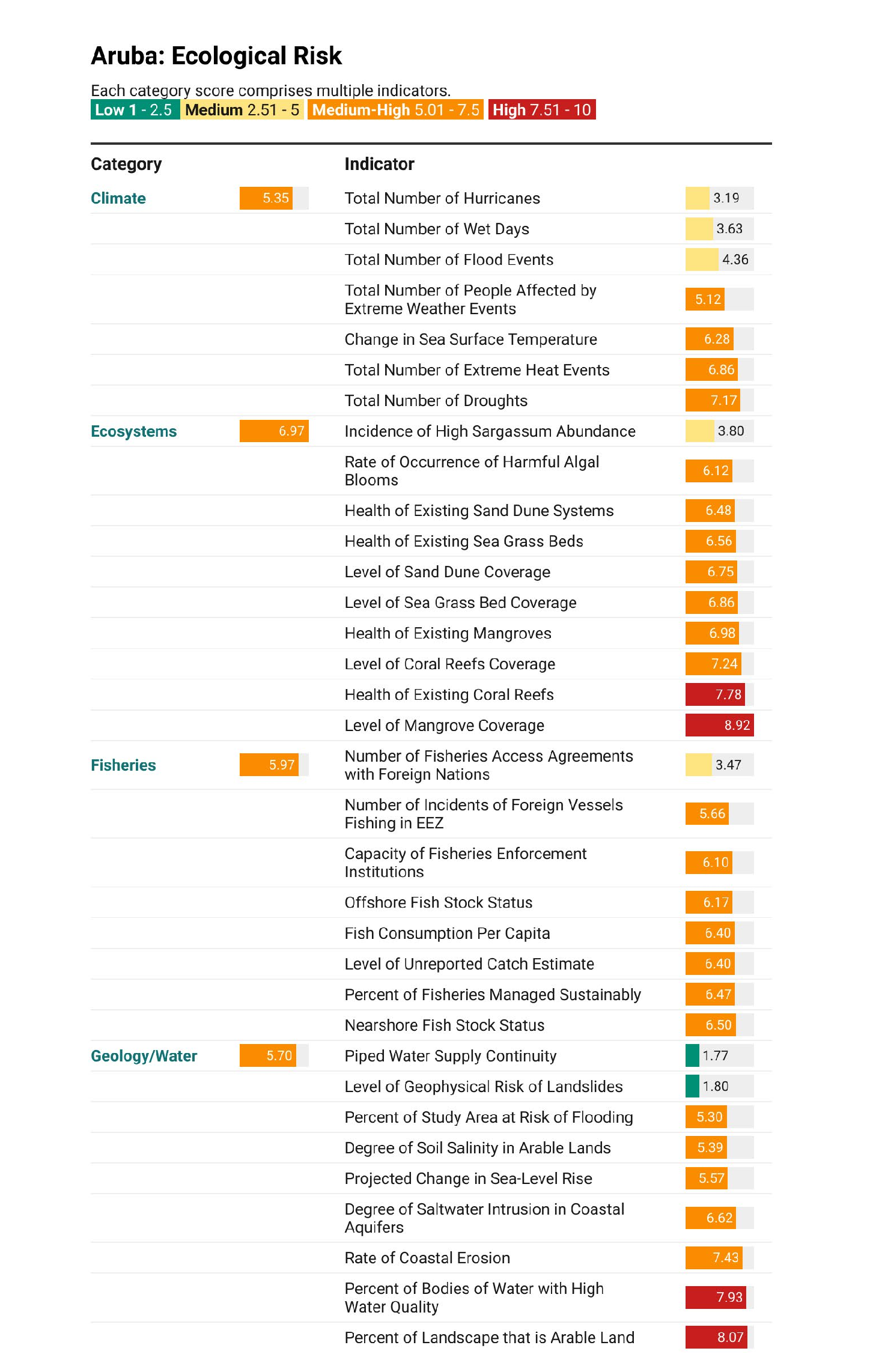
Mangroves are among the most valuable ecosystems in Aruba. They reduce coastal erosion, protect against storm surges, support juvenile fish populations, and store carbon. Yet, the level of mangrove coverage is extremely low and considered high-risk (8.92)
The Health of Existing Mangroves is also in the medium-high risk range, due in part to fragmentation, which weakens their ecological function and increases their exposure to damage
Fragmentation leads to:
- Loss of shoreline protection
- Increased erosion
- Habitat disruption for fish and bird species
- Higher vulnerability to sea-level rise and storms
Despite these risks, the report notes that overall mangrove loss since 1996 has been relatively low meaning restoration NOW can still be effective.
Seagrass Beds and Sand Dunes: Declining Natural Barriers
Aruba’s seagrass beds and sand dunes are vital natural buffers that stabilize shorelines and provide habitat for marine and coastal species. However, they are experiencing widespread degradation due to tourism development, ATV traffic, and lack of management enforcement.
The CORVI assessment reports medium-high risk scores for:
| Ecosystem Indicator | Risk Score |
|---|---|
| Health of Existing Seagrass Beds | 6.56 |
| Seagrass Bed Coverage | 6.86 |
| Sand Dune Systems | 6.48 |
| Sand Dune Coverage | 6.75 |
Specific dune zones Boca Druif, Boca Daimari, Wariruri, Sasarawichi—are experiencing significant human pressure with limited signage or trail management.


This erosion reduces:
- Beach stability
- Natural storm buffers
- Coastal tourism value
Fisheries and Marine Life at Risk
While fisheries are a smaller share of Aruba’s economy, the marine food web plays an essential ecological role. Overfishing and habitat loss are compounded by warming waters and changing breeding patterns.
The CORVI scores indicate medium-high risk across:
- Nearshore fish stocks
- Offshore fish stocks
- Sustainable fisheries management
- Unreported catch levels
- Enforcement capacity weaknesses
Declining fish populations also reduce reef health by removing herbivorous species that keep algae growth under control.
Climate Stress Intensifies Ecological Decline
Aruba’s climate risks amplify ecological vulnerability:
- Extreme heat events and marine heatwaves increase coral bleaching
- Droughts reduce freshwater flow to coastal ecosystems
- Rising sea surface temperatures harm marine life and disrupt habitat ranges
- Coastal erosion increases exposure to storm damage (risk score 7.43)
These overlapping stressors make ecosystem restoration more urgent than ever.
A Path Forward Restoring What Protects Us
Strengthening ecological resilience requires coordinated action across government, industry, research institutions, and community groups.
Priority Actions Include
- Expand mangrove restoration and protection zones
- Strengthen coral rehabilitation and reduce land runoff pollution
- Regulate dune access and restore damaged dune systems
- Support sustainable fisheries enforcement and monitoring
- Adopt climate-smart coastal planning and tourism policies
Conclusion: Protecting Aruba’s Future Begins with Protecting Nature
Aruba’s ecosystems are powerful, living shields. They defend coastlines, support livelihoods, boost tourism, and define the island’s identity. But these systems are weakening and urgent, united action is needed to restore and protect them.
For more local news, visit us and follow our social media pages. Share your news with us by sending it to info@arubaonline.news.